
How Ginkgo biloba helps treat Alzheimer’s
Xu Liu and colleagues recently investigated the effects of Ginkgo biloba extract on a mouse model for Alzheimer’s disease (AD).
Read More arrow_forwardThe Barnes maze is used to test learning and memory in rodent models for Alzheimer’s disease. How does it compare to the Morris water maze?
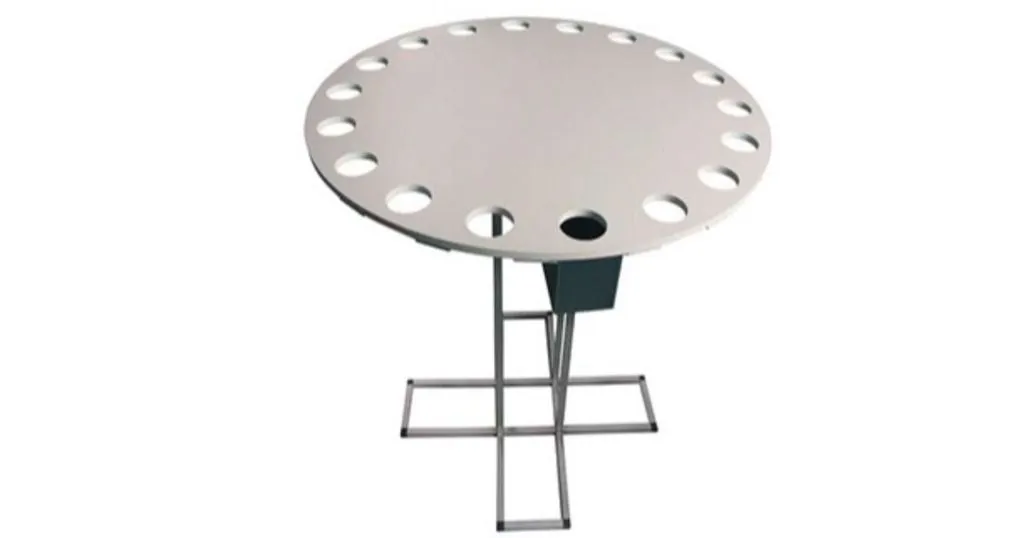
Carol Barnes designed this behavioral paradigm in 1979 to test memory deficits in aging rats [1], while only being adapted to mice as late as 1995 [2]. It is often referred to as an alternative to the Morris water maze, which relies on swimming behavior potentially confounding learning and memory readouts.
At this point in time, the Barnes maze is a well-established behavioral paradigm, and is used to test learning and memory in rodent models for autism spectrum disorder [3], Alzheimer’s disease [4] and ageing [5], to name a few.
The Barnes maze is constructed as a circular table with circular holes around the circumference. The goal of this test is that the subject (rat or mouse) reaches an escape box that is positioned beneath one of the holes. This task relies on visual cues, which thus prompts spatial learning and memory. Essential in such a protocol is learning the position of this box beforehand. This can be done in a number of ways, food reward is a popular choice.
Investigating the animal’s searching strategy over consecutive trial can also be an interesting readout of the Barnes maze. For example, some animals randomly search for the correct hole while in the acquisition phase, while other animals stick to a certain pattern when systematically checking each hole.
In general, performance in the Barnes maze and/or the Morris water maze is highly sensitive to anxiety in rodents, which can be induced (or of greater levels) in animals subjected to for example pharmacological and/or genetic manipulation. This can be mitigated for example by decreased light intensity.
Both the Barnes maze and the Morris water maze are well validated behavioral paradigms for studying learning and memory. Both have clear advantages and disadvantages. It should thus be pragmatically considered which one is the best for you. Do you have a validated setup of one or the other in your lab? Have you previously published with one of these tests? Or do you simply want to avoid swimming, for example in mice which are less-than-natural swimmers compared to rats? Think practically about these thing when writing/planning your study design.
In EthoVision XT there is a predefined template for the Barnes maze, making tracking and analyzing as easy as dragging and dropping the circles (for the escape holes) to the correct place in the video image. Specify which hole has the goal box underneath, and you are ready to acquire your data.

FREE TRIAL:
Xu Liu and colleagues recently investigated the effects of Ginkgo biloba extract on a mouse model for Alzheimer’s disease (AD).
Read More arrow_forward
Plaques and tangles… those of you even remotely familiar with Alzheimer’s disease (AD) will immediately recognize these hallmarks. But they are linked to familial AD, while sporadic AD is far more common.
Read More arrow_forward
The color x-maze can be used to pick up symptoms of Alzheimer's disease in AD-mice months before traditional cognitive tests.
Read More arrow_forwardWe'll get back to you shortly.
Please correct the following errors: