University of Groningen
Using EthoVision XT as an educational tool
As a professor in developmental behavioral neuroscience, Jocelien Olivier works at the University of Groningen, at the GELIFES Institute. In the minor Neuroscience, which is a university broad minor, she and her colleagues show students what neuroscience is all about. For example, she wants students to get in touch with 'how do we score behavior'.
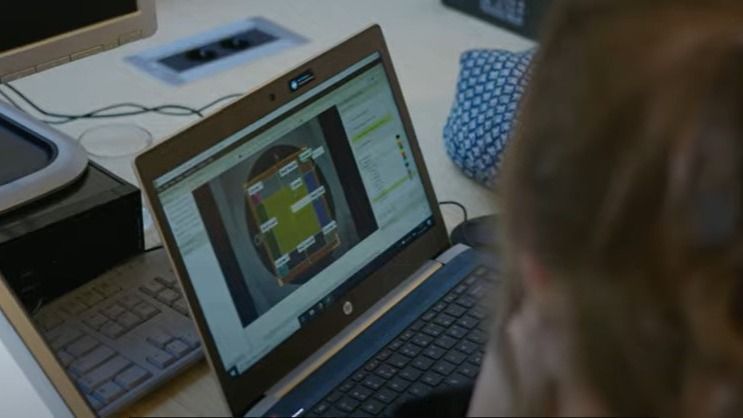
Teaching neuroscience with real research tools
How the University of Groningen uses EthoVision to show students how behavior is measured in practice.
Key takeaways
- Students from all faculties learn how behavior is scored in a practical.
- The same EthoVision setup is used for teaching and for research.
- One tool covers the Morris water maze, open field, and elevated plus maze.
- Automatic tracking is objective, so students don’t need to count by hand.
Dr. Jocelien Olivier is a professor in developmental behavioral neuroscience at the GELIFES Institute of the University of Groningen. Together with her colleagues, she teaches in the minor Neuroscience, a university-wide minor that students from every faculty can sign up for. “So it is a very diverse group,” she says. “In this course we really try to give them the nicest things from neuroscience, and teach them how everything works.”
Learning by doing
In the practical, students work with EthoVision themselves. They respond to it in different ways: some find the protocol very easy to follow, while others see this kind of program for the first time. Either way, they learn how to use it, and they see how it is used in real research.
That last part matters. “We can of course not invite all the students to come into our laboratory, so this is one way to show them how to do it,” Dr. Olivier says. “And they really like it.”
The same tool as in the lab
The team chose EthoVision for teaching because they also use it in their own research. It works with many different experiments, such as the Morris water maze, the open field, and the elevated plus maze, all tests for anxiety or cognition.
It is an easy way, it is objective. We don’t have to score how many squares they are crossing. You can just push the button and follow the rat.
From early life to later life
Dr. Olivier’s research is about how adverse events in early life affect behavior later in life. One of her research lines looks at how antidepressant use during pregnancy affects the offspring. Next to behavior, the team looks at different brain areas, and at whether gene expression differs between treated and untreated rats.
Behavior is never the whole story, she stresses: it is also about everything underlying and causing the changes in behavior. The aim is to help prevent adverse life events from leading to psychopathology later in life. “There is a lot to explore in finding out how we can make sure that people are living as healthy as possible.”
EthoVision
One tool for many behavioral tests
Discover how EthoVision tracks and analyzes animal behavior automatically, from the open field to the Morris water maze.
Interested in similar results?
Get in touch!
Want to achieve the same research quality as University of Groningen? Let us show you how our tools can support your work. Book a demo or request more information.
Thank you!
We will get back to you within one business day.

Thank you!
We'll get back to you shortly.
Please correct the following errors:
Thank you for registering!
We look forward to seeing you at the NoldusViso launch event.
Please correct the following errors: