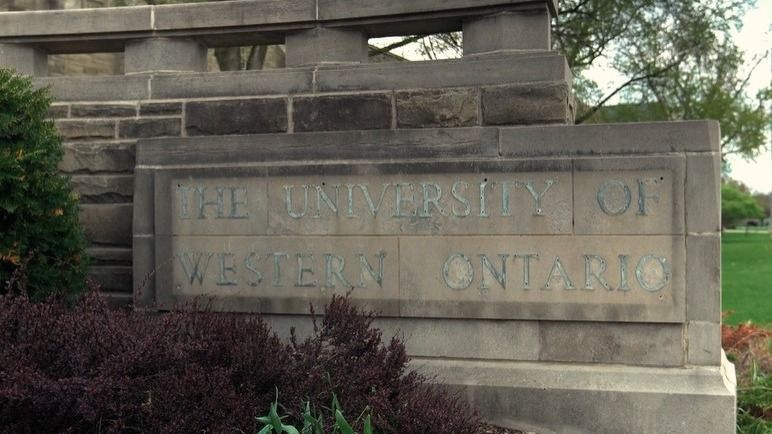
University of Western Ontario
Facial expression and social behavior
Dr. Erin Heerey is an Associate Professor at the department of Psychology, and head of the Social Behavior lab at Western University in London, Ontario. In her work she focuses on social interactions, mainly dyadic interactions.
Smiles rarely come alone
How the Social Behavior Lab at Western University studies the social cues people exchange, one interaction at a time.
Key takeaways
- The lab studies how people exchange social cues, such as genuine and polite smiles.
- NoldusViso records several interactions at the same time and controls the cameras.
- FaceReader codes facial muscle movements automatically and estimates heart rate from video.
- Anonymized FaceReader data can be shared online, without sharing anyone’s face.
Dr. Erin Heerey is the principal investigator of the Social Behavior Lab, part of the Department of Psychology in the Faculty of Social Science at Western University. She trained as a clinical psychologist and did her PhD at the University of California, Berkeley. Social behavior has always fascinated her, because it is such a sensitive indicator of when people have problems.
A smile for a smile
The lab looks at how people exchange different kinds of social cues. One of the cues they have focused on so far is the smile. As it turns out, people rarely smile alone. “If I give you a genuine smile, you’ll often give me a genuine smile back,” Dr. Heerey explains. “And if I give you a polite smile, you will often return a polite smile.”
That exchange happens from moment to moment, which makes it a fascinating process to study, and a demanding one to code. When Dr. Heerey was in graduate school, the team did this work on VHS tapes. Today it is digital, and FaceReader does the heavy lifting.
FaceReader has saved the day. It has massively shortened the timescale of the coding that we have to do.
Why measuring behavior matters
For Dr. Heerey, measuring behavior is critical for the future: for understanding how we interact in the world, and for understanding many of the social problems that arise in it. Think of how a disease like COVID spreads from one person to another, or how misinformation does.
Many conversations, recorded at once
In a typical study, the lab brings in groups of people who don’t know one another. With a round-robin design, each person gets to interact with every other member of their group. The participants go to separate research rooms, where they meet their first interaction partner.
NoldusViso records all of these interactions. It starts and stops the cameras and lets the team control them, to make sure they are focused on the participants’ faces. That way, the lab can run several interactions at the same time, without anyone having to start and stop cameras by hand.
From video to data
The video files then go to FaceReader, which automatically codes the muscle movements people make when they smile or frown. With the Remote Photoplethysmography (RPPG) module, FaceReader can also estimate heart rate from the same video.
FaceReader can also classify emotions from facial expressions, but the lab uses that less. In normal face-to-face conversations, people don’t show many textbook emotional expressions. What matters more to Dr. Heerey is that a computer model can read faces objectively.
It gives us this chance to really decode faces in a way that is free of our human biases.
Making video data shareable
There is one more thing FaceReader makes possible: sharing. Video data can’t simply be put online, because it shows people’s faces. The anonymized data from FaceReader can. The lab only needs permission to share that anonymized data, which makes it much easier for other researchers to work with it, in a way Dr. Heerey doesn’t think has been possible with video data before.
And sharing matters, because understanding social interactions takes a lot of data. The more data researchers share, the more they can learn about diverse populations: different age groups, different scenarios, different countries.
I think this is an open frontier in science, and we really need to spend more time with behavior.
As machine learning and deep learning keep advancing, Dr. Heerey expects the automated analysis of facial behavior to advance with them, giving her lab an ever sharper view of the smiles people share.
FaceReader
Code facial behavior automatically
Discover how FaceReader analyzes facial muscle movements and estimates heart rate from video, so you can spend less time coding.
Interested in similar results?
Get in touch!
Want to achieve the same research quality as University of Western Ontario? Let us show you how our tools can support your work. Book a demo or request more information.
Thank you!
We will get back to you within one business day.

Thank you!
We'll get back to you shortly.
Please correct the following errors:
Thank you for registering!
We look forward to seeing you at the NoldusViso launch event.
Please correct the following errors: