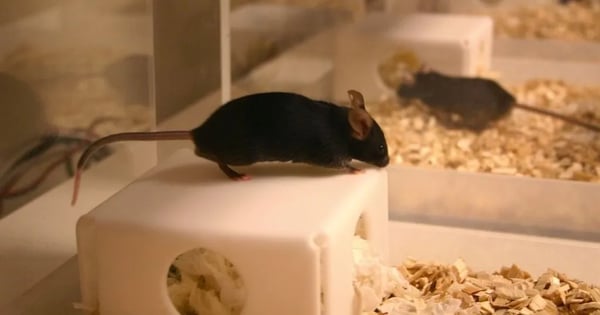
Why it is smart to test your animal in its home cage
Behavior of laboratory rodents is often studied in well-controlled, simple experiments, in an environment that is fundamentally different from the animal’s home cage.
Read More arrow_forwardBuild a realistic NIH budget, adapt to policy changes, and write with clarity. Practical tips to make your proposal stand out to reviewers.

We are honored to welcome guest contributor, Dr. William Gerin, former Professor of Behavioral Medicine at Penn State University. Dr. Gerin is the author of Writing the NIH Grant Proposal: A Step-by-Step Guide, Third Edition (Sage Publishing).
Writing a grant is not just about the science. The practical details, budgets, policies, and clear writing often determine whether your proposal succeeds or fails. In this post, we'll explore how to prepare a budget that stands up to review, stay on top of NIH policy changes, and write in a way that engages reviewers.
Your budget tells a story, and reviewers read it carefully. Salaries and benefits often make up 80% of costs, and they need to be justified.
Common pitfalls:
Pro tip: Collecting pilot data is one of the most persuasive expenses you'll need to plan for.
Funding rules evolve, sometimes dramatically. In 2025, changes included:
Reviewers often read 20 proposals in one sitting, sometimes the night before a study section meets. Poor writing makes their job harder, and that can sink your score. Problems reviewers see all the time:
Pro tip: Good writing won't guarantee success, but bad writing almost guarantees failure.
To improve clarity and flow:
Pro tip: Reviewers appreciate applications that are clear, logically organized, and easy to follow.
Budgets and writing may feel secondary, but they are integral to success. A solid budget demonstrates professionalism and foresight, while clear writing makes reviewers' jobs easier. Pair these with strong collaborators, persuasive aims, and good pilot data, and you'll have built a proposal that stands out in a competitive field. Need support? Our Grant Assistance Program helps researchers develop protocols and maximize their Noldus systems.
Behavior of laboratory rodents is often studied in well-controlled, simple experiments, in an environment that is fundamentally different from the animal’s home cage.
Read More arrow_forward
When using animal models for scientific research, their welfare should be a priority. Here, we're looking at the effects of different housing strategies for mice, and how PhenoTyper provides researchers with insight.
Read More arrow_forward
Why do we write e-books, white papers and even this blog? What drives us in behavioral research? And why choose Noldus?
Read More arrow_forwardWe'll get back to you shortly.
Please correct the following errors:
We look forward to seeing you at the NoldusViso launch event.
Please correct the following errors:
