5 blogs on why you should use video tracking in behavioral research
In this blogpost you can find an overview of our top 5 favorite blogs on why you should use video tracking in your behavioral research.
Read More arrow_forwardLearn what the open field test measures, see recent research examples using EthoVision tracking, and get practical tips for running it in your lab.
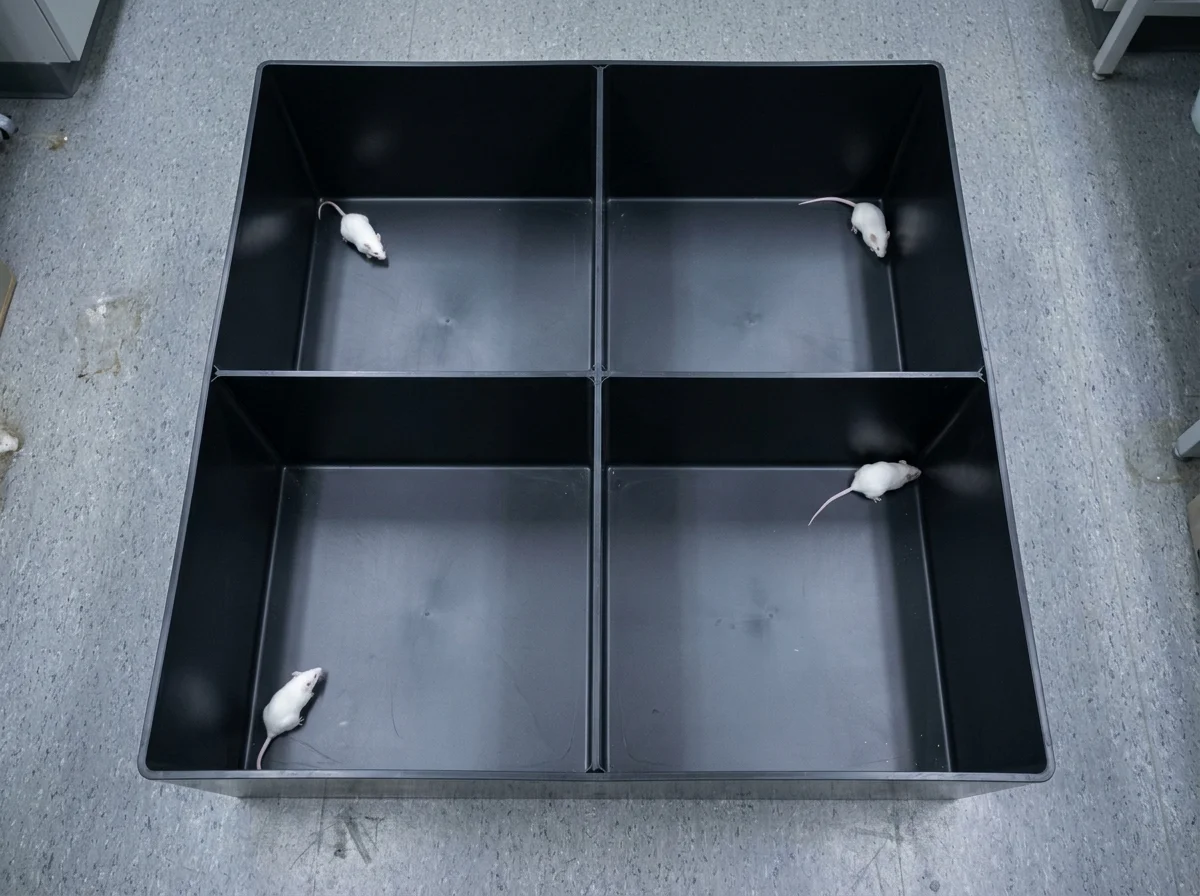
Few behavioral tests get used for as many different reasons as the open field. Depending on the question a lab is asking, the same arena and the same footage can serve as a general health and locomotor screen or a dedicated anxiety-like behavior test. It sounds simple, just an arena and a camera. However, it is the question that makes the open field test interesting and varied. That adaptability is why it has remained an important part of behavioral neuroscience for nearly a century.
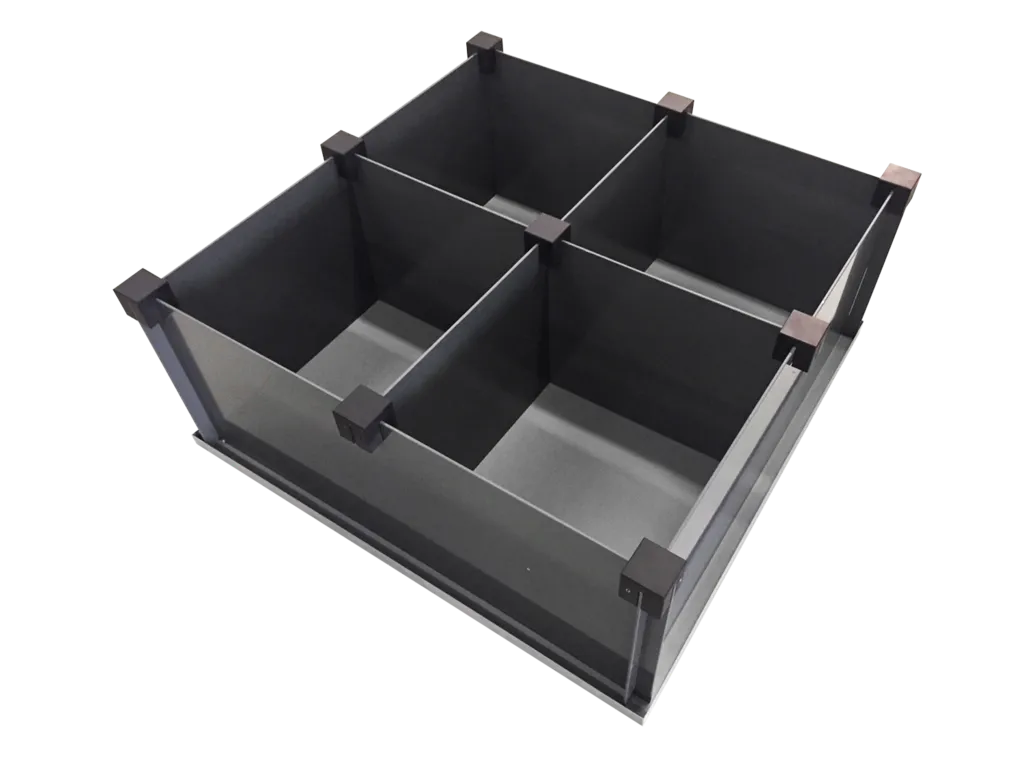
The open field test is a behavioral assay that measures locomotor activity, exploration, and anxiety-like behavior by placing an animal in an enclosed arena and recording how much it moves and how much of the space it uses. It consists of an enclosed arena, usually round or square. An animal is placed in it and filmed from above for a fixed period, typically five to ten minutes. Unlike many other behavioral tests, there is no reward or task for the animal to learn: the whole test rests on the arena being novel. Arena size and material vary with the species and the question being asked, but the basic logic is the same everywhere: give an animal room to move and make sure there is enough contrast between the material and the animal.
The inception of the open field dates back to the 1930s. Calvin Hall used it to study individual differences in 'emotionality' in rats, scoring defecation and urination as crude proxies for fear [1]. Hall and later researchers noticed that rats didn't move through the arena randomly. They stayed close to the walls, venturing into the open center only gradually, if at all. This wall-hugging tendency has a name: thigmotaxis. And this is still the single most-reported measure in open field studies today.
Thigmotaxis is generally read as a sign of anxiety-like behavior. The center of an exposed arena is aversive. So, animals that spend more time there or enter the space more often are typically interpreted as less anxious [2, 3]. That interpretation isn't universally accepted. Critics argue that the open field really captures a fear-driven avoidance response rather than anxiety in a more general sense, and that a proper anxiety test needs both an aversive and an appetitive pull to be meaningful [2]. Most labs sidestep this debate. They treat the open field as a first-pass screen — a quick check for gross changes in locomotion and exploration before moving on to more targeted tests.
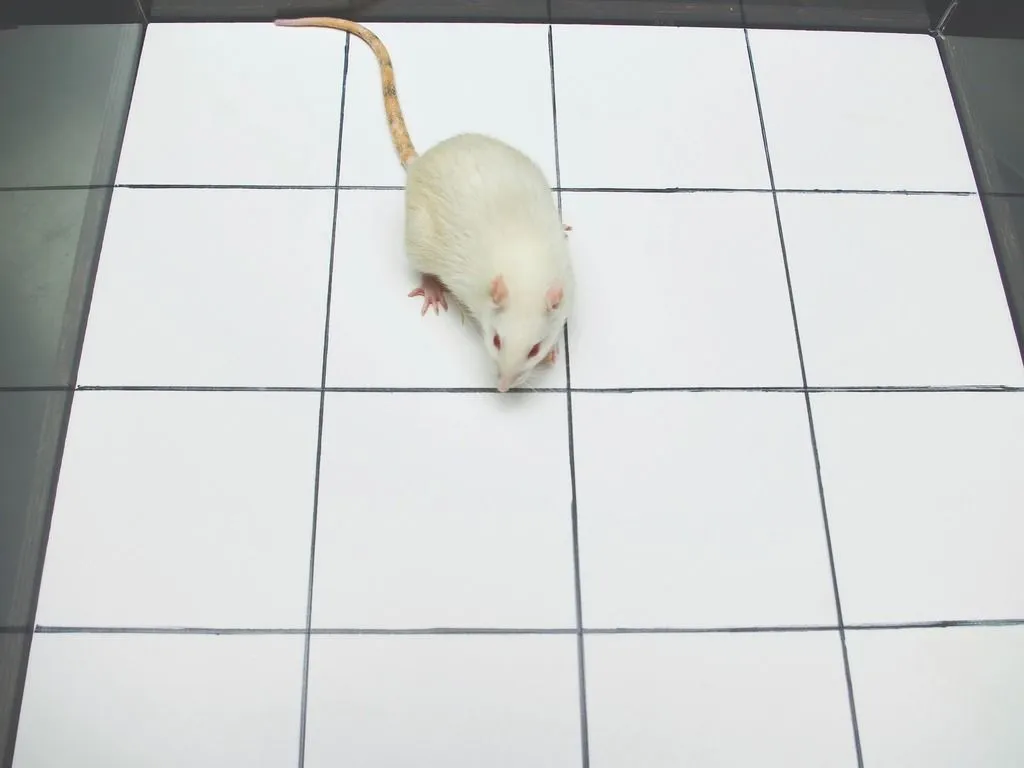
The open field is used for a great variety of applications. Across the studies below, researchers extracted the same handful of measures (distance traveled, time in the center versus the periphery, velocity, entries into defined zones) using EthoVision video tracking.
Ko and colleagues provided the first experimental evidence that polyhexamethylene guanidine phosphate (PHMG-p), a humidifier disinfectant chemical tied to South Korea's mass lung-injury cases, is neurotoxic in mice. EthoVision tracked open field distance and center-zone time alongside elevated plus maze and forced-swim behavior. Exposed mice showed hypoactivity and anxiety-like behavior that tracked with cortical neuron and synapse loss [4]. In zebrafish, Pompermaier and colleagues used EthoVision to quantify distance, turn angle, and center/periphery time in larvae exposed to a diquat-based herbicide. The herbicide altered exploratory behavior alongside survival and heart-rate effects, even at environmentally relevant concentrations [5].
Yao and colleagues linked long-term social isolation during adolescence to worse outcomes after a simulated heart attack in mice. Open field center time and distance, alongside elevated plus maze and forced-swim measures, established an anxiety and depression phenotype that correlated with reduced cardiac function [6]. Mo and colleagues took the opposite approach. They tested whether a probiotic, Lactobacillus reuteri, could reverse LPS-induced depression- and anxiety-like behavior via the gut-brain axis. EthoVision-tracked open field distance and center/periphery time showed the probiotic restored locomotion and reduced center-avoidance behavior [7]. And Yuan and colleagues found that knocking out acid sphingomyelinase, an enzyme linked to toll-like receptor immune signaling, left mice with restricted open field activity and less time in the center. That's a heightened-anxiety profile, consistent with an immune contribution to anxiety-like behavior [8].
The open field is a fixture in disease-model phenotyping. Shetty and colleagues included it among several assays showing altered exploratory behavior in mice lacking a neuronal RNase complex, alongside impaired long-term spatial memory [9]. Jin and colleagues used open field testing to support a PI3K/AKT pathway analysis of a fruit-juice concentrate's neuroprotective effects in a Parkinson's disease mouse model [10]. Buglinina and colleagues tracked open field distance, speed, and center-zone entries in mice after spinal cord injury. Knocking out the receptor TAAR5 sped up motor recovery, but it did not reduce anxiety-like behavior, which stayed elevated regardless of genotype [11]. In a maternal immune activation model of autism, Zhang and colleagues found that neutralizing IL-6 largely reversed the anxiety-like behavior seen in open field and elevated plus maze testing. It left the model's core social-deficit and repetitive-behavior measures untouched [12].
Several recent studies used the open field to check whether an effect held up, or differed, across sexes. Gellman and colleagues compared an endocannabinoid-like lipid and a synthetic CB2 agonist in a genetic rat model of depression. Open field tracking revealed a clear sex split: the endocannabinoid-like compound was anxiolytic in males, but anxiolytic and antidepressant in females [13]. Sacko and colleagues used open field distance and center-zone time as a specificity control when testing a BET inhibitor's effect on cocaine-seeking in rats. Those measures were unchanged by the drug, so the researchers could rule out general sedation as an explanation for the reduced drug-seeking they saw elsewhere [14]. In a pilot study of paclitaxel-induced peripheral neuropathy, Kim and colleagues recorded open field behavior in a PhenoTyper home-cage observation arena running EthoVision. Chemotherapy reduced locomotion and rearing in male rats, with only milder locomotor effects in females [15].
Bonauto and colleagues combined the open field with playback of aversive, rat-specific alarm calls to probe how early-life adversity shapes affective processing in juvenile rats. EthoVision-quantified locomotion and center-zone exploration, during baseline and playback, revealed sex-specific responses to the threat cue. The open field can capture not just a resting anxiety state, but how an animal responds to a stressor introduced mid-test [16].
The open field translates well to other model species. Herrera-Castillo and colleagues used EthoVision to track thigmotaxis and center/periphery time in goldfish, testing whether food-anticipatory activity reflects a ghrelin-driven anxiety state. Ghrelin-receptor antagonists reduced the anxiety-like behavior seen before scheduled feeding. That ties a metabolic hormone directly to an exploration-based measure [17].
Free Trial
EthoVision is the gold standard in video tracking for behavioral research. Request a free trial and see how EthoVision automates your open field analysis.
For more on adapting classic behavioral assays with automated tracking, have a look at our earlier blogs on the Y-maze and the radial arm maze.
What does the open field test measure?
The open field test measures three things: locomotor activity (distance traveled, velocity), exploratory behavior (rearing, zone entries), and anxiety-like behavior (thigmotaxis, or time near the walls versus the center).
Is the open field test an anxiety test?
It's usually treated as one. Animals that avoid the exposed center of the arena are interpreted as more anxious. But some researchers argue it measures fear-driven avoidance more precisely than anxiety. They recommend pairing it with a test that includes a rewarding pull, such as the elevated plus maze, before drawing firm conclusions [2].
What is thigmotaxis?
Thigmotaxis is the tendency to stay close to walls or edges rather than moving through open space. In the open field test, it's the most commonly reported measure. It's generally read as an index of anxiety-like behavior.
How long does an open field test take?
Most protocols run a single trial of five to ten minutes per animal, since the test relies on the arena being novel. Longer or repeated exposure changes what's being measured. That's why acute open field testing and longer-term home-cage monitoring, for example with a PhenoTyper system, are treated as different approaches.
Can the open field test be used with species other than rodents?
Yes. It's been adapted for zebrafish, goldfish, and other species, using the same logic: tracking movement and zone preference in a bounded arena. EthoVision supports tracking across these species.
What software is used to score the open field test?
Most recent studies use automated video tracking software. The most published software used is EthoVision. Other researchers use Any-maze or open-source tools like DeepLabCut.
In this blogpost you can find an overview of our top 5 favorite blogs on why you should use video tracking in your behavioral research.
Read More arrow_forward
When you get used to something, after a while you might not notice it anymore. Like a sent. The lab of Justus Verhagen investigated sniffing behavior with video tracking.
Read More arrow_forward
In this last post in the series, Dr William Gerin gives advice how to build a realistic budget, navigate new NIH policies, and write clearly and engagingly so reviewers understand and support your research.
Read More arrow_forwardWe'll get back to you shortly.
Please correct the following errors:
We look forward to seeing you at the NoldusViso launch event.
Please correct the following errors: