Radboud University
Zebrafish research with EthoVision XT and DanioVision
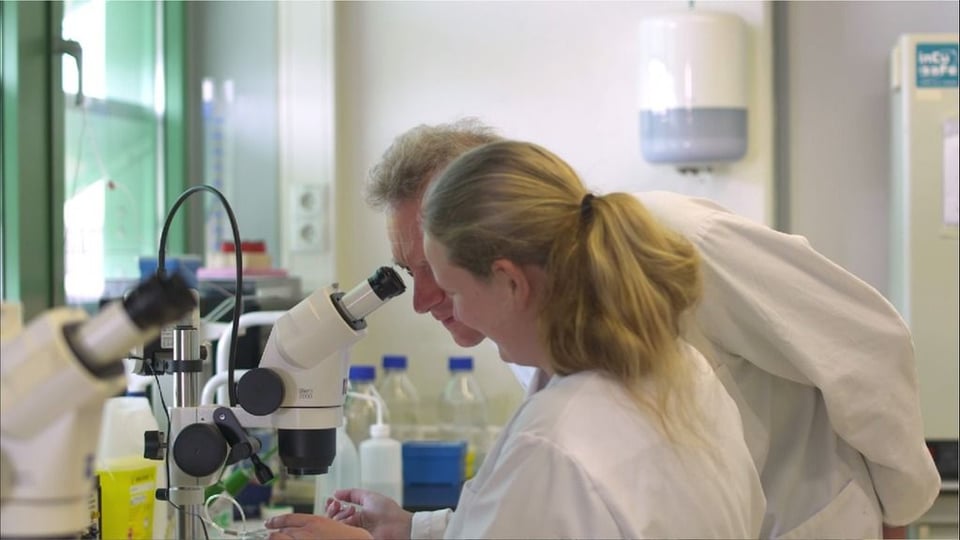
Dr. Ruud van den Bos talks about his work in neurobiology and experimental psychology, and how zebrafish studies contribute to his field of research. He is experienced with DanioVision and EthoVision XT, and explains why good tools are important for reliability and reproducibility in zebrafish experiments.
Why the zebrafish strain matters
How Radboud University uses DanioVision and EthoVision to study emotional systems in zebrafish.
Key takeaways
- Zebrafish show the foundations of emotional systems like anxiety and reward.
- Two common strains, AB and Tupfel Long Fin, turn out to behave differently.
- DanioVision and EthoVision measure both larval and adult behavior.
- Controlling strains and conditions is key to reproducible results.
Dr. Ruud van den Bos is a freelance lecturer, researcher, and consultant in neurobiology and experimental psychology. He works as a guest researcher at the Department of Animal Ecology and Physiology of Radboud University.
Emotional systems at a mini scale
Our emotional systems, related to anxiety or reward, normally help us navigate through life. But sometimes they get out of hand, and we lose control over them. Dr. van den Bos has studied these systems in humans, rodents, and cats. Zebrafish offer a new opportunity, because they show the foundations of how vertebrates developed further.
Their brain looks different from ours, but the fundamental properties are there. He wants to understand how these systems work in zebrafish. Are they the same systems at a mini scale, or are they missing things that we have?
Two strains, two outcomes
One of his interests is the difference between two commonly used strains. AB zebrafish have short fins and stripes, while Tupfel Long Fin zebrafish have long fins and spots. The spots and long fins are caused by two spontaneous mutations. The question was what these mutations do to behavior, physiology, and gene expression.
Using DanioVision and EthoVision, the team studied both adult and larval behavior.
These mutations are not cosmetic mutations. They also have effects on their behavior.
That means the same test in two different strains might give a different outcome.
Good tools and good contact
“I definitely would recommend Noldus tools to others, for a number of reasons,” he says. The tools work well for many different purposes. And he values the contact with the people at Noldus. “If something is going on, I can make a phone call and then we can have a conversation on how to improve on the things that we are doing.”
Towards reproducible results
His ambition for the coming year is a lab that combines teaching and research at the university. It should interest third parties, and give the team full control over its own strains and the conditions in which the animals are kept.
That control matters for the future of zebrafish research. Today, many different strains are reared and kept under many different conditions, so results are not always reproducible. “At the end of the day, that is what we want to have,” he says. “We want to be sure that the compound will lead to a specific result.”
DanioVision
Standardized behavior testing for zebrafish larvae
Discover how DanioVision helps you run light-dark, optogenetic, and other assays in larval zebrafish, under consistent conditions.
Interested in similar results?
Get in touch!
Want to achieve the same research quality as Radboud University? Let us show you how our tools can support your work. Book a demo or request more information.
Thank you!
We will get back to you within one business day.

Thank you!
We'll get back to you shortly.
Please correct the following errors:
Thank you for registering!
We look forward to seeing you at the NoldusViso launch event.
Please correct the following errors: