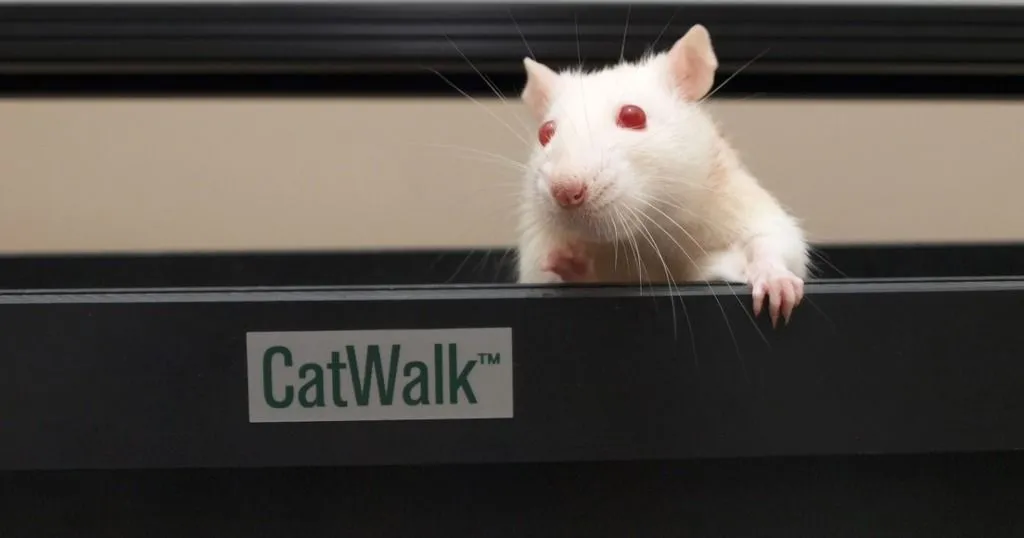
Using CatWalk XT to analyze variations in gait performance in adolescent mice
Rodents are the most common model organisms in biomedical research. Analyzing motor and coordination dysfunctions is a key part of assessing rodent models.
Rodents – particularly mice and rats – are the most common model organisms in biomedical research. Over the last century, rodent models have been instrumental in gaining insight into a staggering range of medical conditions, enabling researchers to explore pathologies and discover new treatments for injuries and disease.
Rodent Models and Gait Analysis
Analyzing motor and coordination dysfunctions is a key part of assessing rodent models. Just like humans, rats and mice alter their gait in a predictable manner in order to protect injured limbs from pain due to loading and/or movement, or in response to peripheral nerve damage or neurological disease.1–3 Indeed, motor and coordination dysfunctions, including gait abnormalities, are the main diagnostic criteria for a number of CNS disorders, including Parkinson's, Huntington's and Alzheimer's diseases.
However, the majority of rodent motor function tests – including manual gait analysis techniques such as BBB scoring, running wheels, and ink-on-paper – are inaccurate and subjective.4 Automated gait analysis using the CatWalk XT provides a precise and objective mea
Automated Gait Analysis with the CatWalk XT
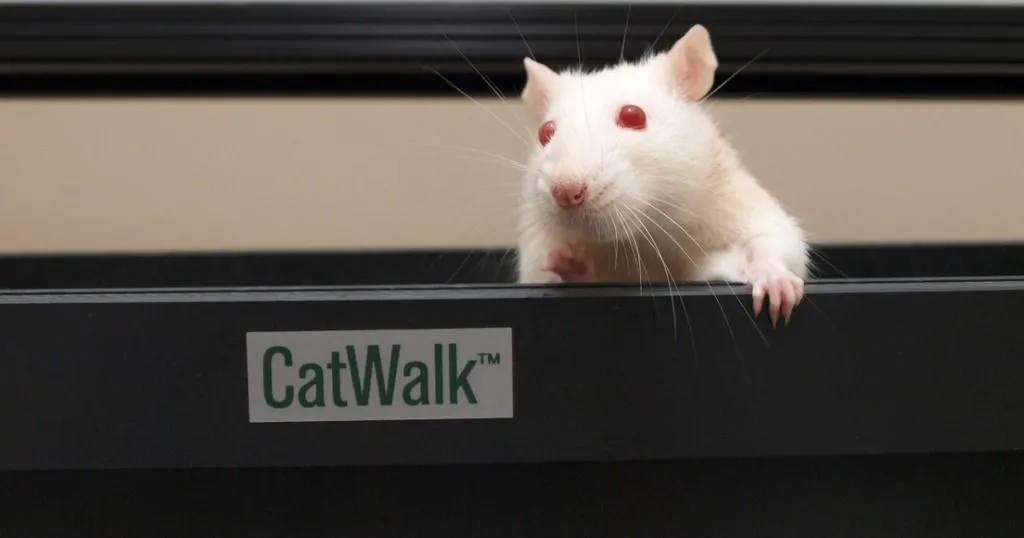
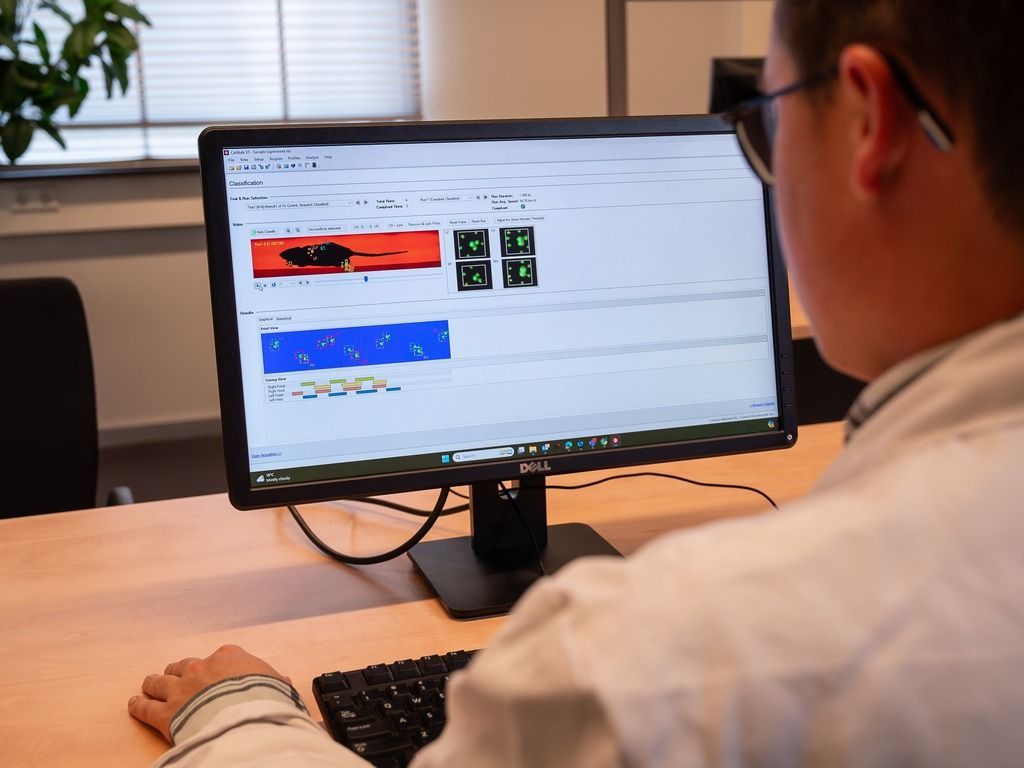
The Noldus CatWalk XT is a powerful all-in-one rodent gait analysis system that provides researchers with a non-intrusive and fully-automated way of accurately quantifying rat and mouse locomotion. Rather than relying on video interpretation like competing systems, the CatWalk XT instead uses Illuminated Footprints™ technology, in which a high temporal and spatial resolution camera tracks light refracted off the paws of mice or rats that traverse freely over a glass walkway.
The CatWalk XT can measure subtle changes in each footstep's dimensions, position, and timing by capturing high-resolution images of the animal's pawprints. This enables the calculation of over 100 gait parameters, including swing speed, stride length and interlimb coordination.
Unraveling Factors Affecting Gait Performance in Adolescent Mice
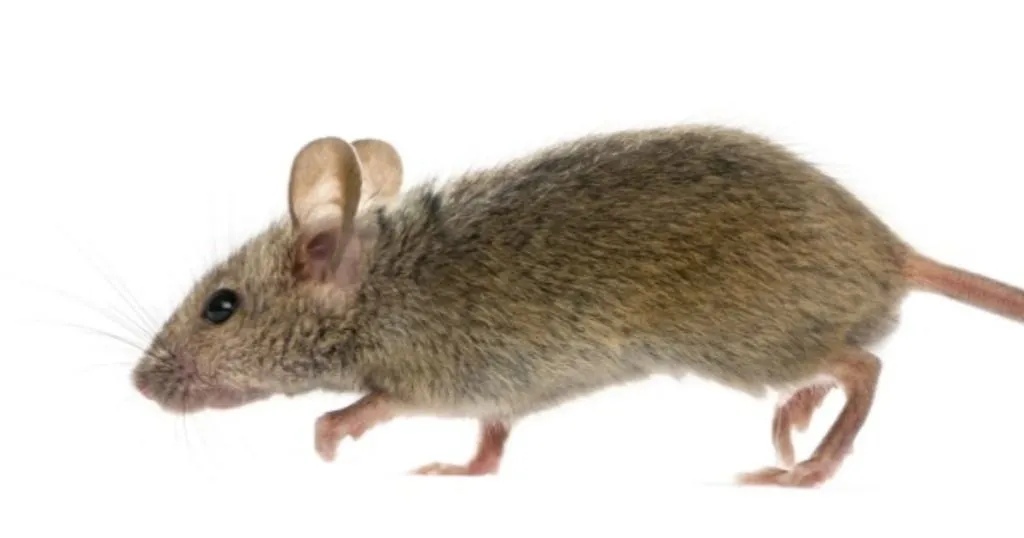
Researchers at Heidelberg University and the University of Washington used the CatWalk XT system to investigate the effects of confounding factors including age, strain, sex, speed and body weight on gait performance.5 The researchers noted that while the CatWalk XT system has been widely used for research into adult mice, a number of motor and gait abnormalities in neuropsychiatric disorders commonly manifest prior to adulthood. In addition, the team noted strain- and sex-specific effects in other behavioral tests.
Using the CatWalk XT, the researchers carried out a complete gait analysis of adolescent mice. Detailed footprint mapping enabled the system to accurately measure multiple temporal, spatial and interlimb coordination parameters simultaneously in the investigated strains during adolescence; allowing the researchers to examine the effects of these confounding variables.
Using these results, the researchers confirmed the effects of genetic strain differences on motor and gait functions; and unraveled the effects of age, sex, speed and weight on mouse gait. This enabled them to make recommendations to decrease intra-laboratory discrepancies and increase the validity of rodent models for future investigations of neuropsychiatric disorders.
Having been used in over 2,400 published research projects, the CatWalk XT is by far the most cited rodent gait analysis system in the world.6
To find out more about the benefits of CatWalk XT or book a free assessment, get in touch with a member of our team today.
RESOURCES
Read more about CatWalk XT
Find out how CatWalk XT is used in a wide range of studies and how it can elevate your research!
Kirtley, C. Clinical Gait Analysis: Theory and Practice. (Elsevier Health Sciences, 2006).
Lakes, E. H. & Allen, K. D. Gait analysis methods for rodent models of arthritic disorders: reviews and recommendations. Osteoarthritis and Cartilage24, 1837–1849 (2016).
de Barros Filho, T. E. P. & Molina, A. E. I. S. Analysis of The Sensitivity and Reproducibility Of The Basso, Beattie, Bresnahan (BBB) Scale in Wistar Rats. Clinics 63, 103–108 (2008).
Pitzer, C., Kurpiers, B. & Eltokhi, A. Gait performance of adolescent mice assessed by the CatWalk XT depends on age, strain and sex and correlates with speed and body weight. Sci Rep11, 21372 (2021).
A footprint, that is. With CatWalk XT, you can extract a lot of information from just one footprint. In this post, I am taking it a step further by talking about the relationship between prints.
Researchers from the University of Bochum achieved significant scientific results by making mice walk again after a complete spinal cord crush! Read more about it in this blog post.
To connect you with our team via live chat, we need to load our chat service (HubSpot). This will set cookies to remember your conversation and provide personalized support.
Are you sure you want to continue?
shopping_bag
check_circle
Thank you!
We'll get back to you shortly.
error
Please correct the following errors:
check_circle
Thank you for registering!
We look forward to seeing you at the NoldusViso launch event.