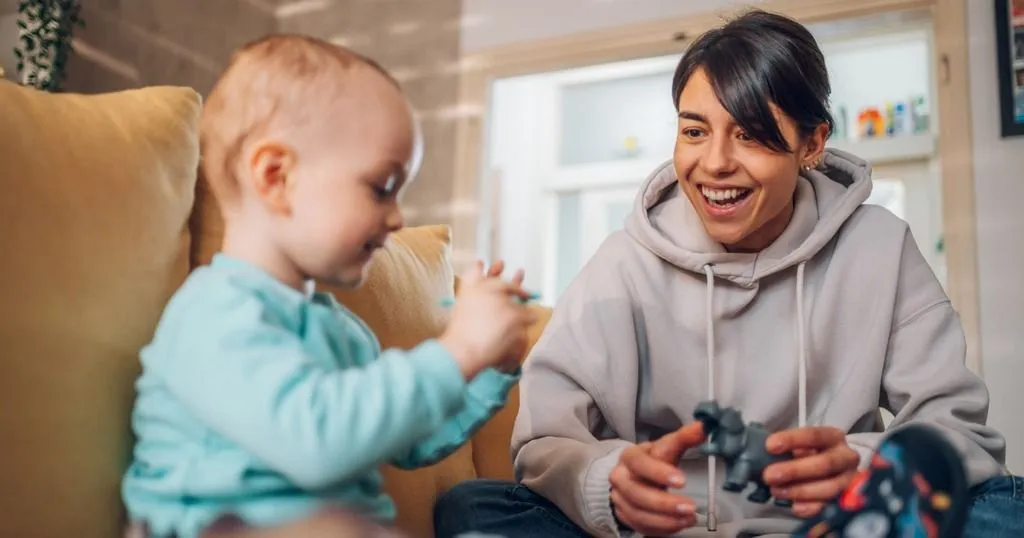
We've all been there: getting a toddler to do what you want is a real challenge. Especially when you're clearing away toys. So, what should you do in this situation? Researcher Larzelere and his team studied how behavioral modeling and collaborating can help. Not just during the clean-up, but to improve children's future behavior as well. Their mission? To provide enough detail with their research to really help parents.
Modeling the right behavior
Many examples of developmental psychology research have demonstrated the effects of modeling on behavior, including prosocial actions, antisocial behavior, and coping strategies. But what about noncompliant behavior? As we all know, it's very common for young toddlers not to listen to their parents. To elaborate on existing theories of effective parenting, it would be valuable to know how best to respond to noncompliant children.
The best way to do that, is to get really specific about what you're studying. That's why the researchers from this study distinguished between two types of behavior modeling: indirect and deliberate modeling. Indirect modeling means that children simply observe adults' behaviors, without the adults trying to get their attention. With deliberate modeling, on the other hand, the adult actively encourages the child to observe and imitate their behavior.
Let's work together
They also examined the effects of collaborating, which is a more direct way to get a child to cooperate. It also relies more on the relationship between a parent and a toddler. Research shows that having these kinds of interactions at a young age has a positive impact on children's development. For example, it helps to strengthen their compliance, self-regulation, and conscience development. Knowing more about the effects of collaborating when a child is noncompliant may help parents to foster the right environment to improve future behavior.
Immediate and long-term effects
So, what kind of effects were Larzelere and his team looking for?
First, they examined the immediate effects of modeling and collaboration on a toddler's compliance. In other words: were the children more likely to help their mothers in clearing away their toys? Second, the researchers examined the long-term effects on behavior control, after 2 and 16 months.
By studying multiple time intervals, as well as two different types of modeling, they were able to study these behaviors in great detail.
Coding behavior in mother-toddler interactions
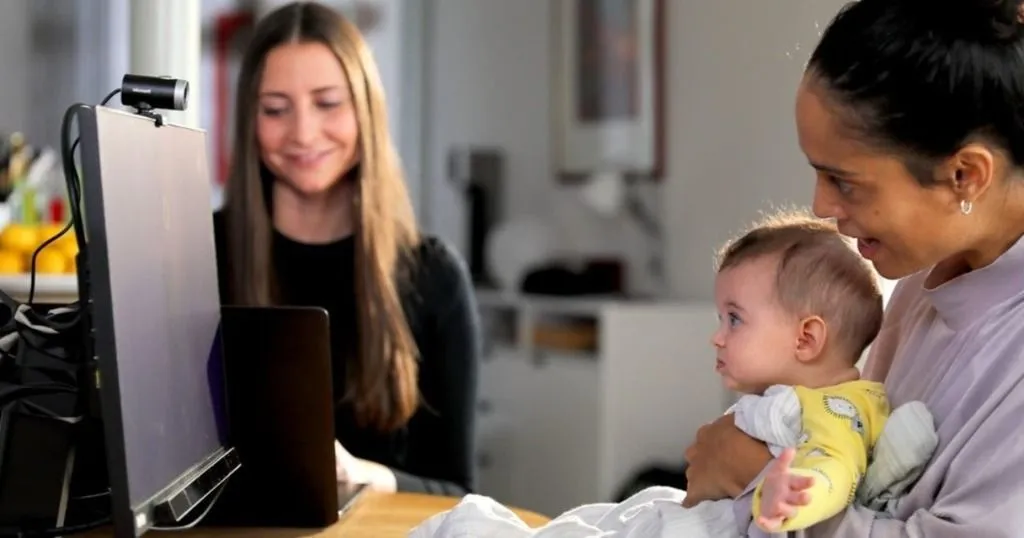
During their experiment, the researchers observed 85 mother-toddler pairs during a 5-minute clean-up task in the laboratory. Using The Observer XT, coding behavior continuously was an easy task for the research team.
Other measures included questionnaires about child behavior and discipline practices, as well as detailed descriptions of discipline episodes. To improve their results, they also considered possible confounding variables.
The researchers expected both modeling and collaboration to have a positive effect on cooperation, as well as long-term child behavior. They also hypothesized that deliberate modeling would have a greater effect than indirect modeling.
FREE TRIAL
Try The Observer XT yourself!
Request a free trial and see for yourself how easy behavioral research can be!
-
check_circle
Work faster
-
check_circle
Reduce costs
-
check_circle
Get better data
Free Trial
arrow_forward
Collaboration is key
Their results showed that both forms of modeling and collaborating were immediately effective in getting toddlers to cooperate. Collaboration was especially effective, they found, when toddlers were not cooperating at the beginning of the clean-up task.
And what happened after the experiment? Surprisingly, when reviewing long-term results, only collaborating predicted any significant improvements in toddlers. After 2 months, toddlers showed fewer externalizing behavior problems. Furthermore, the children showed greater behavior control after 16 months.
As the researchers hypothesize, these results may reflect the benefits of a positive parent-child relationship, where collaboration is common. This type of interaction may help to model larger values, such as cooperation, working together, and staying on task.
Recommendations for parents
Based on these results, what can Larzelere and his team recommend?
For parents, it may be a helpful strategy to collaborate with their young children when they're not listening. For example, handing them a toy and asking them to put it away. Or making a deal to finish a task together. Specific recommendations like these are more meaningful than advice like "just be positive" or "don't be harsh."
Reference
Larzelere, R.E.; Ritchie, K.L.; Knowles, S.J.; Curtis, J.; Lin, H.; Oliver M.G.; Bigler, J.F.; Larzelere, W.A. (2022). Immediate and longer-term effects of modeling desired behavior and collaborating when toddlers are noncompliant. Journal of Child and Family Studies, https://doi.org/10.1007/s10826-022-02367-1.