The coronavirus has greatly affected our lives and our work the last few months. The pandemic that began in March 2020 put high pressure on hospitals, emergency services, and healthcare institutions, among others. The coronavirus is still wandering and continues to cause infections. Can simulation-based training play a role in preparing for another outbreak or other similar crises?
Why organize simulation-based trainings in times of crisis?
Researcher Dieckmann and his team published an article in the journal Advances in Simulation in which they describe the potential of simulation to prepare and improve hospital responses to outbreaks like COVID-19. Practice through simulation can reduce the cognitive load of the staff involved in patient care, thereby helping to reduce errors in times of pressure and exhaustion.
Moreover, findings from such training sessions can help in identifying and shaping learning goals, staff preparedness, improving systems and protocols, and ultimately patient safety.
According to the authors, simulation can play a role within several layers:
-
1.
Educational: the (re) qualification of personnel
For example by focusing on infection prevention for healthcare professionals, dealing with an agitated COVID-19 patient, and ensuring clear leadership and followership roles where needed.
-
2.
System: understand and optimize workflows, bottlenecks, dependencies
For example by focusing on optimizing the layout and equipment available, testing systems and improving processes, optimizing flow of patients, or dealing with the lack of equipment.
-
3.
Personal: dealing with the emotional strain of the situation
All staff should informally share experiences and consider ways to keep healthy.
When conducting simulation-based training sessions, a feeling of safety is very important, especially in this setting, as participants may be very anxious and overwhelmed by the protocols and guidelines.
Preparing, running, and debriefing simulation sessions
Simulation can be a useful tool in the development of new standard operating procedures and policies needed to respond to crises like COVID-19. Besides preparing and running the simulations, debriefing the sessions is central to learning as well. Debriefing facilitates recall and insight, clarifies learning points, builds trust and self-confidence, and improves (team) performance.
Using a video feedback tool, such as Viso, to create and play back audio- and video recordings of the simulation sessions, allows adding feedback with personalized markers. While playing back the recordings during debriefing, participants will realize what happened, discuss marked events, and consequently gain deeper insight. The debriefing can also be used to inform relevant others in and beyond the organization about the findings.
FREE DEMO VISO
Capture skills training sessions
Request a free demonstration to find out why AV recording tool Viso is the right tool for your educational institution!
-
check_circle
Easy-to-use solution
-
check_circle
Train and educate, enhance teamwork
-
check_circle
Immediate playback of recordings
Get your Free demo
arrow_forward
Improve the response
The tables included in the article of Dieckmann et al. provide an extensive overview of areas to focus on, learning goals, target groups, methods, and practical considerations to conduct simulation sessions and improve the response to infectious disease outbreaks like COVID-19. Because of the infectiousness, extra attention should be paid to prevent contamination, such as using personal protective equipment, clarifying routines, and which equipment to use and which not.
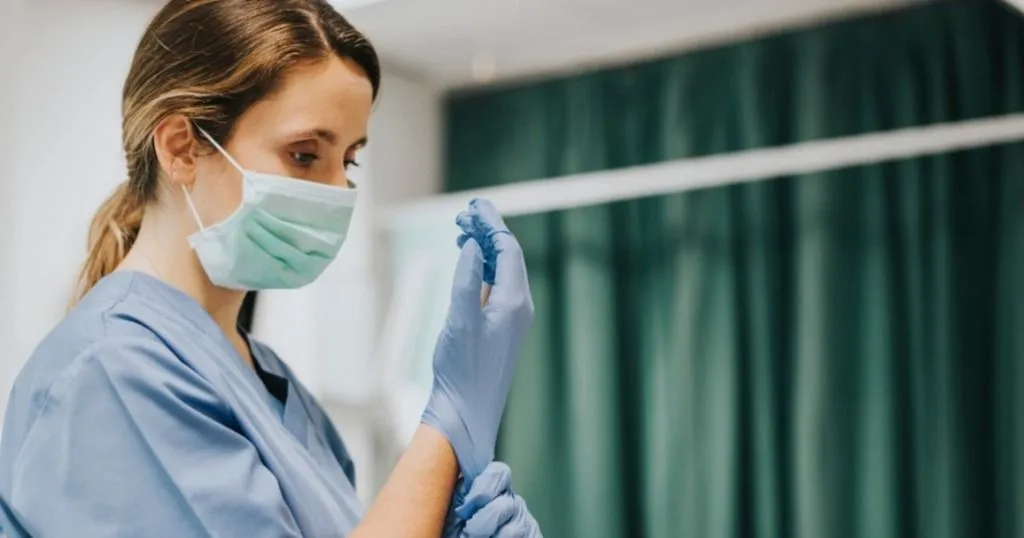
The use of personal protective equipment, such as a face mask, reinforces the need for teams to communicate very clearly. By wearing a mask, is will be less clear what people say and it will disrupt lip-reading and the understanding of facial expressions.
Advance team performance and self-confidence
Simulation-based team training will improve team preparedness so that caregivers can treat patients safely and self-confidently. Running the scenarios support practicing core skills and develop know-how to control the emergency.
Reference
Dieckmann,P.; Torgeirsen, K.; Qvindesland, S.A.; Thomas, L.; Bushell, V. & Ersdal, H.L. (2020). The use of simulation to prepare and improve responses to infectious disease outbreaks like COVID-19: practical tips and resources from Norway, Denmark, and the UK. Advances in Simulation, 5 (3), https://doi.org/10.1186/s41077-020-00121-5