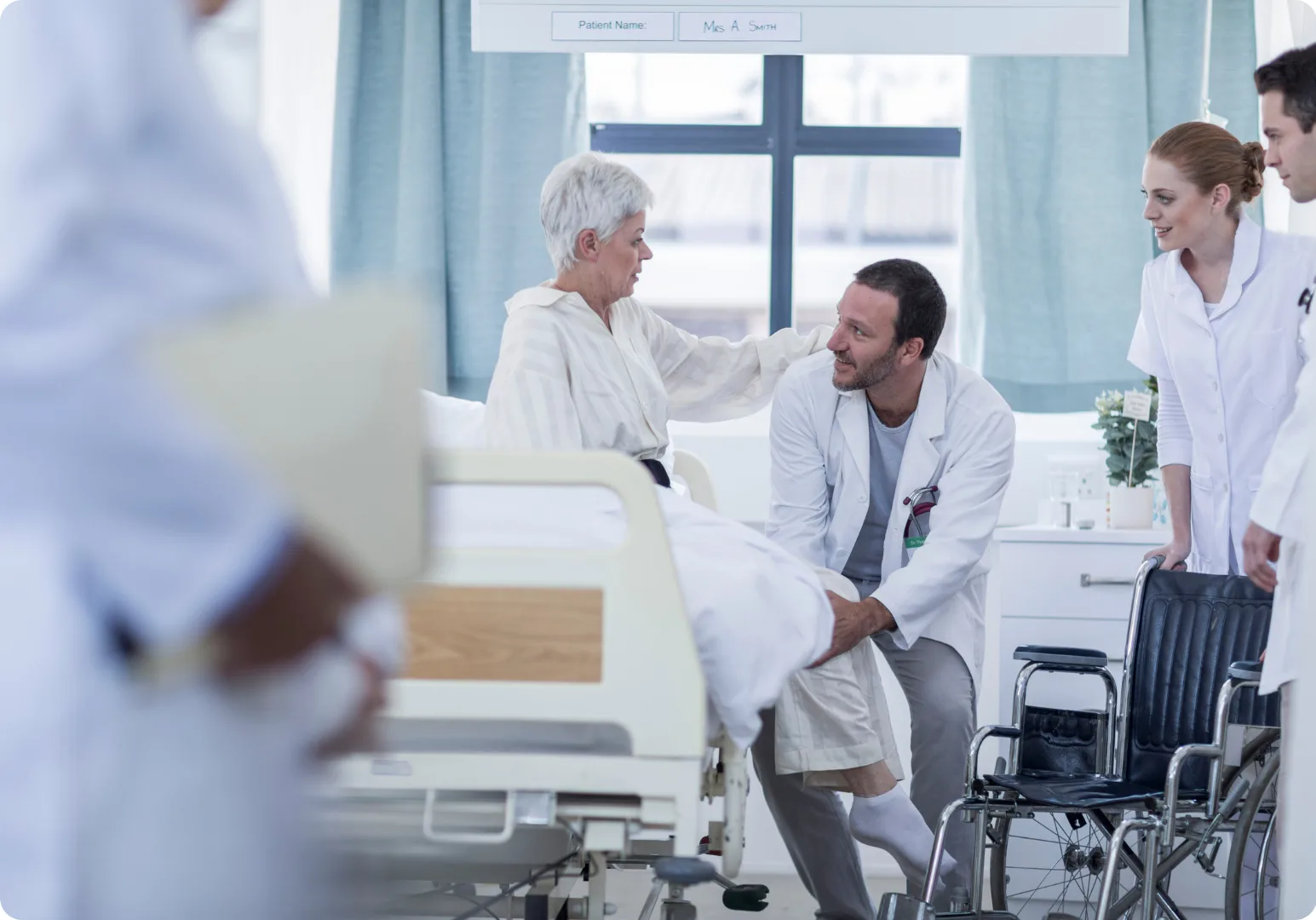
You've just finished a full day of skills training with three educators, eighty students, and a thick pile of feedback forms. One form says, "good communication." Another, for a very similar performance, says "work on patient rapport." Both educators are experienced and both are sincere, yet the student walks away unsure which advice to follow.
Practical assessment is a core part of nursing and allied health education. In many programs, it takes the form of an OSCE (Objective Structured Clinical Examination). Students move through a series of short tasks, such as taking a medical history, dressing a wound, or guiding a patient through an exercise, often with an actor playing the patient. However your program organizes it, the aim is to give every student an equal opportunity to show their skills.
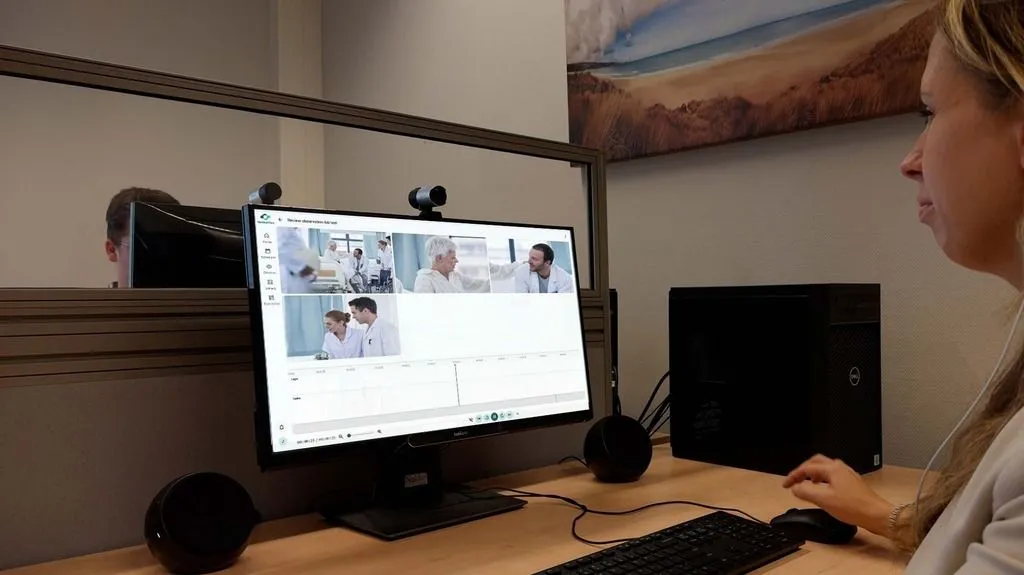
In the absence of video, feedback still depends on what each educator noticed, remembered, and managed to write down in a few busy minutes. When a performance is recorded, educators and students can return to what happened instead of what someone recalls and dictates in the moment. Continue reading to learn why video feedback works in simulation-based training and how you can build it into your own training and assessments, starting small.
The feedback challenge in skills assessment
Why consistency matters
Every practical assessment, from a weekly practice session to a final exam, aims to be fair and consistent. In practice, that is not always easy. Scores can differ quite a lot depending on who is watching, especially for communication skills, such as explaining a treatment in a way the patient understands. A second pair of eyes helps, and that is exactly what video recording and debriefing makes possible for every performance.
Educators usually watch each performance live, and only once. Every educator notices different things, and over a full day of sessions, attention naturally fluctuates. As a result, students receive feedback that reflects the observer as much as the performance.
Research from paramedic education shows this clearly. In large-scale exercises for paramedic students, scores from experienced observers differed considerably from one observer to the next. A detailed analysis of video recorded from several camera angles gave instructors a clear and objective picture of what happened (Perry et al., 2022).
What students gain from feedback they can act on
Clear feedback tells students exactly what to repeat and what to refine, while varied feedback leaves them guessing where to improve. Time plays a role, too. Practical tasks often last only 5 to 10 minutes, which leaves educators little room for detailed comments, and written feedback frequently reaches students long after the moment has passed.
The quality and immediacy of feedback shapes how competent and confident your graduates feel when they meet their first real patients. It also shapes how your program is seen by students, clinical partners, and accreditation bodies.
Why video feedback works
What research shows about student outcomes
A recent study in nursing education backs this up. At Atatürk University in Turkey, 65 first-year nursing students learned to place a feeding tube through the nose. Half of them recorded and reviewed their own performance, while the other half trained without video. Both groups improved, but the video group scored considerably higher on the practical skills test (Yavuz et al., 2025).
Video makes a visible difference
Nursing students who reviewed their own recorded performance scored an average of 87.6 points on a practical skills test. Students who trained without video scored 61.3 (Yavuz et al., 2025).
View the researchopen_in_new
Video feedback works because students observe themselves, reflect on what they see, and connect it to expert input from their supervising trainers. In simulation-based training, debriefing is where much of the learning happens. Watching a recording alone is a good start, but discussing it with an educator turns what students see into clear next steps. The paramedic study mentioned earlier also recommends video as a debriefing tool (Perry et al., 2022).
Students learn more when they feel at ease
AIXTRA is the competence center for training and patient safety at RWTH Aachen University, where students in medicine, nursing, midwifery, and physiotherapy train side by side. A recent study from AIXTRA found that students who felt more comfortable in group learning settings also reported greater learning success in a hands-on clinical skills course (Lenes et al., 2026). The authors recommend structured, behavior-focused feedback and low-stakes opportunities to practice. They also suggest building up step by step: first observing, then guided practice, and only then performing in front of others.
Video fits this approach well. Reviewing a recording privately, at their own pace, gives students a calm space to reflect that a quick conversation in a busy corridor rarely provides.
Standardizing feedback across your program
Feedback becomes more consistent when you pair video with a clear checklist. You define the competencies, such as patient rapport, clarity of communication, and clinical reasoning. Then you describe each one as behavior you can see and hear. As our complete guide to behavioral observation puts it, this is how "seemed" becomes "happened."
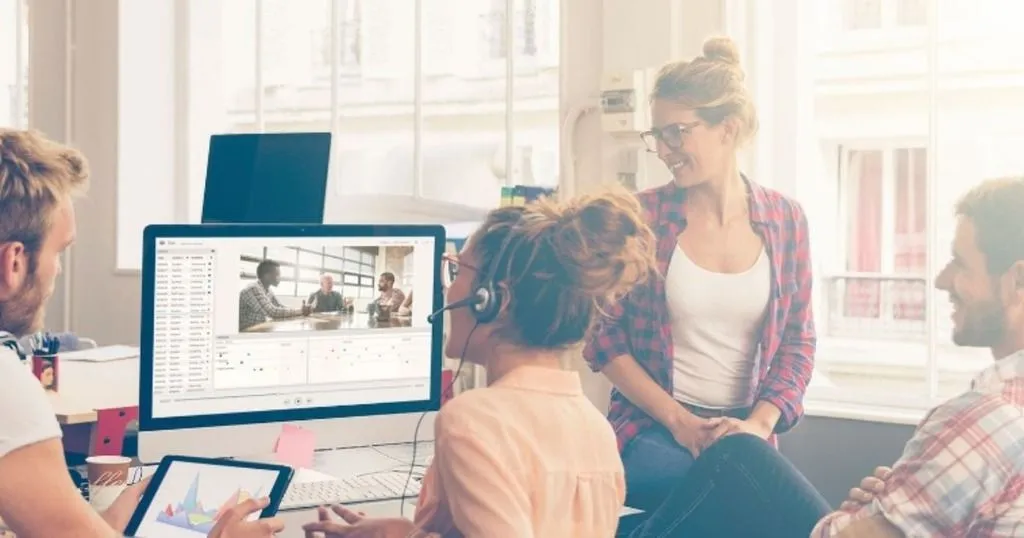
Once everyone works with the same checklist, several educators can watch the same recording and score it. If their scores differ, they can watch that moment again together and see why. These conversations help educators agree on what good performance looks like, so their judgments grow closer over time.
Real-world example
Researchers in the United States created a list of 12 leadership behaviors, such as sharing information and assigning tasks, each rated from poor to excellent. Using The Observer, two trained raters, who were not leadership experts, scored each of 360 video recordings of real care for seriously injured patients. Together, their ratings proved highly reliable, and teams whose leaders scored higher also delivered better patient care.
View the publicationopen_in_new
This also helps when an external review asks how you keep assessment fair and consistent: you can show the recordings and scores that support your approach.
Adding video feedback to simulation-based training
How to add video feedback: before, during, and after
Before the session
- Create your checklist: which behaviors, visible and audible, show that a student is competent?
- Make sure all educators understand the checklist and how to use it for feedback.
- Tell students which skills the session focuses on, so they know what to look for when they watch their recording.
During the session
- Record each task or scenario.
- Educators score in real time, using the shared checklist.
- Mark key moments as they happen, so they are easy to find later.
After the session
- Debrief: educator and student review the marked moments together and agree on what to keep and what to change.
- Individual review: the student watches the full recording, reads the feedback, and reflects.
- Track progress: in a later session, a new recording shows the students how their skills have developed.
In practice: During a patient interview, the camera records the full conversation. The educator scores communication behaviors such as open questions, empathy, and clarity, and marks two moments worth discussing. That same day, the student watches the recording, reads the educator's notes, and knows exactly what to focus on next time.
Free download
See how NoldusViso supports video feedback
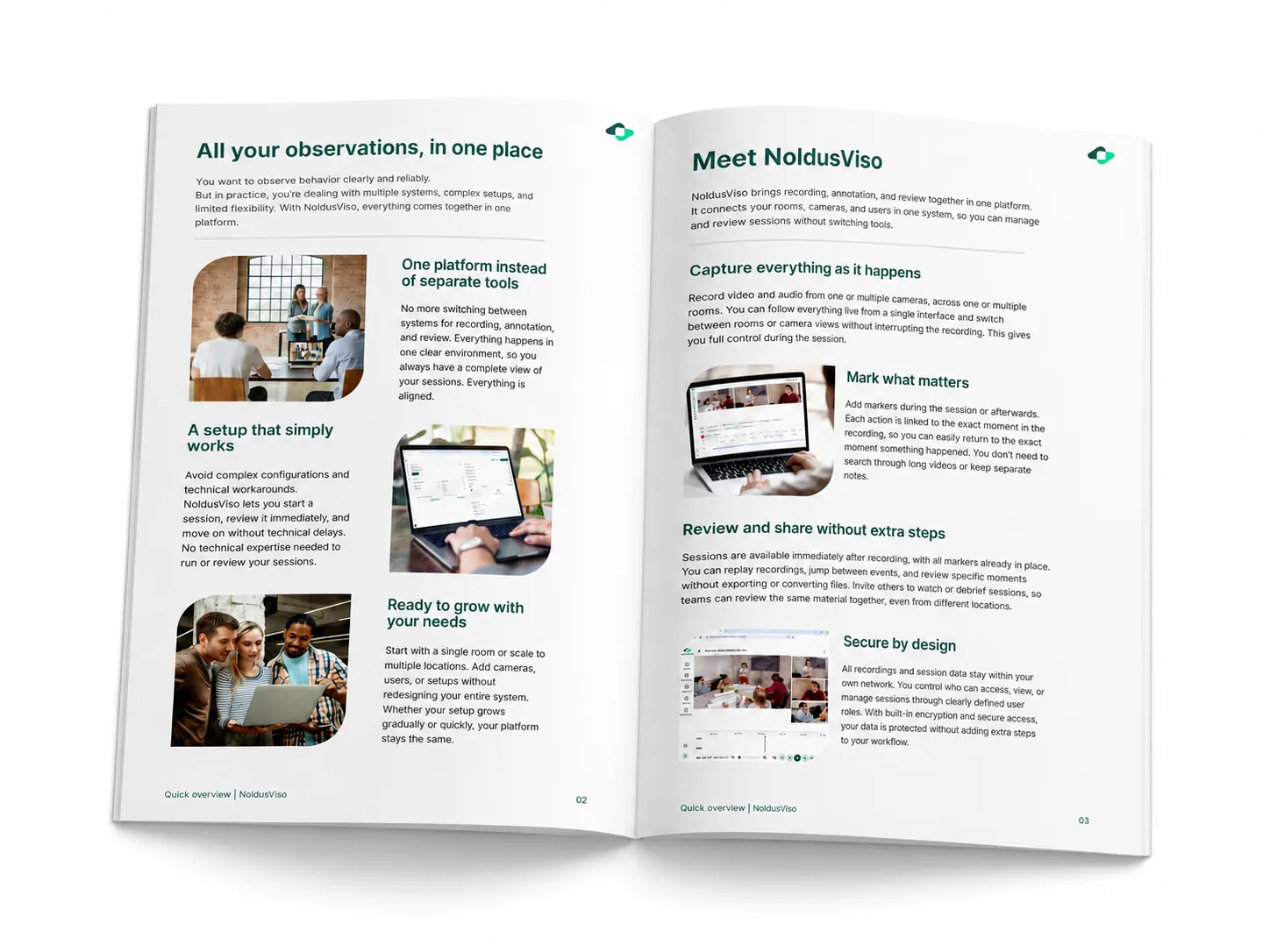
Discover how NoldusViso helps you record, mark, and review skills sessions across multiple rooms. Download the leaflet to explore the features.
Privacy, consent, and ethics
Recording in education calls for clear agreements and procedures, so make them part of your standard process. Ask students to sign a recording agreement at the start of the program. Store recordings securely and give access only to the student and the educators involved. Decide how long you keep recordings, in line with your institution's rules, and use a system that deletes them automatically after that period. Most importantly, explain the purpose openly: recordings exist to help students learn and grow.
Where NoldusViso fits
With NoldusViso, you can record in several rooms at once and mark key moments during and after the session. Recordings are ready to review right afterward, and role-based access ensures that only the right people see the right videos. For teams that also conduct deeper research on their training methods, The Observer adds detailed behavioral coding and analysis options and lets you assess how different people coded the same recording.
Clearer feedback for students and educators
Video gives every practice session a second life. Students can revisit what happened, understand it, and build on it. They gain clarity and confidence, while educators get a shared reference point and your program builds fair, consistent assessment that it can clearly demonstrate.
The same approach works wherever people learn practical skills, whether they are training to become nurses, physiotherapists, or paramedics. Want to explore further? Start with the complete guide to behavioral observation, or read why video feedback works in education.
Ready to bring video feedback to your skills training? Download the free white paper Video feedback in skills education: 10 reasons why, or start a conversation with our team about your program and goals.
References
- Lenes, A.; Klasen, M.; Bohorquez-Mendoza, G.; Gecht, J.; Sopka, S. & Vogt, L. Psychological determinants of successful practical teaching: personality traits, self-efficacy, and subjective perception in a hands-on clinical skills course. BMC Medical Education 2026, 26, 1069.
- Perry, O.; Jaffe, E. & Bitan, Y. Dynamic Communication Quantification Model for Measuring Information Management During Mass-Casualty Incident Simulations. Human Factors 2022, 64(1), 228-249.
- Rosenman, E.D.; Grand, J.A. & Fernandez, R. Validity evidence of a resuscitation team leadership assessment measure for use in actual trauma resuscitations. AEM Education and Training 2025, 9(2), e11061.
- Yavuz, B.; Koç, G.; Yüce Başaran, H.D. & Çiftçi, B. Watch and learn your performance: The effect of self-assessment with video recording on nursing students’ knowledge and skills of nasogastric catheter placement. A randomized controlled trial. Nurse Education in Practice 2025, 83, 104251.