Behavioral observation is essential to reliable research, training, and clinical work. Learn what it is, why it matters, and how to implement it effectively without sacrificing time or consistency.
Frame by frame. Eight hundred hours of manual observation, behavioral coding, and analysis to capture subtle expressions during social interaction (smiling, eye contact, hesitation) in a single behavioral study.
This challenge isn't unique. Whether you're conducting research, running training programs, or assessing clinical competency, behavioral observation is essential, but the traditional method is a time sink that doesn't match the scope and complexity of modern work.
The complete guide to Behavioral Observation: What it is and how to do it right
Behavioral observation is everywhere in serious research. It shows up in psychology research measuring human cognitive processes, learning patterns, and social interaction. In education and training programs assessing professional competency and skill development. In clinical settings validating therapy outcomes. In child development research and behavioral change across the lifespan.
The method is foundational and that's exactly why the friction around how it's done matters so much.
This guide shows you what behavioral observation is, why it's critical to research that holds up, and how to implement it so that reliability doesn't require your team to sacrifice time or consistency. You'll understand the method's real strengths, where it struggles, and how to navigate both. By the end, you'll have a clear framework for designing an observation program that scales with your research ambitions.
What is Behavioral Observation?
Defining behavioral observation in modern research
Behavior is observable and measurable, the things people say and do in specific moments. Observing that carefully is where understanding begins.
Behavioral observation means creating a structured, detailed record of what happens — this is behavioral coding. Usually video analysis is involved, sometimes live notes. The goal is to capture what actually occurred, without interpretation or bias. A therapist's tone. A researcher's hesitation. A student's eye contact. These are observable facts, not impressions.
The power of observation is that it replaces "seemed" with "happened." Instead of "The patient appeared anxious," you have a record showing specific markers: speech pace, facial expression, body position. That shift from subjective feeling to documented behavior is what makes structured observation reliable.
This matters whether you're a researcher studying cognition, a trainer assessing skills, or a clinician evaluating progress. The method is the same, but the application changes.
The tools that enable such work have evolved faster than we might realize. Today, behavioral observation software streamlines the process, but the foundation remains unchanged: careful attention to what actually happens.
Why observation matters (across disciplines)
Behavioral observation isn't niche, in fact, it's foundational to reliable research and training across multiple fields and application areas.
Psychology and neuroscience research, including studies on learning, cognition, memory, social behavior, all depend on behavioral observation to move beyond correlation into mechanism. You don't just measure outcomes; you measure how subjects interact with tasks, with each other, and with stimuli. That level of detail is what lets researchers understand move beyond correlation to cause and effect.
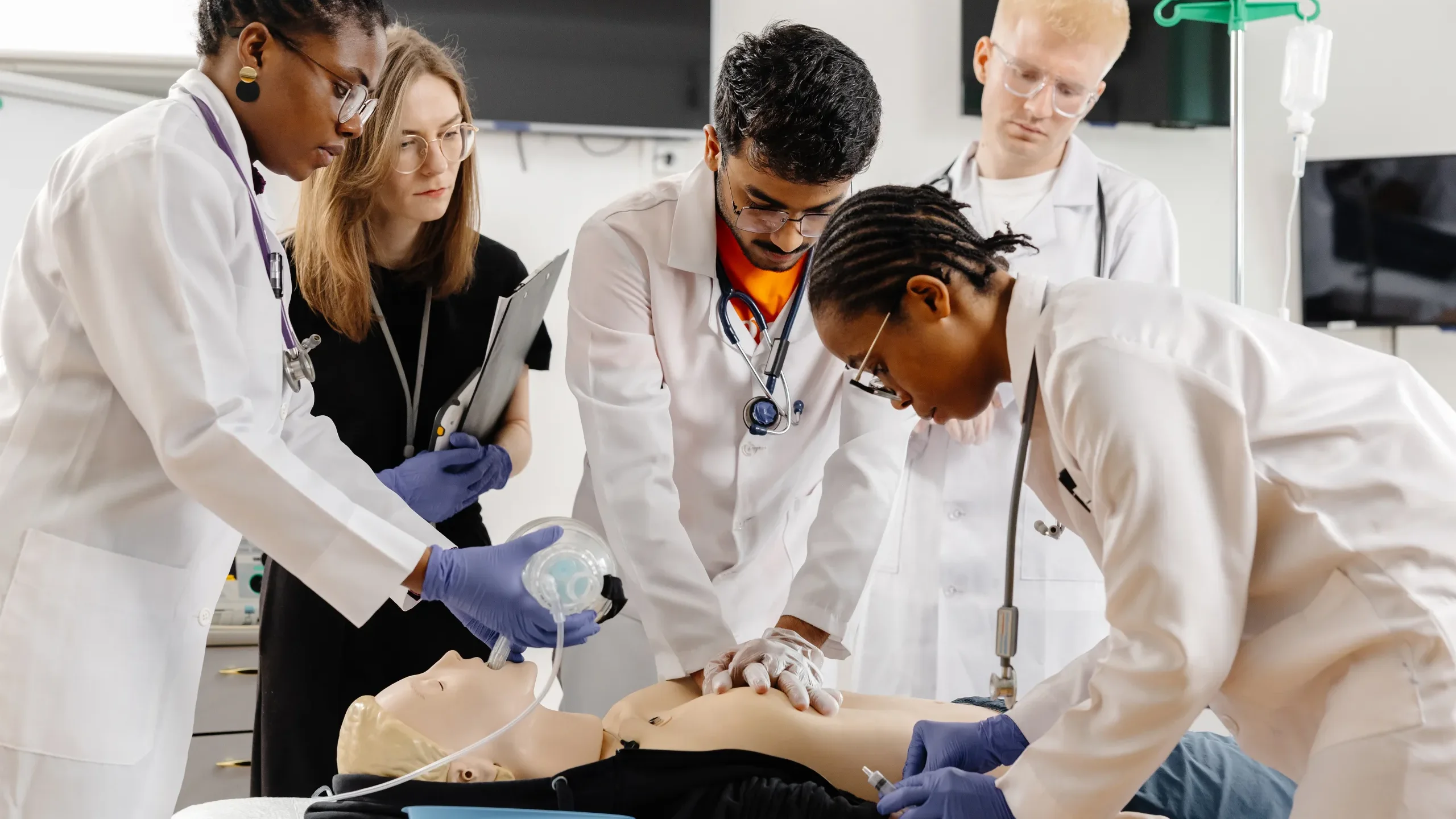
Education and training programs, including medical and nursing education, use behavioral observation to assess professional competency and skill development in ways that grades and exams cannot. You're not evaluating knowledge; you're evaluating performance. A nursing student can know the steps of a procedure where behavioral observation shows whether they actually do them, in sequence, under pressure. Medical educators assess clinical skills through the same lens of structured observation of actual behavior.
Clinical competency and research relies on behavioral observation to measure therapy outcomes and skills with precision. Instead of asking, "Did the therapy work?", you can measure whether "Patient displayed 47% more positive affect markers in session 10 versus session 1." That's powerful, publishable data driving evidence-based methods into practice.
Professional interview and interaction skills assessment rely on behavioral observation to evaluate how someone communicates, manages pressure, builds rapport, handles conflict, or responds to feedback. You're documenting exactly what changed instead of guessing whether the trainee "got it."
The common thread across all these fields is that behavioral observation transforms subjective impression into objective, comparable, and reviewable data. From that, insights and actionable measures can be taken. That shift is why the method is trusted, and why getting it right matters so much.
Types of behavior
Behavioral observation captures different types of behavior through behavioral coding.
Overt behavior is what you can directly see and measure: hand movements during a procedure, eye contact during conversation, or a pause in speech. These are the visible actions you are recording.
Covert behavior is internal: thinking, hesitation, uncertainty. You can't see it directly, but it manifests through facial expressions, tone, or timing. That's where careful observation catches the clues like a furrowed brow, a longer-than-usual silence, or a shift in posture. These subtle markers reveal what someone is experiencing.
Social behavior is how people interact. This includes who speaks first, how they respond to each other, and whether there's rapport. In training contexts, this is critical, as you are watching how someone engages with another person rather than just individual performance alone.
Good observation captures all three types of behavior in context. It's not enough to see the action (overt), you also need to notice the hesitation or confidence markers (covert), and you need to understand the relational dynamics (social). That's what makes observation in training and education so powerful — you're seeing the whole picture.
The challenges with traditional observation methods
Observing behavior sounds simple. Watch, notice, remember, evaluate. In practice, it's much harder than it sounds, especially when you're in the moment and there's too much happening at once.
You don't want to miss what happens in real time
Real-time behavioral observation has a core fundamental problem: you can't be everywhere at once, and you can't rewind what you've already seen.
For example, a trainer watches a student practice a clinical skill. The trainer catches most of it but misses the exact sequence of hand movements. Or, a supervising counselor observes a session, and they notice the therapist's tone shift, but they don't catch the micro-expression on the client's face that triggered it. Perhaps a teacher watches group interaction and by the time they focus on one student, they've missed what another student did.
Once the moment passes, it's gone. You're left with impression, not data, and impressions are incomplete at best.
You need consistency and structure in your observations
The same behavior looks different depending on who's observing and what they're focused on.
Imagine a student performing a medical procedure in 45 seconds. One observer codes it as efficient, yet another sees it as rushed. Same action, different judgment. Neither is wrong, they're just seeing through different lenses.
This inconsistency is invisible while you're observing. It only shows up later, when you compare notes with a colleague and realize you saw very different things.
You need to capture the details that matter
Observing in real time creates a problem: too much information, limited working memory, no rewind or review.
You're watching a student's clinical assessment. You need to track: hand positioning, communication clarity, patient engagement, procedural steps, timing, eye contact. That's a lot to hold simultaneously while you're also trying to stay present in the moment.
So you let some of it go. You focus on what seems most important and lose track of the rest or you observe only at certain moments. Later, when you try to give feedback, you realize you can't recall the specific sequence of events or some events are missing altogether. You remember the overall impression, but not the details that matter.
This is why observation-based assessment often relies on general impressions ("strong performance") rather than specific, actionable feedback ("you did X well, and here's how you could improve Y").
You need to observe without cognitive overload
Real-time observation while doing something else is cognitively expensive.
If you're the teacher in the room, you can't simultaneously teach and observe. You're managing the group, answering questions, watching the clock. The observation happens around the edges of everything else you're doing.
If you're watching from the sidelines (like in a supervision or training context), you can focus more, but you're still holding multiple things: what you're supposed to look for, what you've already seen, what you think is important, what you should write down. These are all important feedback points for your trainees.
The result of real-time overload: fatigue. After 30 minutes of observation, your attention wavers. After an hour, you're losing details you would have caught earlier. You become an unreliable narrator of the behavioral events that are so important to your work.
You need to be able to review what you observe
Real-time observation is also permanent once it happens. You see something once. If you misread it the first time, you don't get a second chance. You can't slow it down, you can't pause and think about what you just saw.
This matters especially for brief behaviors: a facial expression, a hesitation, a tone shift. These happen in milliseconds. See it clearly the first time, or miss it entirely.
The result is that subtle, important behaviors go unnoticed.
The shift to digital observation and automation: video analysis
From live observation to recorded observation
Tools have fundamentally changed what's possible when you observe.
Before video, observation was live and gone. You watched, you noted what you remembered, and that was it. You got one chance to see it right.
Video changed everything. Suddenly you could record behavior once, then review it as many times as you needed. You could slow it down, rewatch ambiguous moments, catch details you missed the first time: a micro-expression, a hesitation, a pause. Things that happen too fast to see in real time become visible when you slow down and replay.
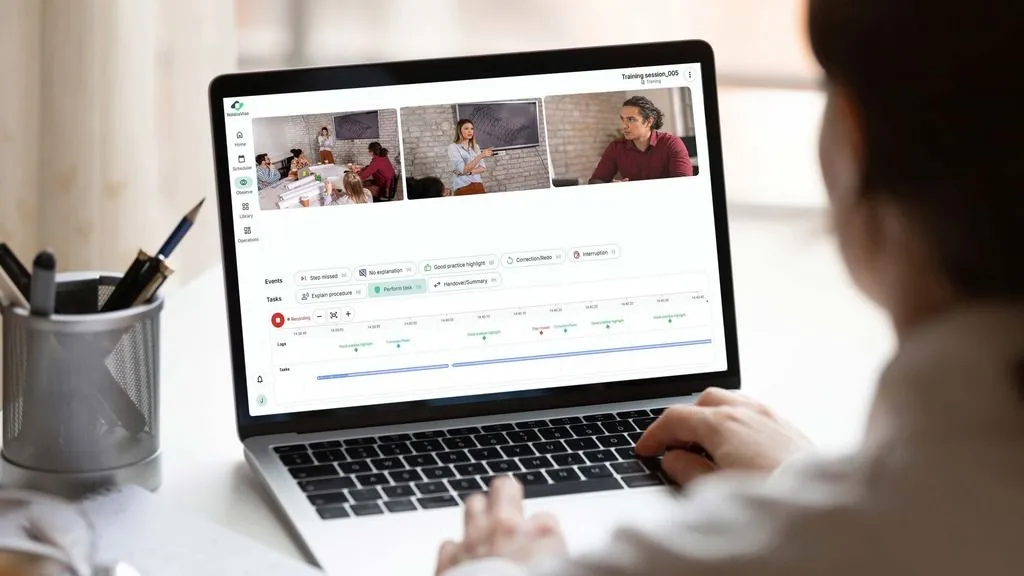
Digital video platforms and video analysis took this further. Easily timestamp moments or jump between clips. Compare the same behavior across different recordings and derive data directly from your observations. Annotation tools like The Observer and NoldusViso let you mark observations directly on video without transcribing notes later.
Each shift made behavioral observation itself more reliable and less dependent on real-time attention.
How technology enables better behavioral observation
The shift from manual to digital observation isn't just faster. It also makes observation itself more effective.
Replay ability is the gamechanger. Digital video lets you review what you observed multiple times at normal speed, slow speeds, or rapidly to advance downtime. You can also zoom in, rewatching moments you were unsure about and getting a closer look. Catch details that flash past too quickly in real-time observation.
Timestamps and markers, along with easy-to-use marking methods, let you organize your observations without pulling attention away from watching. Mark important moments as they happen and revisit them later. Compare the same behavior across different recordings but using the same annotation criteria. These are the patterns you'd certainly miss watching live.
With technology, collaboration becomes easier, as well. Multiple people can watch the same recording and note what they see, then compare observations directly. You discover where you agree and where your interpretations diverge. That transparency builds confidence in what you've actually observed and allows for refinement of coding schemes and behavioral coding in general.
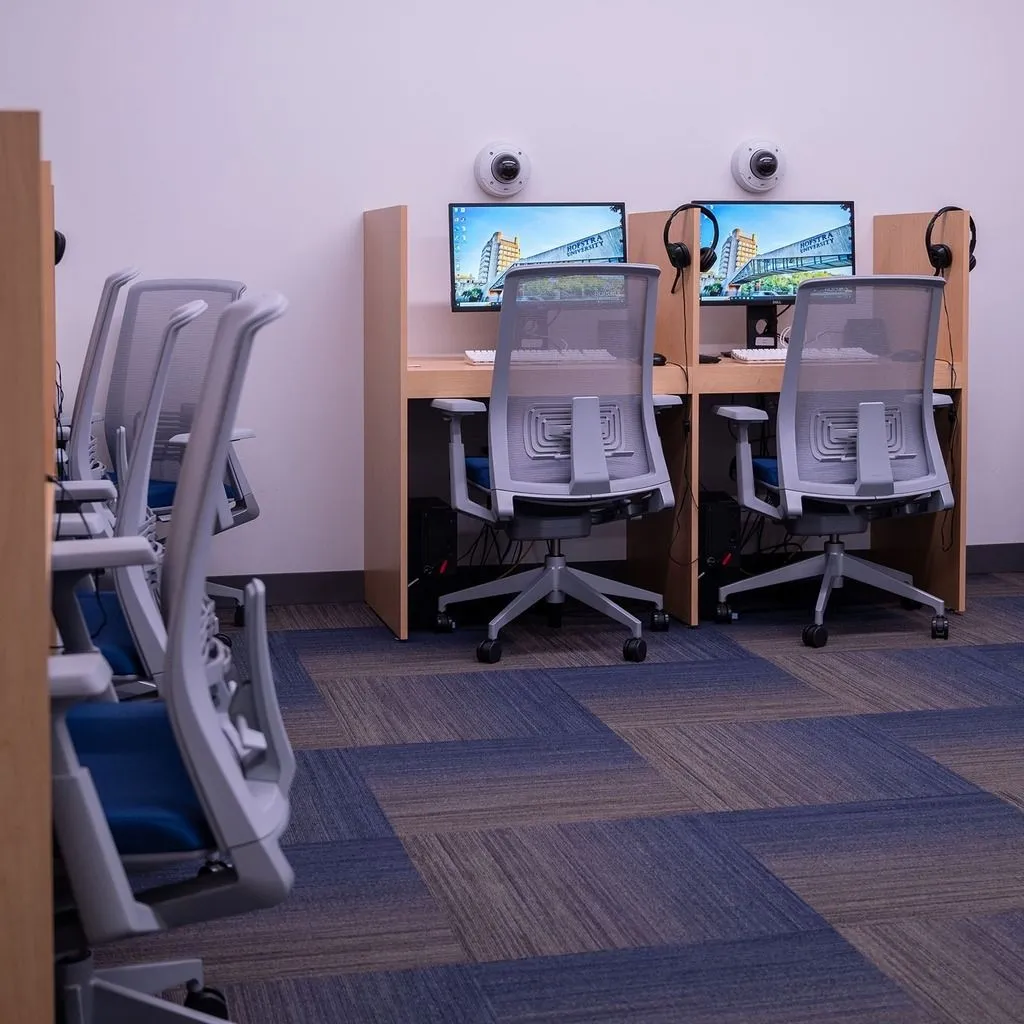
It is only with digital observation tools that scale becomes possible. One observer with good behavioral observation software can watch and document substantially more material than manual real-time observation allows. Larger groups, more sessions, more thorough observation, within realistic time.
Smart observation tools
Many trainers wonder: will video analysis tools replace my judgment? The answer is no. These tools are designed to support you, not replace you.
Tools excel at recognizing structured observation patterns: interaction timing that reveals confidence or hesitation, facial expressions that signal engagement or confusion, gaze patterns that show attention or avoidance. Software can flag moments where these patterns appear, without you having to watch every second of video. That's powerful for speed and for interpretation.
Tools also enable collaboration and data collection across distances. Multiple observers can watch the same recording and annotate simultaneously, even if they're in different locations. Observations can also be spread across geographies, creating a more diverse data set. This means you can bring in expertise and information from elsewhere, without everyone needing to be present at the same time or place. Modern observation platforms like NoldusViso or The Observer make this seamless.
Of course, tools also have real limitations and require humans in-the-loop. For example, ambiguous behavior, the moments where context matters, still requires your discernment and interpretation. Is that pause a thoughtful moment or avoidance? Is that facial expression genuine confusion or polite attention? These questions need human intelligence informed by training context and observation expertise.
Think of observation tools as a helper, not a decision-maker. Tools point out moments worth watching while you decide what they mean. That's where the real benefit comes in: tools save you time by finding the important moments, and you bring the expertise to interpret them correctly.
Best practices for Behavioral Observation
Understand that behavior is automatic
Most people underestimate habit's influence. For example, research performed by Rebar and colleagues found that 65% of all actions are initiated out of habit, and 88% of actions are performed on autopilot. This means the majority of what people do each day is driven by automatic processes, not conscious deliberation.
When you're teaching someone a new skill, they're not just learning the steps. They're trying to override automatic patterns and build new ones, which is cognitively demanding. It's why people slip back into old habits, why training can take time and repetition, and why feedback alone often isn't enough.
This matters for observation: watch not just whether someone does the skill right, but where they hesitate, where they speed up, or where they revert to old patterns. Those moments of struggle are where learning is actually happening.
Understanding this helps you give better feedback, design better training programs, and establish realistic expectations about behavioral change.
Know what you're looking for before you start
This sounds basic, but it's where observation often goes wrong.
Before you observe, be clear about what matters. What specific behaviors or moments are you looking for?
- Confidence markers
- Communication patterns
- Clinical procedure steps
- Hesitations
Write it down. Share it with others who'll observe with you and practice to see what fits and what needs to be adjusted.
Test your focus list on a short observation first. Does it actually help you see what you intended? Does something important slip through because you weren't looking for it or it was inadequately defined? Refine based on what you learn.
This upfront clarity makes observation more reliable without making it rigid.
Observing interaction patterns and professional skills
Not all observation is about individual actions. Some of the most important behavioral data is about how people interact with each other.
In interview and interaction skills assessment, you're not just watching whether someone answers questions. You're watching how they listen, how they respond to feedback, and how quickly they recover from a mistake. You're observing their communication rhythm, their emotional regulation, and their ability to build rapport with others.
In counselor supervision, it's not just about whether the therapist asked the right question. It's about the therapeutic alliance between the parties: how the client responds to the therapist, whether there's genuine engagement between them, or where tension emerges.
In professional coaching contexts, you're observing how someone handles pressure, receives feedback, and adapts in real time within a social context.
These kinds of observations require a different focus, as you're not timing specific actions in isolation, but instead you're tracking relational dynamics, communication patterns, and behavioral responsiveness. That demands precision in your codebook, repeated coding passes, and clarity about what you're measuring.
The principle remains the same: define what you're looking for, observe systematically, and code reliably.
Multiple observers strengthen observation
One person's observation is limited. Multiple observers catch what one person might miss.
How does it work? Have more than one person watch the same interaction (or the same recording). They don't need to be in the same room, or even the same location as modern tools like NoldusViso or The Observer make it possible for observers to watch and annotate together remotely. Don't try to agree beforehand; just observe and then compare what each person noticed. What did they both catch? Where did they see differently?
Those differences are valuable. They show you where behavior is ambiguous or where personal interpretation enters. They also show you where observation was clear and consistent. Both help establish calibration and training practices for coders.
Manage video data ethically and securely
Behavioral observation generates sensitive data and it's important to treat it accordingly. Here are our top tips for managing this properly:
Ethical & Secure Video Management
A Quick Checklist
Use these key steps to ensure behavioral video data is managed ethically, securely, and responsibly.
how_to_reg
Start with consent
Subjects must know they're being recorded and observed (or your study design must have ethical justification for covert observation).
encrypted
Secure storage is critical
- Video files contain identifiable information, faces, voices, context.
- Store these files on encrypted, access-restricted servers and implement role-based permissions.
- Only people who need the files can access them.
- De-identify where possible by assigning subject ID numbers instead of names.
- Redact identifying information in transcripts.
event_busy
Establish retention & deletion protocols
When do video files get deleted? When do coded datasets expire? Make these decisions upfront and document them.
groups
Train your team on data security
Everyone handling video must understand confidentiality expectations.
verified
Keep it audit-ready
Document all of this in your study protocol, ready for checks by auditors and regulators.
Design observation workflows that stay consistent at scale and grow with you
Quality observation needs structure but leave room for flexibility and growth. One way to tackle this is to build regular checkpoints into your observation. Pause periodically to confirm your notes are clear and your observations are staying consistent over time and over observers. Modify your coding schemes to incorporate any new additions found along the way.
Use tools like behavioral observation software to handle logistics and details, while also allowing for future growth of your program. Basics, like timestamping, should be automatic and notes, should be easy to revisit. What about adding functionality as your needs shift — features like multi-room recordings and multimodal observations. Your tool should get out of the way and let you focus on observing while also leaving room for more.
Why Noldus is the leader in Behavioral Observation software
35+ years of behavioral observation expertise
Noldus Information Technology was founded in 1989 with a singular focus: behavioral observation software. That focus matters. For three decades, Noldus has invested in understanding how observation actually happens, what tools observers really need, and how to support both research reliability and practical effectiveness. That longevity means Noldus understands behavioral observation from the ground up.
Systematic behavioral coding at scale
The industry standard for detailed behavioral analysis, The Observer, is purpose-built for researchers who need precise, reliable coding of complex behavioral data. Whether you're coding interaction patterns, analyzing learning behavior, or conducting clinical research, this software provides the structured tools for systematic observation. Many research teams use it as their foundation for rigorous behavioral work.
Video observation for real-world practice
NoldusViso is built for real observation work wherever it happens. In training programs, in research labs, and in clinical settings. It excels in any environment where understanding behavior through video matters.
The software is built for practitioners, not just researchers. The process is simple: record interactions once, then review them as many times as you need. Slow down, rewatch, or compare moments. Mark what matters directly on video for future review and debriefing. No complex setup and no rigid procedures.
For trainers, NoldusViso facilitates better feedback. For researchers studying interaction or behavior change, it means reliable, detailed observation. For clinicians, it means precision in assessment.
In every context, you have the actual video recording to revisit and analyze instead of relying on memory or pen and paper alone. That's the foundation. What the software adds is consistency: making observation reliable, structured, detailed, and transparent.
Exploring behavioral research beyond observation
Observation is one dimension of understanding human behavior. Noldus also offers complementary tools for measuring emotional responses, engagement, and other behavioral indicators. Explore the full Noldus human behavior research toolkit to discover solutions for your specific research or training needs.
Commitment to supporting observation work and setting industry standards
Noldus isn't neutral on what observation practitioners need nor are we inventing solutions that don't fit the users. We actively source input from real users doing observation across disciplines and build tools around that reality.
Data security and privacy are fundamental: encrypted storage, role-based access, and compliance with relevant security and privacy legislation. For Noldus, that's non-negotiable when observation involves sensitive information.
Our approach goes beyond providing a tool and simple technical support. We focus on customer success: helping practitioners understand and get the most from their tools so that their outcomes are realized. We actively work alongside people who understand behavioral observation, through partnerships with research institutions, training programs, and clinical teams.
Next steps: Your Behavioral Observation Journey
Behavioral observation looks different across contexts.
Your next step: contact us to discuss how behavioral observation works in your specific setting. We can help you design an observation system that scales with your research or training goals.
contact_mail
Get in touch!
Or explore these resources:
Summary
Behavioral observation is a method with timeless principles and constantly evolving tools. The core idea is simple: watch systematically, observe reliably, and turn impression into actionable insight.
The challenges are real: you miss things in real time, your observations drift, details escape you, it's easy to see what you expect instead of what actually happens. Modern tools make rigorous observation feasible at a scale that would have been unthinkable 20 years ago.
The field now has clear best practices:
- Know what you're looking for before you start.
- Bring multiple observers to catch what one person misses.
- Understand the difference between observing individual actions and observing interaction patterns.
- Check alignment regularly to catch drift early.
- Manage data ethically.
- Maintain consistency at scale.
Organizations that implement these practices don't just collect better observations, they train more effectively, they give better feedback, they evaluate professional competency more accurately. They make better decisions backed by evidence instead of impression.
That's why behavioral observation matters. And that's why getting it right matters too.
References
Bocklage C, Selden R, Tumsuden O, et al. (2025). A software-based observational coding approach for evaluating paediatric dental pain, anxiety, and fear. International Journal of Paediatric Dentistry (35), 241-258. https://doi.org/10.1111/ipd.13227
Bradshaw, J., Fu, X., & Richards, J. E. (2024). Infant sustained attention differs by context and social content in the first 2 years of life. Developmental Science (27). https://doi.org/10.1111/desc.13500
Choi E, Yoo L, Shin S, and Jung D (2026). Mealtime Support by Direct Care Workers in Long-Term Care Facilities: Secondary Behavioural Analysis of Videos. Journal of Advanced Nursing (82):3135-3147. https://doi.org/10.1111/jan.70067
Kofler MJ, Soto EF, Rapport MD and Whitehead S. (2025) Ecological Validity of Clinic-Based Actigraphy for Assessing Hyperactivity in Clinically Evaluated Children with and without ADHD. Journal of Psychopathology and Behavioral Assessment (47). https://doi.org/10.1007/s10862-025-10218-8
Rebar AL, Vincent G, Le Cornu KK, and Gardner B (2025). How habitual is everyday life? An ecological momentary assessment study. Psychology & Health (18), 1-26. https://doi.org/10.1080/08870446.2025.2561149
Rochon L-J, Karran AJ, Rolon-Merette T, Courtemanche F, Coursaris C, Senecal S, and Léger P-M (2025) Cognition in the cockpit: assessing instructional modalities in pilot training simulations. Frontiers in Psychology (16). https://doi.org/10.3389/fpsyg.2025.1625321
Rosenman ED, Grand JA, Fernandez R. (2025). Validity evidence of a resuscitation team leadership assessment measure for use in actual trauma resuscitations. AEM Education and Training (9). https://doi.org/10.1002/aet2.11061