
Classroom observations including facial expression analysis
Internet and technology usage, including computers, tablets, and mobile phones, has increased exponentially in the past few years.
Read More arrow_forwardDiscover how fewer instructions and tools like Viso help students learn nursing skills more effectively and perform better under pressure.
In the calm and controlled environment of the classroom, clinical skills can seem simple. But everything shifts in real-life settings—where pressure mounts, patients are unpredictable, and multitasking is the norm.
That contrast is exactly what a group of researchers set out to explore: can nursing students still apply their skills when it truly matters?
What they discovered may challenge the way you approach teaching. Their results also reveal why rigid, step-by-step protocols might not be the most effective path to real-world readiness.
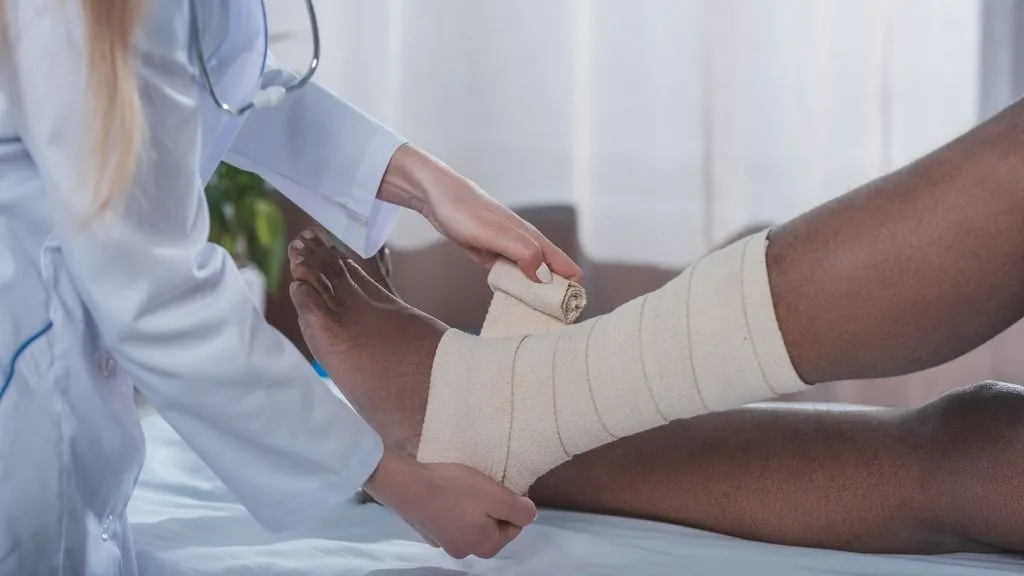
In many nursing programs, students are taught clinical skills through detailed, structured protocols. For example, a skill like bandaging. Think multiple pages of instructions, followed by demonstrations and lots of repetition. This is what experts call explicit learning: you consciously learn each step.
But what if students could learn just as well—or even better—without memorizing all the details?
Enter implicit learning. It's when students pick up skills without thinking through every motion. Instead of remembering 12 steps, they focus on the outcome: wrapping the leg so the bandage stays in place, feels comfortable, and doesn't cause pain. Think of it like riding a bike—you don't recite instructions; you just do it.
In the Netherlands, researchers ran three experiments to test a simple idea: can less really be more? They randomly split nursing students into two groups:
All students practiced wrapping a bandage around a peer's lower leg. They first pulled on a soft, stretchy sleeve to protect the skin, then added padding around bony areas, like the ankle, to prevent pressure spots. Finally, they wrapped two layers of bandage to apply gentle, even pressure. The bandage needed to stay in place, feel comfortable, and allow the leg to move freely, without causing any discomfort.
The classroom was equipped with cameras connected to the Viso system—a multi-camera setup that recorded the practice sessions for detailed review and analysis. For educators, Viso offers a powerful way to observe behavior, spot mistakes, and see how students improve over time—all without disrupting the flow of training.
Here's what surprised the researchers: students who practiced with minimal instructions performed just as well as those with full protocols. In fact, in situations where they had to multitask (like communicate with the patient and perform the task at the same time), the minimally instructed group performed more consistently.
Want to see how you can setup a space for practice sessions? Explore the story of AIXTRA - Competence center for training and patient safety - which has multiple simulation rooms, comprehensive debriefing spaces, and a dedicated control room equipped with Viso, all designed to create a realistic learning environment.
If you're an educator or trainer, switching to minimal instructions is a game-changer. Here's what it means:
And when you're using a tool like Viso, you can capture these subtle improvements on video. This helps you reflect, assess, and fine-tune your teaching approach without hovering over every student.
Here's something else the study uncovered: students in the explicit learning group remembered more rules about how to bandage—but that didn't make them better at doing it. In real-life scenarios, being able to act smoothly and adapt matters more than being able to recite instructions.
What's more, many of the students using the full protocol started ignoring the instructions by the second attempt. That's a red flag—too much information can overwhelm, especially for beginners.
If you're ready to experiment with implicit learning, here's how to get started:
BUYER'S GUIDE
Learn exactly what you need to consider for your AV lab.
Switching from step-by-step teaching to a more intuitive, learner-driven approach takes time. That's why the researchers noticed bigger improvements in the second year, when both teachers and students had gotten used to the new method.
But the payoff is worth it: more confident students, better performance under pressure, and a smoother transition from the classroom to clinical practice.
Van Brakel-Van Lobenstein, N.; Van Leeuwen-Prins, S.T.; Verdoes, L. et al. (2025). Teaching nursing skills without detailed protocols: effects of an implicit learning strategy in nursing education. Advances in Health Science Education. https://doi.org/10.1007/s10459-025-10421-y
Internet and technology usage, including computers, tablets, and mobile phones, has increased exponentially in the past few years.
Read More arrow_forward
Many researchers focus on classroom interaction to learn more about group dynamics, teaching behavior, and student engagement. One of the research methods used is behavioral observation.
Read More arrow_forward
Is boredom the opposite of interest? Lídia Vinczéné Fekete and her research team used FaceReader and The Observer XT to find out what makes students get bored and which elements encourage interest.
Read More arrow_forwardWe'll get back to you shortly.
Please correct the following errors:
We look forward to seeing you at the NoldusViso launch event.
Please correct the following errors: