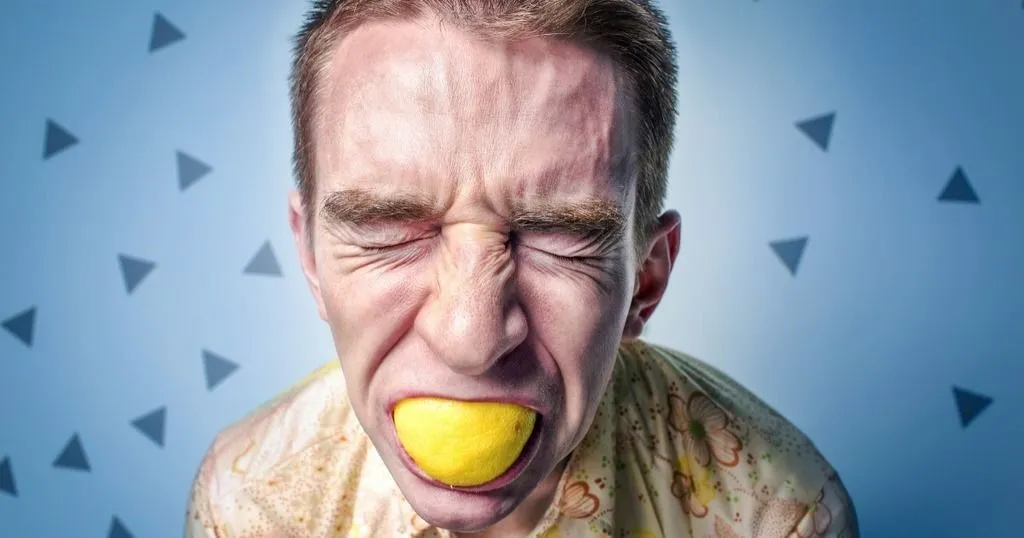
Consumers' food choices and emotions
Is there a relationship between food choice and a person’s mood? Bartkiene et al. examined the factors that influence our food choice, using facial expression analysis.
Read More arrow_forwardA UX test is a method of evaluating a product or service by having users test it.

This article was written by Gabriel Bergeron-Proulx, a master's student in marketing at the University of Sherbrooke, Quebec, Canada. It explains the usefulness of a facial expression analysis software in the context of a customer retention mandate for a company's digital environment (digital marketing).
Customer retention is defined as a company's ability to keep its customers, i.e. to make them loyal so they continue to use the services over a given period of time. Therefore, customer retention is a strategic objective.
In order to conduct a retention quality analysis of a lifestyle company's digital environment, we evaluated its website, its Instagram social network, and a promotional email. We randomly selected 12 volunteers to conduct user testing (UX research) of the company's digital media. Usability testing is a method of testing the functionality of a website, app, or other digital product by observing real users as they attempt to complete tasks on it.
Volunteers completed a sign-up sheet promoted on the company's Facebook page.
Our UX test consisted of 4 tasks:
The tests took place over a period of one week. Once the UX tests were completed, we conducted one-on-one interviews to learn more about the user experience. All tests and interviews were conducted via video conference using the Teams platform and were recorded. We then conducted an emotional analysis of the UX test recordings using FaceReader software.

FREE WHITE PAPER:
Non-verbal behavior is a strong indicator of how our subconscious works. Non-verbal communication goes beyond what participants perceive of themselves. Therefore, it can be an effective way to target a sensitive point in them without them even being aware of it [1].
For example, in our analysis of the emotions of our UX tests for emails, we detected several times that consumers tend to click on the company's logo to access their website. In our case, the logo does not offer the possibility to redirect to the company's website, which created frustration for the users.
In the individual interviews, no participant mentioned that this element seemed to affect them. Yet, these micro-moments are crucial in digital marketing as consumers expect to have everything within a click's reach [2]. They are immersed in a world of choice and therefore, they will not hesitate to look elsewhere at the slightest hitch.
For a marketing email to be effective, it needs a perceived enjoyment in the eyes of consumers [3]. Automatic facial expression analysis with software such as FaceReader is then particularly useful for targeting the "silent" strengths and weaknesses of a digital communication channel to improve its effectiveness.

Figure 1: Conceptual framework [3]
Figure 2: Moment of frustration when trying to click on the logo
Figure 3: Moment of sadness during research via an Instagram post
When analyzing emotions, researchers always face the same problem related to emotion measurement: subjective self-report methods are highly biased. It is difficult to confirm what the participant says.
On the other hand, objective methods of direct measurement of emotions such as facial electromyography require expensive tools and a well-defined context, which makes it difficult to collect and interpret the data.
Today, emotion measurement through the use of software can be done at fairly low cost and is extremely easy to implement; we can record the facial expressions that lead to emotions remotely or face-to-face with everyday tools such as a cell phone, a webcam, a tablet, or a computer. Moreover, the considerable advantage is that this technology is not at all intrusive for consumers, which allows us to collect data that is more true to reality.
RESOURCES:
References
Is there a relationship between food choice and a person’s mood? Bartkiene et al. examined the factors that influence our food choice, using facial expression analysis.
Read More arrow_forward
Within the field of human factors and usability, frustration poses an interesting challenge. It can be a barrier for learning. So how can we measure frustration in order to minimize it?
Read More arrow_forward
Are you looking for guidance in getting started with your facial expression analysis? Or want to get more out of your FaceReader setup? Keep reading to learn 7 essential things you need to know about FaceReader!
Read More arrow_forwardWe'll get back to you shortly.
Please correct the following errors:
We look forward to seeing you at the NoldusViso launch event.
Please correct the following errors: