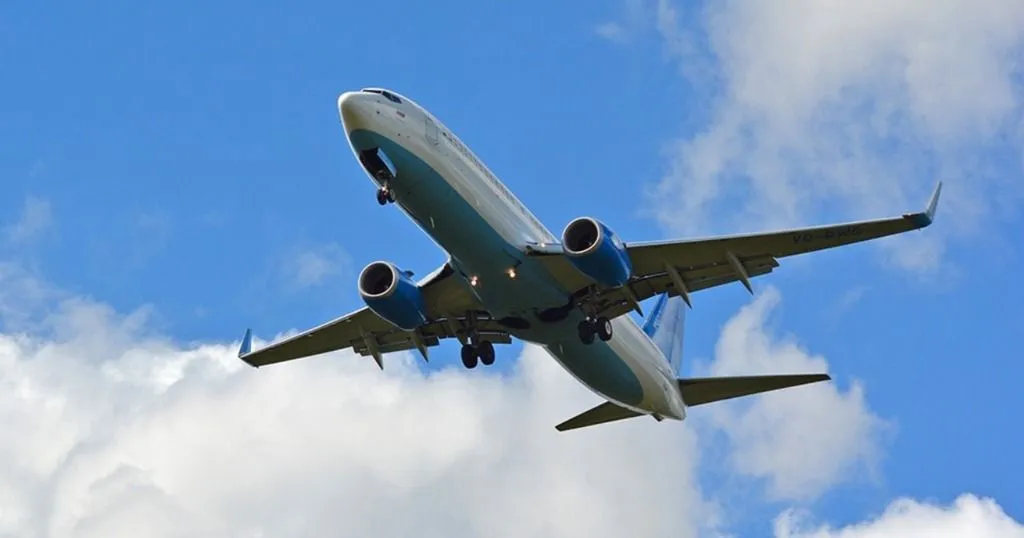
There are many types of traveling -- business travel with defined schedules and justifications for the trip, vacation travel to spend sitting on a beach looking at boats (or in a boat looking at beaches), and adventure travel based on exploration and new experiences. In order to arrive at the destination of our choice, we increasingly travel through the air.
During a long journey, it is often very tempting to go to sleep. However, in an airplane seat, sleeping is almost never comfortable. The chance of a stiff neck after some nodding in your airplane seat is very likely.
As a passenger, you need to find a solution to cope with the minimal living space available during a trip. When I googled 'comfort during traveling,' all kinds of shops offered me all kinds of products: special compression stockings, a sleeping bag, sleeping masks, earplugs, and a travel pillow. All products came in all shapes, sizes, and colors, and claimed to improve comfort.
Are expectations about comfort equal to experienced comfort?
Comfort is a convenient experience that guarantees a person is satisfied with the product used, whereas discomfort refers to physical inconveniences. Joyce Bouwens and her team selected five travel pillows to answer the following questions:
- Which travel pillow provides the head and neck with ideal support?
- Does ideal support correspond with expected comfort when selecting a travel pillow?
Each of these pillows had different characteristics in terms of head and neck support as well as restriction of movement in some directions:
- Total Pillow: a doughnut-shaped pillow filled with microbeads that can be twisted to a preferable shape for optimal support of the head from the side or the back
- J-pillow: shaped in the letter J and filled with original pillow stuffing that supports the head on the side and under the chin
- Inflatable Travelrest: a tall and inflatable pillow; the pillow is positioned from the shoulder to the waist and provides support on the side of the head
- Carex Memory Foam: a traditional horseshoe shaped travel pillow filled with memory foam that is placed around the neck and supports the back and the sides of the head
- Embrace Sleep Collar: a hard plastic U shape, covered with foam that is tightly placed around the neck in order to support the head under the chin and on the side by restricting movement in these positions
Comfort expectations
A questionnaire was sent out to 50 participants with previous flight experience in order to quantify the expectations of passengers. They were asked to rank pictures of people with the travel pillows used in this study based on expected comfort.
The majority of the participants expected that the J-pillow and the Total pillow would offer the most comfort.
Comfort experience
In this study, the comfort experience and user behavior were measured using 10 participants. The participants were invited to the Human Factors and Ergonomics Laboratory of Zodiac Seats, and were asked to evaluate six conditions (five conditions with the five different travel pillows and one condition without a pillow) while sitting in airplane seat and trying to rest or sleep.
Video recording the movements of the heads
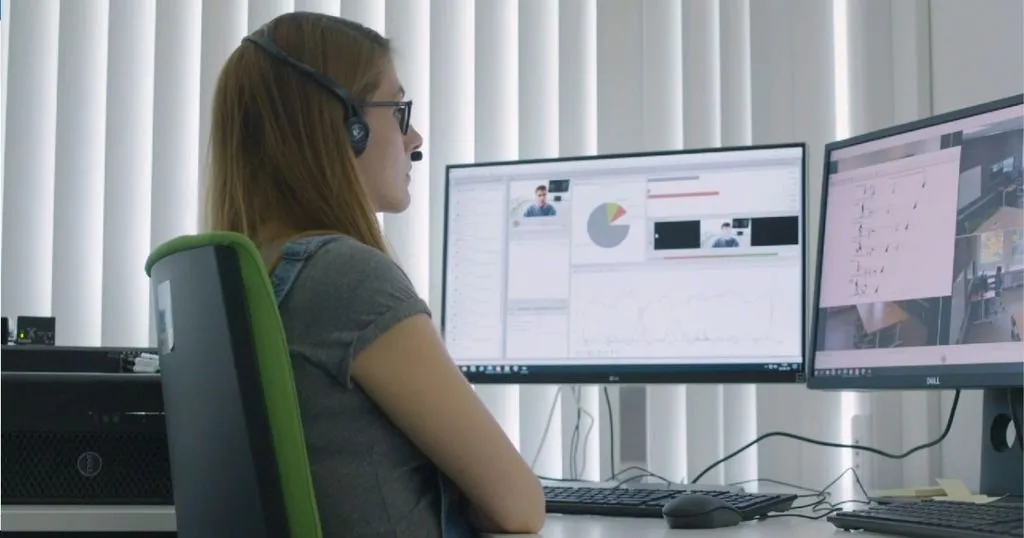
With the help of Noldus' Media Recorder software, four synchronized network cameras were installed around each participant. One was installed in the front, one from above, one at the left, and one at the right side. After each condition, the participants were asked to rate their perceived discomfort on a visual analog discomfort scale.
The video recordings were then evaluated using The Observer XT by coding the position of the head relative to three different axes: pitch-down direction (y-axis), neutral roll position (x-axis), and yaw position (z-axis). The total time spent in each position was calculated, and the number of times the participants moved to a given position was recorded.
Observations bring clarity
The observations showed that the inflatable Travelrest caused the highest number of head movements, and the Embrace Sleep Collar resulted in the lowest number. Regarding the three different axes, the Embrace Sleep Collar exhibited the least movements as well as the most neutral position.
This was confirmed by the ratings of the participants, which also indicated that the Embrace Sleep Collar caused the least discomfort. The fewer times the head moved to another position, the higher the participant rated the comfort of the pillow.
This research supports the statement that a participant's discomfort experience is objectively measurable by observing the movement behavior of the participant.
Formatting the equation
The comfort ranking that the 10 participants made after experiencing all six conditions differed from the expected comfort by the 50 participants, suggesting that passengers are unable to predict the comfort associated with a travel pillow based on pictures. Nevertheless, this is increasingly occurring alongside the growing popularity of online shopping.
FREE TRIAL
Try The Observer XT yourself!
Request a free trial and see for yourself how easy behavioral research can be!
-
check_circle
Work faster
-
check_circle
Reduce costs
-
check_circle
Get better data
Get your Free trial
arrow_forward
Reference
Bouwens, J.M.A.; Schultheis, U.W.; Hiemstra-van Mastrigt, S. & Vink, P. (2017). Expected versus experienced neck comfort. Hum Factors Man, (00), 1–9. https://doi.org/10.1002/hfm.20721