
Implementing Tailored Activity Programs
Tailored Activity Programs (TAP) have been shown to have significantly reduce behavioral occurrences in dementia patients and improve engagement and positive behaviors.
Read More arrow_forwardHealthcare professionals working in an operating or emergency room, frequently deal with unpredictable situations. How do they manage that?
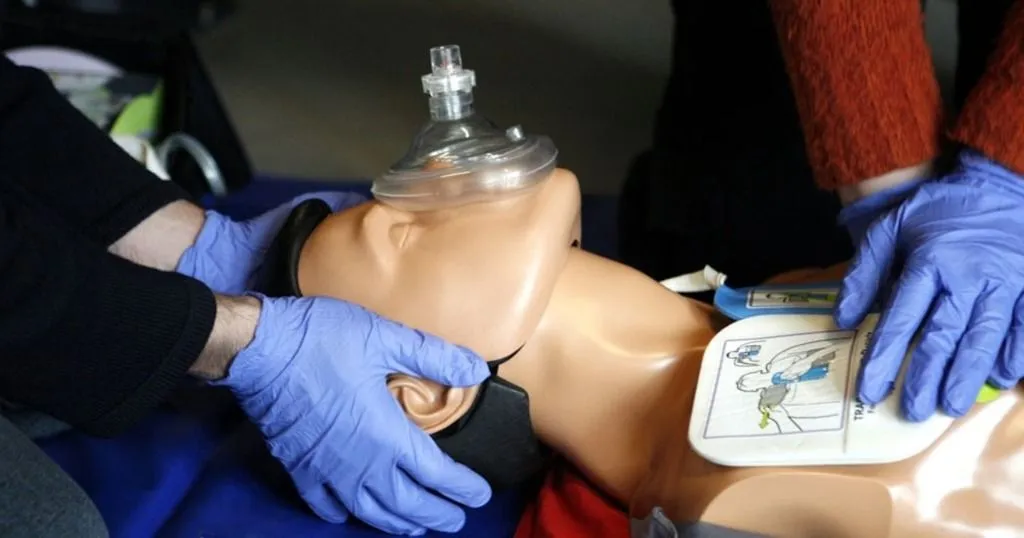
Everyone knows that it is hard to stay focused and think clearly when you are in a very stressful situation. However, when that situation is all about saving someone's life, that is exactly what you need to do: stay focused and think clearly.
Healthcare professionals, particularly in the operating or emergency room, deal with this all the time. In unpredictable situations, they need to carry out complex medical procedures. Then, effective teamwork is of the utmost importance.
This means there must be effective communication, coordination of activities, clarity on decision making, and managing of errors. These aspects will all influence the outcome of the crisis.
The performance and effectiveness of teams has been the focus of many researchers. On our Behavioral Research Blog, we already mentioned a few studies. In this blog post, the spotlight is on the study of Hoogeboom and colleagues from the University of Twente, The Netherlands, which was performed in a medical simulation room for advanced life support (ALS) training.
ALS is a complex emergency situation following the cardiac arrest of a patient, and is characterized by "extreme time pressures, diagnostic uncertainty, and rapidly evolving situations." [1]
In their study, the researchers combined different research methods:
The study sets out to uncover what the added value, pitfalls, and hurdles are when using and combining different sensor technologies with additional measures in order to better understand team interactions. They claim that outcomes of their research will help optimize simulation-based team trainings, and thus improve the medical and interactions skills of healthcare professionals.
Twenty-one teams, consisting of four first-year master's students, participated. During the ALS course, students learned to diagnose and manage a patient with cardiac arrest and perform cardiopulmonary resuscitation (CPR) on an advanced human-patient simulator [2].
All four students of each team were randomly assigned to these fixed team roles:
They all wore a sociometric badge, which is a wearable device that measures proximity, body movement and speech features.
In addition, a wristband was placed on the wrist of the team leader's non-dominant hand to help record skin conductance responses and consequently detect the moments of high arousal. In the context of medical simulations, higher levels of arousal may arise when time pressure forces an ALS team member to act quickly.
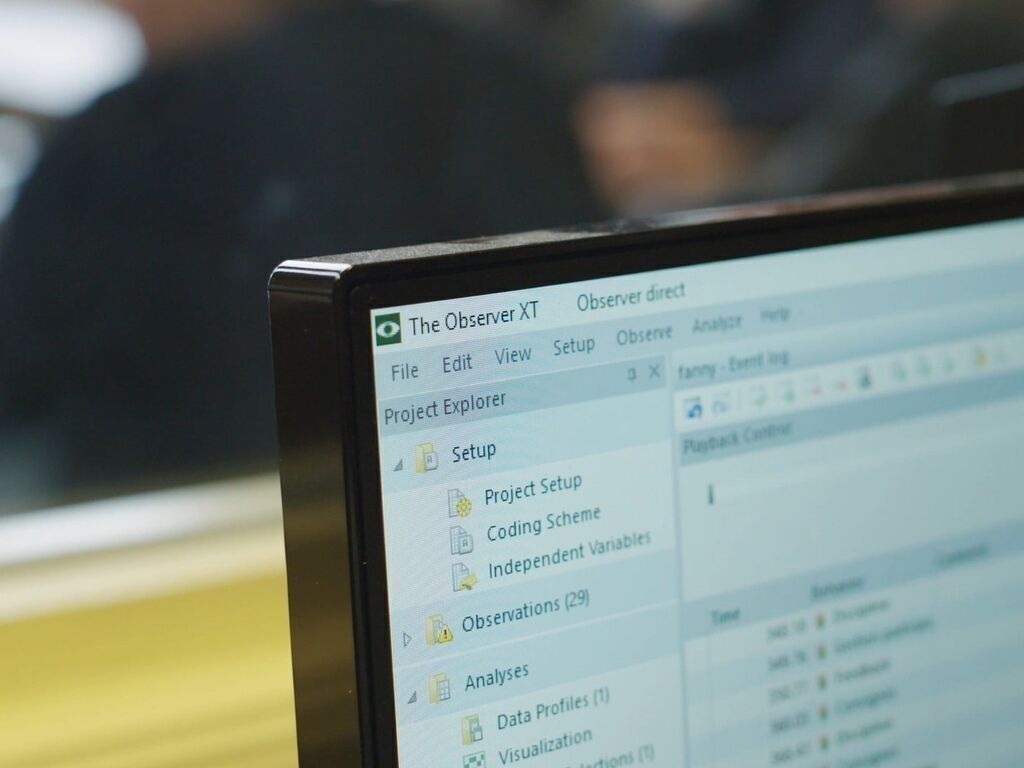
The content of the team interactions was coded with The Observer XT. Behaviors such as giving a command, summarizing, confirming, and asking questions were collected by the team leader. The remaining three team members were only coded on checking back with the team leader.
FREE TRIAL
Request a free trial and see for yourself how easy behavioral research can be!
Finally, to assess team effectiveness, two teachers scored on four effectiveness items directly after the simulation was finished: "This team is a consistently well performing team," "This team is effective," "This team makes few mistakes," and "This team delivers high quality work." As a result, the teams were categorized as 'more' or 'less' effective.
Regarding the content of the team interaction, the results showed that in the beginning of the scenario, the team leader expressed many commands. However, at the end of the scenario, when teams had to reach a diagnosis and handover the patient, there was more communication back and forth.
Moreover, in the more effective teams, one person was more dominant in terms of speaking time, while in less effective teams the team members contributed more equally. On average, more effective teams were less imbalanced during moments of high arousal. During those moments of high arousal, team leaders mostly gave commands and asked less often for confirmation or opinions. They also made fewer suggestions.
It is crucial for an ALS team to be well organized so that individual skills can be deployed efficiently and effectively. Therefore, understanding team interactions is key. The authors conclude in their article:
"This and future studies might enable future medical professionals to better understand what is required at stressful moments. Using these results in training and during debriefing sessions can potentially optimize team interactions of future medical professionals and enhance the quality of medical care."
Tailored Activity Programs (TAP) have been shown to have significantly reduce behavioral occurrences in dementia patients and improve engagement and positive behaviors.
Read More arrow_forward
Basil Preisig and his colleagues at the University of Bern, Switzerland, were especially interested in communicative development of people diagnosed with language disorders like aphasia.
Read More arrow_forward
Studies on eating behavior play an important role in preventing childhood obesity. Faith and his team examined the effectiveness of a family-based behavioral intervention to reduce eating pace.
Read More arrow_forwardWe'll get back to you shortly.
Please correct the following errors:
We look forward to seeing you at the NoldusViso launch event.
Please correct the following errors: