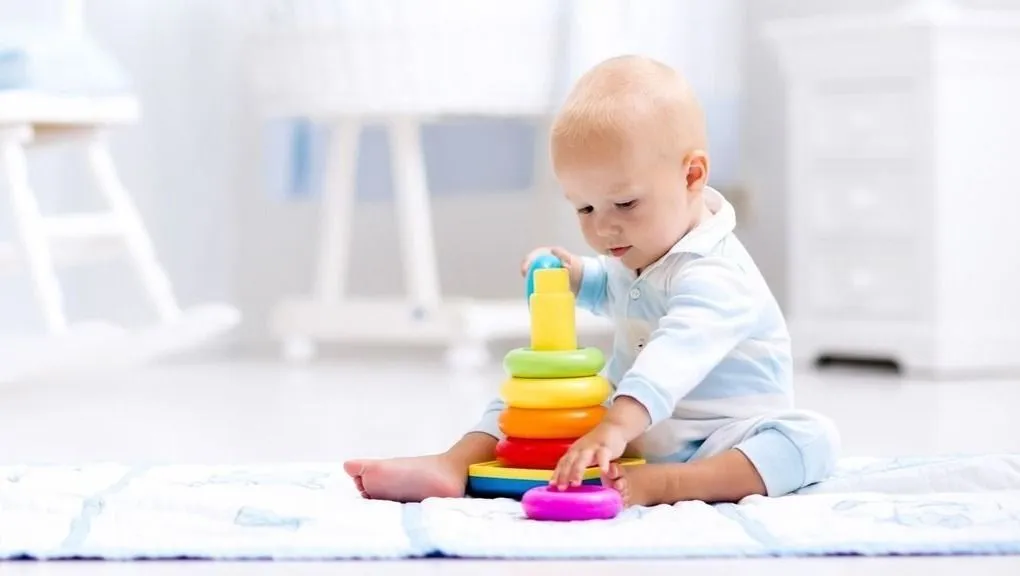
Imagine a baby staring intently at a toy, completely focused despite the sounds and movements around them. This ability to tune out distractions and concentrate on one thing is called sustained attention. It is a key skill that helps infants explore and make sense of their world. Unlike a quick glance, sustained attention shows deeper cognitive engagement.
This focused attention is essential for learning and development, setting the stage for skills like problem-solving, communication, and self-control. It can be measured through behavioral cues like looking duration or physiological indicators such as heart rate.
FREE WHITE PAPER
Tools for infant studies
Learn more about the software tools available for infant studies.
-
check_circle
Capture behaviors with video
-
check_circle
Annotate behaviors accurately
-
check_circle
Unobtrusive emotion analysis
Get your copy instantly
download
How researchers study infant attention
To better understand how infants develop sustained attention, researcher Jessica Bradshaw and her team from the University of South Carolina designed a unique study. The blend of tools, methods, and long-term observation used in this study provided valuable insights into how infants process and interact with their environment.
Their goal was to explore how sustained attention changes in infants over time and whether factors like context (live interactions versus screen-based tasks) or the type of stimulus (social versus non-social) make a difference.
A longitudinal study on social development
The study followed 53 infants from 1 to 24 months old. Each infant took part in multiple sessions, spaced across their first two years of life. During these sessions, the researchers measured attention during four different tasks:
- Watching social videos (e.g., people or puppets interacting)
- Watching non-social videos (e.g., animations or scenes with objects like dominoes or moving toys)
- Social interaction with a caregiver (like face-to-face play)
- Playing with toys without caregiver interaction
Combining video and heart rate data to track attention
To understand how deeply engaged the infants were, the researchers used a combination of behavioral observations and physiological data.
They recorded how long infants looked at a specific target, like a caregiver's face or a toy, to capture their visual focus. At the same time, they collected heart rate data using a wireless electrocardiogram (ECG) sensor placed on the infant's chest.
Video ensures detailed view
The Viso system provided high-quality video footage of the infants during the different tasks, ensuring that the researchers could accurately track the infants' gaze and interactions with the stimuli.
This provided a detailed view of not just how long they looked but how deeply they processed what they saw.
Out of the data extracted from the behavioral coding, the research team calculated two dependent variables: the percentage of time that infants spent on looking and the average look duration.
FREE WHITE PAPER
How does AV recording tool Viso work?
Discover how Viso can transform your work—download the free white paper to explore its features and security.
-
check_circle
How can Viso benefit your work?
-
check_circle
What can you expect of the Viso features?
-
check_circle
Is data protection guaranteed within Viso?
Start downloading
download
By analyzing changes in the time between heartbeats (inter-beat intervals), the researchers identified three phases of attention:
- orienting (initial shift of attention to the stimulus)
- sustained attention (staying focused)
- attention withdrawal (ending of focus, often followed by a look away from the stimulus)
Sustained attention, marked by a steady slowing of the heart rate, reflected moments of focused cognitive engagement. These heart rate-defined moments were synchronized with video recordings to determine what the infant was focusing on.
Infants' attention patterns
The researchers found that infants' sustained attention develops in different ways depending on the task and type of stimulus. Infants showed an increase in looking time from 1 to 4 months across all conditions, but by 4 to 6 months, their looking behavior began to shift.
They spent less time looking at caregivers during social interactions, while their attention to toys and videos remained stable. When it came to sustained attention, infants spent more time focused during video tasks (both social and non-social) than during live interactions, especially in the first 6 months.
Even though infants looked at their caregivers less during social interactions, their heart rate-defined sustained attention stayed the same. This suggests that looking less at the caregiver didn't mean they were paying less attention to them.
More focus on social videos than toys or live interactions
Throughout the first year, infants paid more attention to videos (both social and non-social) than to toys, with social videos becoming particularly engaging by 12 months.
In contrast, attention to social and non-social stimuli during live interaction tasks was roughly equal. This indicates that video content may be more engaging than real-world toys and interactions during the second half of infancy.
From 6 to 24 months, sustained attention stabilized, but social videos continued to draw more attention. The study also suggests that the first 6 months are a period of rapid change in attention, after which attention patterns stabilize but still show preferences for social videos.
It's crucial to consider multiple measurements together
The results of the study suggest that different ways of measuring attention to social and non-social stimuli may reflect distinct developmental processes. It's important to compare and consider these measures together, especially when using infant attention as an indicator of typical or atypical development.
Reference
Bradshaw, J.; Fu, X. & Richards, J.E. (2024). Infant sustained attention differs by context and social content in the first 2 years of life. Developmental Science, 27(4). https://doi.org/10.1111/desc.13500