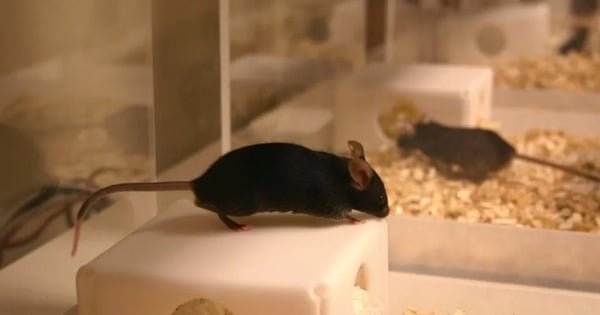
Mice in the spotlight: why you should perform your tests in a home cage
Mouse models are essential for neuroscience research. Many tests are susceptible to bias. Home cage testing provides a number of solutions.
Read More arrow_forwardHow does the Morris water maze test spatial memory? Learn what to measure, see recent studies and get practical tips for tracking it with EthoVision.

Think back to the last time you walked out of a supermarket and tried to remember where you parked. You probably didn’t exactly retrace your steps. Instead, you glanced at the entrance, the lamp posts and other cars, and worked out where your car must be. That ability to use landmarks to locate something you can’t see is spatial memory, and it depends heavily on the hippocampus.
Now imagine the car is a small platform hidden just under the surface of a pool, and you are a mouse. That, in short, is the Morris water maze (MWM). It needs no food deprivation, gives the subject a clear and motivated task, and produces rich data in a few days. Therefore, the MWM has become one of the most widely used tests of spatial learning and memory in rodents. In this blog we explain how it works, what you can measure, and how researchers pair it with EthoVision to study everything from Alzheimer’s disease to exercise and human evolution.
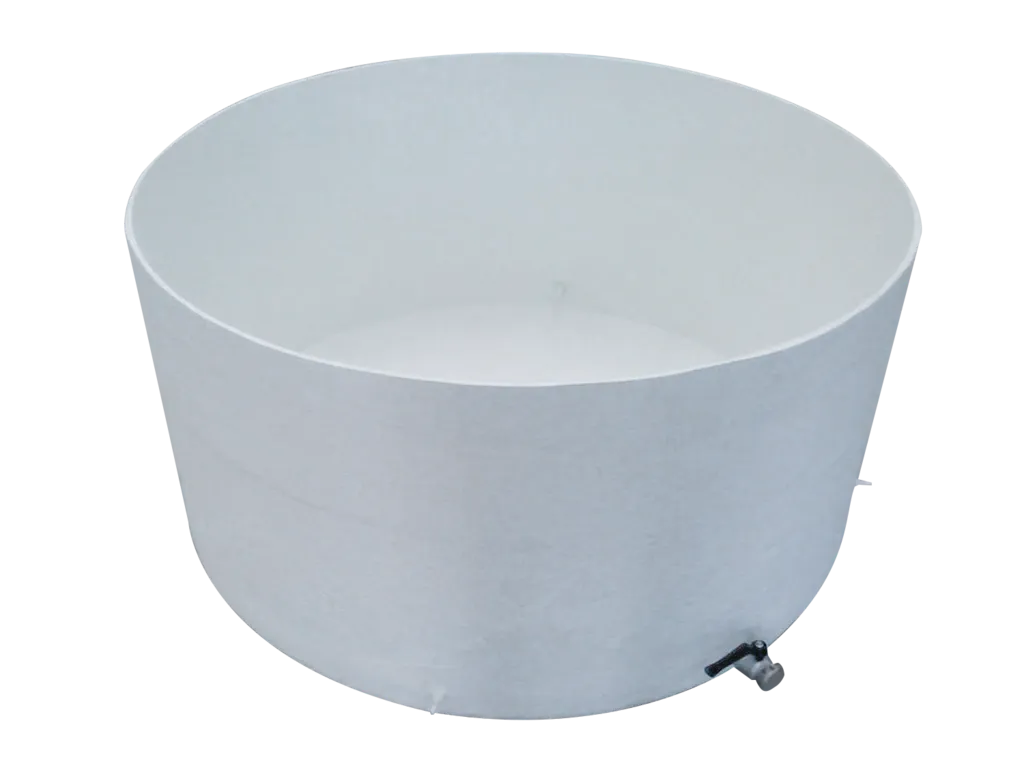
Developed by Richard Morris in the early 1980s, the Morris water maze is a large round pool filled with water made opaque, so the animal can’t see what lies beneath. Somewhere in the pool, a small escape platform sits just below the surface. Around the room, fixed visual cues such as posters or shapes on the walls give the animal something to navigate by.
On each trial, a rat or mouse is released into the water from the edge of the pool. At first it swims around until it finds the platform by chance. Over repeated trials, it learns to use the room cues to swim more directly to the platform’s location.
Nowadays, protocols vary between labs. In the papers we discuss below, pools ranged from 83 to 200 cm in diameter, hidden-platform training lasted 4 to 8 days, each trial was capped at 60 to 90 seconds, and the water was kept at roughly 21 to 25 °C.
A single water maze experiment usually combines several phases, each with its own readouts.
It is also important to note: latency alone can be misleading. An animal that swims slowly will take longer to reach the platform even if it knows exactly where it is. Comparing path length and velocity between groups helps you separate a memory effect from a motor or motivational one.
Beyond just numbers, the shape of the swim path tells you how an animal searches. Vouros and colleagues developed a machine-learning method that classifies segments of a swim path into strategies, such as wall-hugging (thigmotaxis) versus focused search [1]. They showed that classifying whole trajectories loses information, because animals switch strategies within a single trial. The method was released as open-source software (RODA) that works on trajectory data exported from EthoVision.
All of these measures can be automated, which saves hours of manual scoring and keeps the analysis consistent across animals, days and experimenters.
The water maze turns up across a wide range of research questions. Here is a selection of recent studies that used EthoVision to track it.
Milazzo and colleagues tested a new kind of gene therapy in female 5xFAD mice, a model of Alzheimer’s disease [2]. They engineered blood stem and progenitor cells to overexpress TREM2 and transplanted them directly into the brain. This reduced neuroinflammation and amyloid-β aggregation and improved memory. Their water maze included visible, hidden, probe and reversal phases.
For a good example of a full, longitudinal design, look at Yang et al. [3]. They gave APP knock-in mice weekly infusions of B28, a fully human antibody against amyloid-β oligomers, in a blinded four-month trial. B28 reduced plaques, oligomers and gliosis, preserved neurons and lessened memory decline. In lab binding tests, it also had higher affinity and captured more amyloid-β from Alzheimer’s brain extracts than lecanemab. The mice were tested before treatment (cued training, acquisition and probe) and after it (recall and reversal).
Maphis and colleagues took a translational route [4]. Their vaccine against tau phosphorylated at threonine 181 produced strong antibody responses in two mouse models of tauopathy and in rhesus macaques, with an encouraging safety profile in the macaques. In PS19 mice, vaccinated animals spent significantly more time in the target quadrant during the probe trial.
KDM5C is one of the most frequently mutated genes in X-linked intellectual disability. Karwacki-Neisius and colleagues found that during a developmental window, KDM5C controls WNT signalling, which governs the timing of neurogenesis [5]. Inhibiting WNT during that window rescued behavioural changes in Kdm5c knockout mice, while a single WNT3A injection into the brains of wild-type embryos caused anxiety and memory changes. Their water maze protocol included visible, hidden and reversal training.
Can you measure human evolution in a pool? Tan et al. came close [6]. They studied HAR123, a short stretch of DNA present in all mammals that has evolved rapidly since humans and chimpanzees diverged. It promotes the formation of neural progenitor cells, and mice lacking it had a defect in cognitive flexibility. The probe and reversal tests measured quadrant time, quadrant entries and platform crossings.
Li and colleagues studied mild closed-head injury in mice [7]. The inflammasome adaptor ASC kept neuroinflammation going for up to 21 days, and mice lacking ASC were largely protected from mild cognitive impairment. Their water maze had five days of training, a probe trial and then a cued phase with a flagged platform and the room cues removed.
Mehni et al. trained 160 rats in the water maze before a mild cortical impact and retested them 7 and 28 days later [8]. The immune compound Pam3Cys reduced the injury-induced increase in latency at one week in both sexes.
Surgery itself can affect memory in older animals. Nagarajan and co-workers gave mice aged 21 to 24 months abdominal surgery under isoflurane [9]. Chronic intermittent propofol prevented the surgery-induced microglial activation and cognitive impairment. Their 14-day protocol included learning, a probe trial, reversal learning and a reversal probe.
In diabetic mice, brain capillaries stall, blocked mainly by red blood cells. Sharma and colleagues found a surprising cause: IL-10, a molecule usually considered anti-inflammatory [10]. Blocking its receptors restored blood flow and reversed the cognitive deficits. Escape latency and swim speed were measured in a water maze that was run twice in the same animals.
Why does exercise help memory? Kim’s team showed that exercise raises the protein Serpina1e in muscle [11]. Giving it to sedentary male mice reproduced the memory benefit of exercise, and removing it from muscle abolished that benefit. Serpina1e crosses into the brain, where it stimulates neurogenesis and BDNF.
Diet can matter too. M’Bra and colleagues fed two Alzheimer’s mouse models a control diet, the same diet with 10% medium-chain triglycerides, or a ketogenic diet [12]. Both alternative diets improved hippocampus-dependent spatial learning and memory, and the authors used EthoVision heat maps to show how search behavior differed.
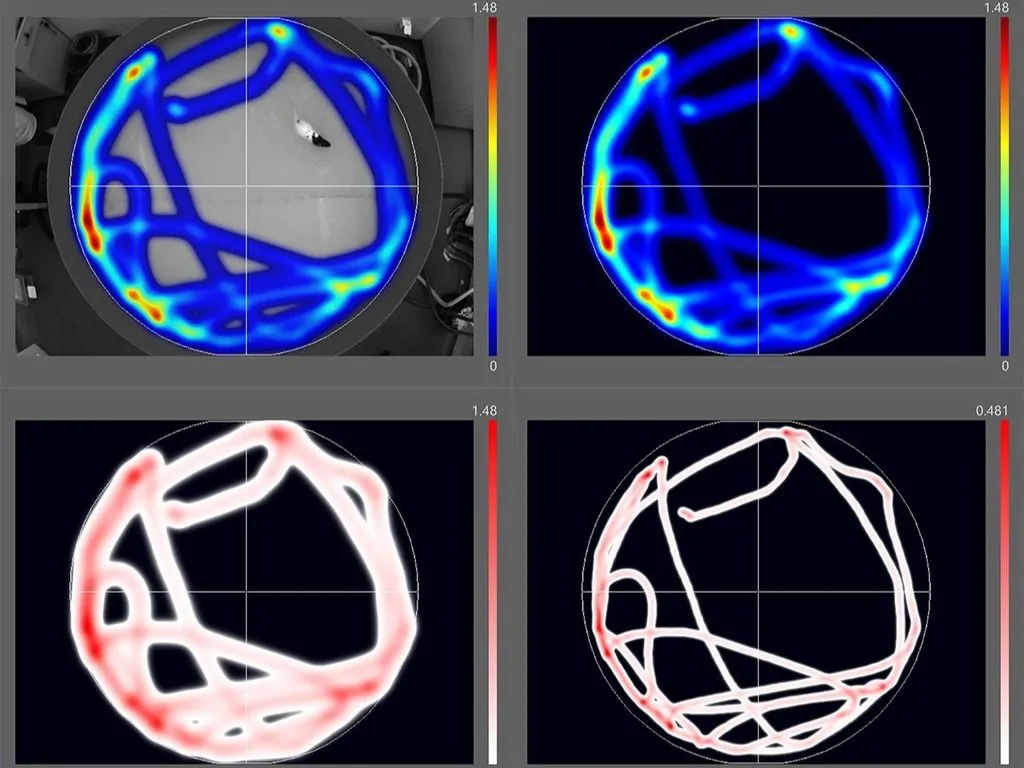
Water maze heat maps in EthoVision unrelated to the described study.
Biosca-Brull and colleagues exposed pregnant wild-type mice, and mice carrying human APOE3 or APOE4, to the pesticide chlorpyrifos [13]. Long-term memory retention was impaired in both male and female APOE4 offspring exposed before birth.
Stress can echo down the generations. Ebrahimkhani et al. stressed father rats with unpredictable footshocks before mating [14]. Their adolescent sons and daughters had impaired spatial memory, and lithium reversed most of the behavioural changes.
Several of these studies tested both sexes and found they did not always respond alike. In the paternal stress study, effects were stronger in daughters overall [14]. After brain injury, females’ spatial memory was more impaired than males’ at four weeks [8].
Time of day matters as well. Dias and colleagues tested male and female Wistar rats in the morning or afternoon [15]. Time in the target quadrant was consistent across groups, but females had longer latencies in the afternoon. It is a useful reminder that different water maze measures can tell different stories.
Manual scoring of swim paths is slow and hard to standardise. EthoVision tracks the animal’s position from overhead video and reports escape latency, distance swum, velocity, time in each quadrant, zone entries and platform-zone crossings automatically. You can define the target quadrant and platform zone once and apply them to every trial, then export trajectories for further analysis, as Vouros et al. did for search strategy classification [1].
EthoVision 19 adds deep-learning detection of the nose, body center and tail base, plus faster AI models, so you spend less time setting up and more time on your research question.
Try EthoVision yourself: request a free trial and see how it handles your own water maze videos.
The Morris water maze is simple to describe and rich in what it reveals. With acquisition, probe, cued and reversal phases, a single experiment can tell you about learning, memory, flexibility and search strategy, as long as you control for vision, swim speed, sex and time of day. Automated tracking makes it practical to measure all of this consistently.
Curious about other tests? Read our blogs on the Elevated Plus Maze, the Open Field test, the Y-maze and the Radial Arm Maze. Looking for the right apparatus? Explore the mazes we offer for behavioural research.
It measures spatial learning and memory: how well a rodent learns to find a hidden platform using cues around the room. It also gives information on cognitive flexibility and search strategy.
Hidden-platform training typically lasts 4 to 8 days, followed by a probe trial. Adding cued and reversal phases extends this, up to around two weeks in some studies.
A trial with the platform removed. Time in the target quadrant and crossings of the former platform location show how well the animal remembers where the platform was.
Moving the platform to a new location tests cognitive flexibility, the ability to update a learned response. Some deficits only show up in this phase.
Yes. Several studies report sex differences, and one found that female rats had longer latencies in the afternoon. Balance and report both in your design.
EthoVision is widely used to track the water maze automatically, reporting latency, distance, velocity, quadrant time and platform crossings from overhead video.
Mouse models are essential for neuroscience research. Many tests are susceptible to bias. Home cage testing provides a number of solutions.
Read More arrow_forward
Proper handling technique is essential in not only ensuring welfare, but also for reliable results. Check out this blog to learn more about how to handle rodents in an experimental setting!
Read More arrow_forward
In behavioral research, even the smallest details can significantly influence the behavior of animals. Understanding these nuances is crucial for the accuracy of your data.
Read More arrow_forwardWe'll get back to you shortly.
Please correct the following errors:
We look forward to seeing you at the NoldusViso launch event.
Please correct the following errors:
