
Students’ first contact with The Observer XT
Prof. Dr. Stefanski and Dr. Flauger explain why it is important to introduce students to professional software tools at an early stage.
Read More arrow_forwardNeuroscience trends 2024: The Society for Neuroscience (SfN) 2024 conference is behind us! What did we spot as the latest trends?
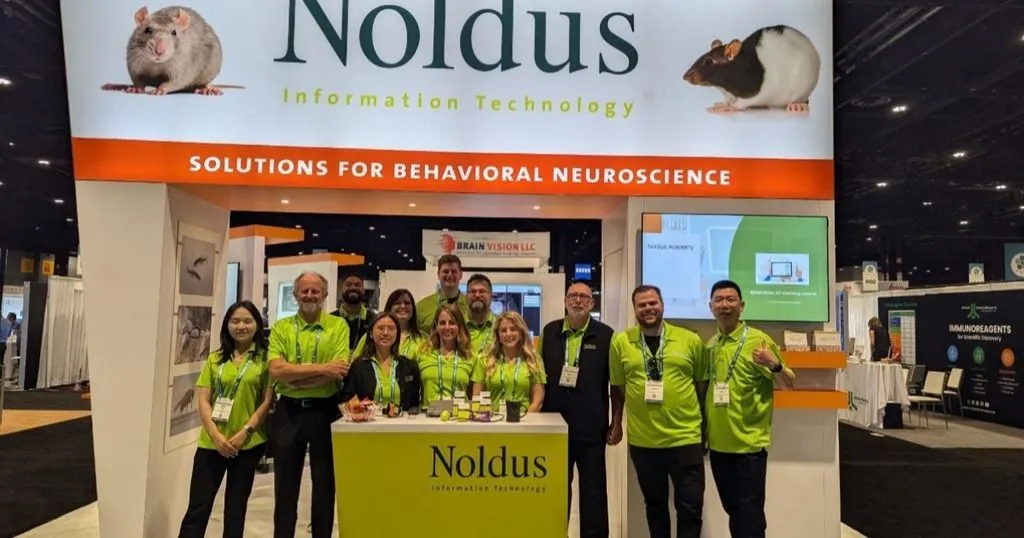
The Society for Neuroscience (SfN) 2024 conference is behind us! And it was an inspiring event for our Noldus team, as we connected with researchers, talked about known research paradigms, and also explored the latest developments in (behavioral) neuroscience. This year, several key trends emerged, and they closely align with our commitment to advancing behavioral research through flexible, reliable solutions like EthoVision XT. Here is our take:
One of the most interesting observations at SfN 2024 was the increasing complexity of behavioral research setups. Researchers are pushing beyond traditional paradigms, using elaborate systems such as location-based stimuli, custom maze protocols, and sophisticated multi-room experiments. These innovations reflect the growing need to explore behavior in more dynamic and intricate environments. It’s exciting to see how researchers are thinking outside the box and embracing novel methodologies.
However, while these complex setups are certainly on the rise, it's important to note that basic behavioral tests remain just as essential. Simple and known paradigms, like the open field test or other relatively straightforward mazes, are still fundamental for quantifying core behaviors such as locomotion, anxiety, or cognition. These tests continue to provide reliable, quantifiable data that allow researchers to understand essential behavioral phenotypes before moving into more advanced experimental designs.
At Noldus, we’ve designed EthoVision XT to thrive in both worlds. Whether you're conducting a basic open field test or a complex custom experiment, our software adapts effortlessly, providing the precision and flexibility needed to capture meaningful behavioral data in any setup. The feedback we received from researchers at SfN reaffirms this, showing that EthoVision XT is not just for either advanced or simple setups: it's for both. This versatility ensures researchers can transition seamlessly from basic to complex experiments without compromising on data quality.
Another major theme at SfN 2024 was the growing demand for integrating electrophysiological (e-phys) data with behavioral data. Researchers emphasized the need to synchronize these two data streams, allowing them to correlate neural activity with behavior more precisely. However, achieving this integration is technically challenging, particularly when dealing with real-time data collection.
This is where our collaboration with Blackrock Neurotech really makes a difference. The integration of EthoVision XT with Blackrock’s implantable EEG systems provides researchers with the ability to synchronize e-phys and behavioral data. This allows for highly accurate, real-time insights into how brain activity drives behavior, offering a new level of understanding for researchers investigating neural circuits, cognitive function, and neurodegenerative diseases.

Just like we’ve seen last year, artificial intelligence (AI) remains a prominent trend in (behavioral) neuroscience, particularly for behavioral tracking. At SfN 2024, the use of trained neural networks to interpret animal behavior was a recurring theme. Many research labs are turning to AI to automate the tracking and analysis of complex behaviors, enhancing precision while reducing manual effort.
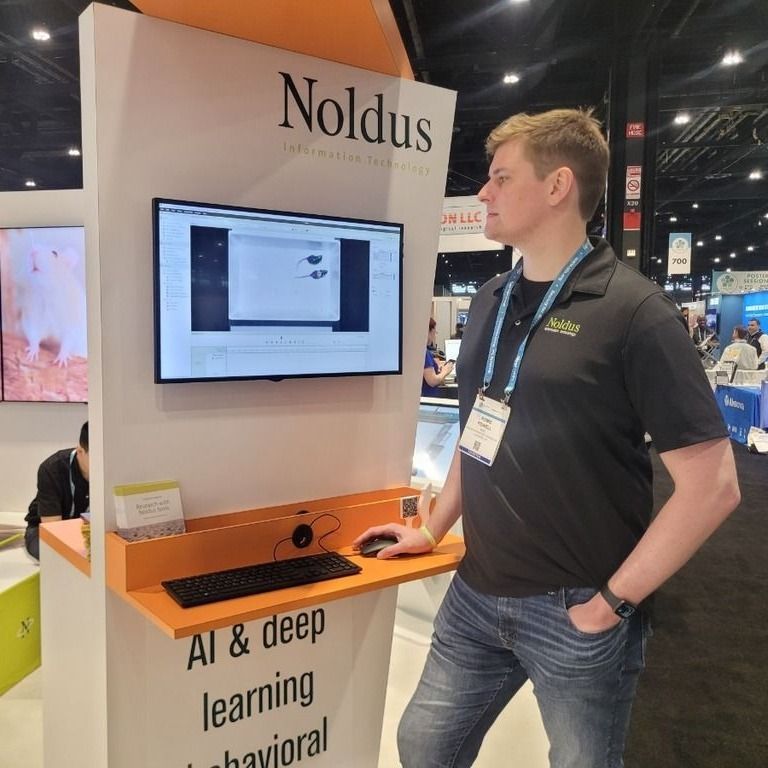
At Noldus, we’ve been ahead of this trend with EthoVision XT’s deep learning tracking method. What sets our approach apart is that the AI powering EthoVision XT was developed in-house by our team of behavioral neuroscientists. Our deep learning model was trained on real-world behavioral data, making it ready to use, very reliable, and tailored specifically for behavioral research. Unlike other generic AI tools, EthoVision XT is designed to provide accurate, actionable insights without requiring users to code, build, or train their own models. Researchers appreciate that they can trust our AI to deliver results that are both scientifically validated and easy to interpret.
Another key takeaway from SfN 2024 was the increasing demand for educational materials. As neuroscience research grows more complex, more-and-more researchers from other disciplines are incorporating behavior into their research. Since this group is ever-growing, they need access to high-quality training resources to help them master new tools and methodologies.
With NoldusCare you get access to such materials through the Noldus Academy, an online platform offering courses, training modules, and (on-demand) webinars designed to help researchers get the most out of our tools. Whether you’re just starting with EthoVision XT or looking to expand its capabilities, the Academy provides step-by-step guidance.
In addition, our e-books cover various topics in behavioral research, offering insights into experimental design, data analysis, and best practices for using our software. The feedback from researchers at SfN was clear: educational resources like these are becoming increasingly essential as the field continues to grow in size and continues to advance.
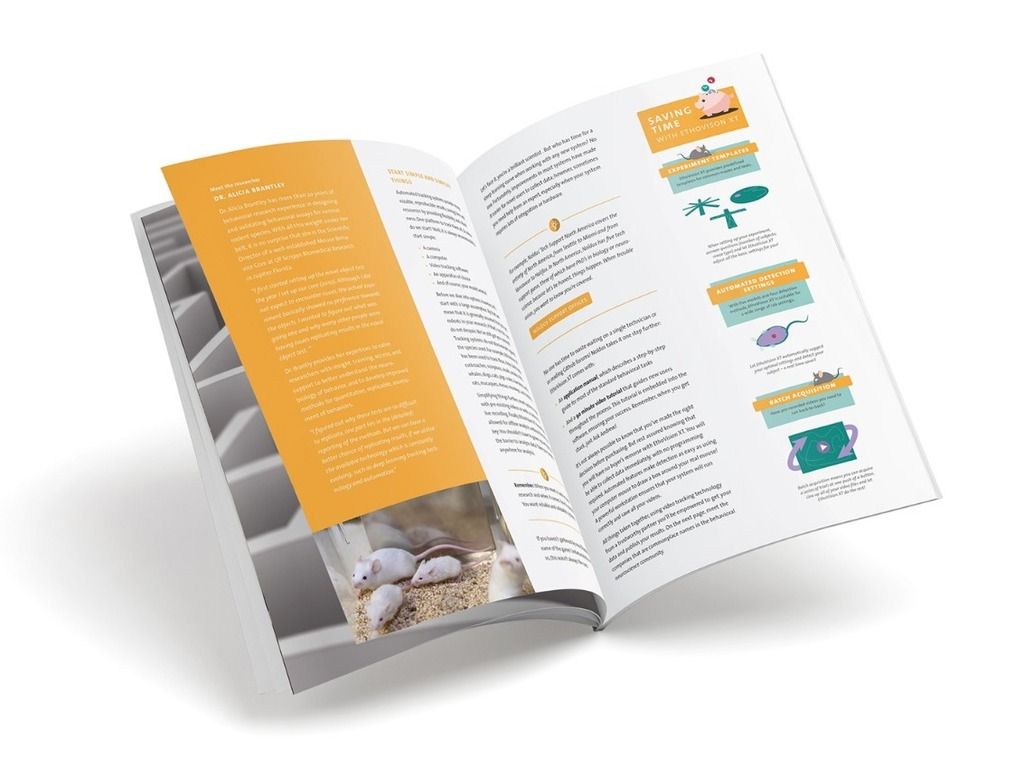
Want some more literature on the basic (behavioral) neuroscience in rodents? Download our free e-book. In this guide we explain why and how we investigate specific types of behaviors. Our goal is to help you advance your research by providing high quality products and accurate information at a high level.
Throughout SfN 2024, we were reminded once again why Noldus is regarded as the gold standard in behavioral neuroscience. Our tools are not only scientifically validated but are also built from the ground up by behavioral neuroscientists who understand the intricacies of the field.
Whether researchers are working with simple or complex experimental setups, they know they can rely on Noldus to provide accurate, reliable data that drives meaningful insights. As neuroscience continues to evolve, we stay firmly committed to staying at that forefront, offering tools that meet the needs of the research community.
All-in-all our SfN 2024 experience was great! And we will be there again next year, where we would love to meet you (again) in person!
See you next year in San Diego.
We’re passionate about helping you achieve your research goals. Let’s discuss your project and find the tools that fit.
Prof. Dr. Stefanski and Dr. Flauger explain why it is important to introduce students to professional software tools at an early stage.
Read More arrow_forward
The point of this blog is to encourage you, as researchers, to ‘double think’, which is to say think like a scientist and think like an animal.
Read More arrow_forward
In one of my previous blog posts, I wrote about the success of insecticide treated bed nets in preventing malaria. In the past five years, mortality from malaria has dropped with 60%.
Read More arrow_forwardWe'll get back to you shortly.
Please correct the following errors: