Consumer behavior
What is important to you when you buy a product? What decisions do you make before you buy? Really knowing your customer is what you need to design loved products and applications.
Therefore, as a consumer behavior researcher, you:
- check Focus on studying consumer actions (in the moment)
- check Want to get to know the underlying motives
- check Intend to predict consumer preference and consumer buying behavior

What is consumer behavior research?

How do individuals, groups, or organizations make decisions about buying, using, and disposing products or services? A consumer behavior researcher looks at the factors that influence these decisions, such as emotions, cultural influences, personal preferences, and social trends.
Understanding consumer behavior helps predict what products or services people will choose and align with people's real needs.
As a result, products and services improve, marketing is more relevant, and consumers' satisfaction grows.
A day in the life of a consumer behavior researcher
In today's fast-paced world, your role as a consumer behavior researcher is more vital than ever. You explore why people make certain choices, analyzing both emotional and rational factors. Your work involves sorting through data, identifying trends, and uncovering patterns in behavior. Staying up to date with new technologies and changing consumer expectations is key.
Bridge the gap
Your challenge lies in filtering through vast amounts of information to find actionable insights, often under tight deadlines. You want to bridge the gap between what consumers say they want and what truly drives their actions.
When you discover the key factors that predict behavior, the reward is clear: you uncover customer needs.
Uncover answers: Methods and tools to measure consumer behavior

Observe in a natural or simulated environment
Your test participant's environment greatly affects behavioral experiment results. To control this in a lab, create an experience room to simulate real-world settings, or conduct observations on-site.
- check A video observation tool will help you capture, replay, and discuss participants' behaviors.
- check For analyzing the behaviors properly, you need to code your video observations.
- check A portable lab offers the best solution if you want to carry out observations on site, for example, in a shop.
Capture emotional responses and eye movements
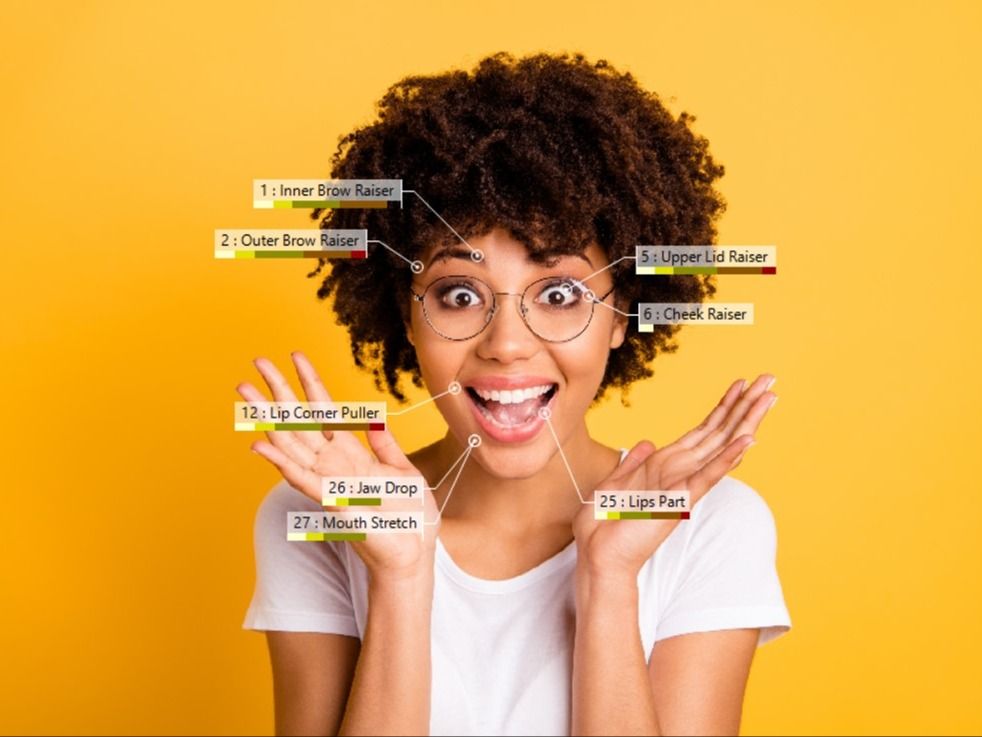
If something smells disgusting, if a weird color makes us feel anxious, or if we like the taste of something: our face and eyes can tell, without us being aware of it.
- check Measuring facial expressions provides insights in the relationship between emotions, consumer acceptability, and purchase intent, and gives guidance towards food and packaging innovation.
- check Eye tracker glasses allow your test participant to move and look around freely, while the researcher gets to see where the test participant is looking at, or is not looking at.

Measure changes in one's physiological state
Responses like changes in heart rate, pupil size, and sweating occur without us realizing and can give a lot of information about how and especially how much someone feels about something.
These techniques let you dive deeper into the unconscious preferences of consumers and their decision-making processes.
- check By integrating various data streams you get a comprehensive view of participants' behaviors and physiological responses. Besides, you want everything to be aligned for an accurate analysis.
Best practices for consumer behavior research

Define clear objectives | Start with a clear understanding of what you want to discover or test in your research.
Use multiple data sources | Collect data from multiple sources—surveys, behavioral experiments, observational studies, and online behavior analytics—to get a fuller picture.
Segment your audience | Break down your consumer group into segments based on demographics, psychographics, or behavior to better target insights.
Apply behavioral insights | Use knowledge of how people naturally think and act to better understand what influences their choices. Incorporate principles like loss aversion, social proof, and the endowment effect to understand how consumers are influenced.
Test in realistic settings | Simulate real-world environments, or conduct field studies to observe genuine consumer behavior.
Stay updated on technology | Utilize advanced tools like eye-tracking, biometric measurements, facial expression monitors, and big data analytics for precise insights.
Account for bias | Be aware of cognitive biases - mental shortcuts or patterns of thinking that can lead people to make decisions that are not entirely rational or objective. This can affect how consumers perceive information and make choices.
Focus on ethical research | Ensure transparency, informed consent, and respect for participant privacy in all studies.
Featured blog posts

How to increase attention in commercials for Gen-Z
Generation Z has the shortest attention span for commercials, yet they are becoming an important market segment. Understanding what captures their interest and how to engage them is crucial.

Why you want to find out if your customers are bored
Emotions deeply influence our daily lives, shaping our moods and behaviors - including our decision making. That's why facial expression analysis is often used in consumer behavior research.

A study on consumer experience in self-designing
Consumer research suggests that you value a product more when you design it yourself. But abandonment rates in the self-design process are extremely high. Researchers tried to find out why.
Are you looking for advice on your application?
Do you want to learn more about how to apply Noldus products to your research, or do you need advice from our team of behavioral experts?
Noldus is here to assist you throughout the whole process.
Thank you!
We will get back to you within one business day.