Psychology
As a psychologist you are concerned with understanding the principles of behavior, including how individuals learn, make decisions, and respond to different stimuli. Questions you would like to answer are for example:
- check How do we learn new behaviors and habits?
- check What factors shape our decision-making and actions?
- check How do our surroundings and social interactions affect our behavior?

Areas of psychology research

Developmental psychology
What shapes our growth, from childhood to adulthood? How do we acquire language, develop emotional bonds, or build our identity? These questions are at the heart of developmental psychology – the study of how we evolve emotionally, cognitively, and socially.

Behavioral psychology
Have you ever wondered why you behave in a certain way or what drives your actions? Behavioral psychology studies the connection between our minds and our behavior, how our surroundings and social interactions affect our feelings and choices.

Clinical psychology
What helps people manage anxiety, agitation, depression, or trauma? Clinical psychology seeks to answer that by understanding, diagnosing, and treating mental health challenges through assessments, counseling, and tailored treatment plans.
A day in the life of a psychologist
In your role as a psychologist, your day involves juggling a wide range of tasks, making you a true jack-of-all-trades. Beyond designing and conducting your (clinical) research, you're responsible for many other critical aspects. You must handle personal data with care, navigate ethical considerations, engage with a range of stakeholders, stay updated on the latest techniques, ensure your software runs smoothly, and manage vast amounts of data.
Combine your insights to make sense
Given that human behavior is shaped by a complex web of factors, studying it requires an integrated approach. By combining insights from various perspectives, you can make sense of this complexity and gain a clearer understanding of human behavior.
Psychology includes a wide range of subfields, such as developmental psychology, behavioral psychology, and clinical psychology.
How to uncover answers

Observations
To gather real-life data on actions and interactions of children, adolescents, or adults you can watch how they behave in natural or controlled settings.
- check Video observation is a non-invasive form and will enable you to capture (inter)actions. Multiple camera views create new perspectives on the same behavior.
- check To be able to analyze behaviors properly, you need to review and code your video observations.
- check To discreetly observe and analyze participants in a naturalistic yet controlled setting an observation lab would suit perfectly.

Behavioral experiments
Running tests in a controlled setting can help you identify cause-and-effect relationships and uncover the underlying mechanisms that drive people's actions.
- check To capture reactions to stimuli or how participants perform a task, video recordings are indispensable.
- check Statistical methods will help you analyze data and identify significant patterns. After all, you want reliable results for your publication.
- check Behavioral experiments typically take place in controlled environments such as a research lab. Benefit of precise control and access to advanced technology.
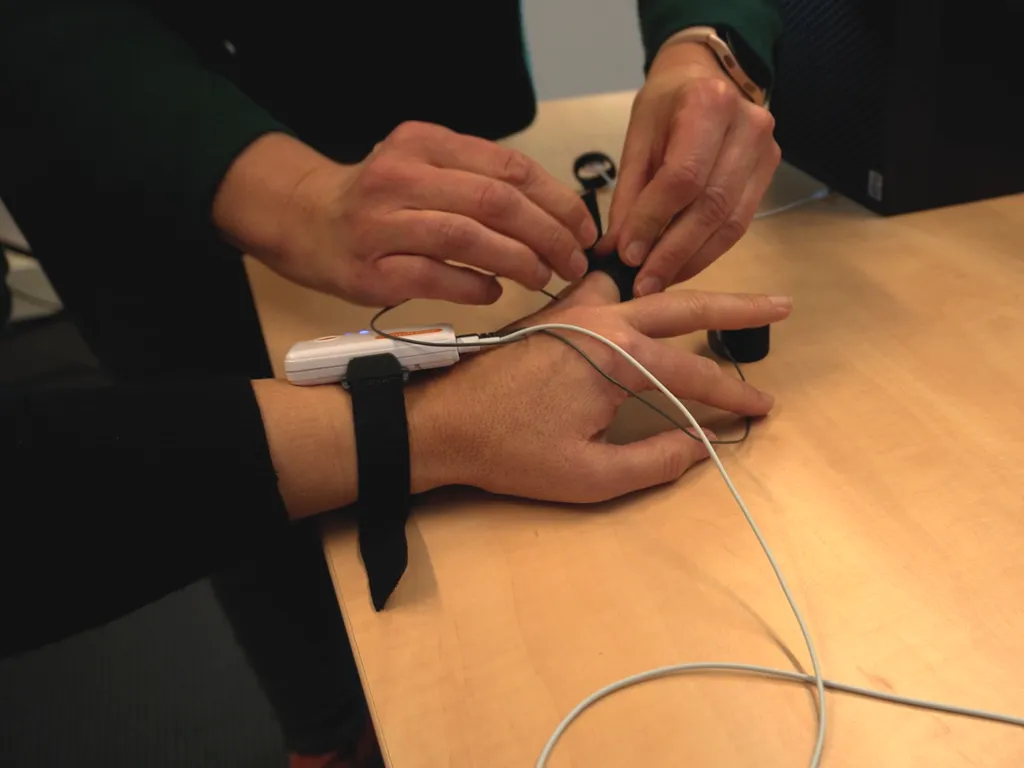
Psychophysiological tests
By measuring bodily responses you can understand how the brain and body interact in various psychological states.
- check By integrating various data streams you get a comprehensive view of participants' behaviors and physiological responses.
- check Combining facial expression analysis with physiological data gives a fuller picture of emotional experiences.
Best practices for psychology research

Clear hypotheses and objectives
Define the research hypotheses and objectives before starting the study. This helps to focus the research, guide the experimental design, and ensure that the study addresses specific, measurable questions.
Ethical considerations
Ensure all research follows ethical guidelines, including obtaining informed consent, ensuring confidentiality, and minimizing harm to participants. Ethical review boards should approve studies to protect participants' rights and well-being.
Rigorous experimental design
Use well-structured experimental designs that include control groups, randomization, and blinding when possible. This helps to eliminate biases and allows for more reliable and valid results.
Accurate and reliable measurement
Use validated and reliable measurement tools and techniques to collect data. This includes standardized tests, well-constructed surveys, and precise observational methods to ensure the accuracy and consistency of the data.
Comprehensive data analysis
Employ appropriate statistical methods and software for data analysis. This includes understanding and applying the correct statistical tests, addressing potential confounding variables, and ensuring that the results are interpreted correctly and transparently.
Replication and peer review
Encourage the replication of studies to verify results and enhance the robustness of findings. Additionally, submitting research for peer review helps to identify potential flaws, improve the quality of the study, and ensure that the research meets the standards of the scientific community.
Featured resources

Identify differences in behavior and brain development
Because there is still so much to learn about early brain development, lots of research is done at the Baby & Child Research Center.

Examine infants' evaluations of moral dilemmas
At the Centre for Infant Cognition researchers look at minute eye gaze changes, hand gestures, and emotions of infants while they are observing a moral dilemma or social interaction.

Gain insight in cognitive delays in infants with Down syndrome
Researcher Fidler and her colleagues aim to understand more about early cognitive development in people with Down syndrome so that we can improve preventative care.
Are you looking for advice on your application?
Do you want to learn more about how to apply Noldus products to your research, or do you need advice from our team of behavioral experts?
Noldus is here to assist you throughout the whole process.
Thank you!
We will get back to you within one business day.