The experiences an animal has early in life can have a lasting effect on its behavior and physiology. Working out the mechanisms behind these effects is important, because it shows us where vulnerabilities take hold and where we might one day intervene. Behavioral research in animals has been central to mapping how early-life conditions influence well-being and affective states later on. And increasingly, researchers are turning to a surprising group of animals to study them: insects.
Why use insects?
Rodents and zebrafish have dominated the behavioral neuroscience landscape for years, so insects might not be the first animals that come to mind. But they offer a number of advantages. They are cheap and easy to house, and their short lifespans mean that behavioral changes which would take months to surface in a rodent can appear within days. Despite their size, their nervous systems share a great deal of core machinery with vertebrates, including many of the same neurotransmitter systems. As Westwick and Rittschof point out in their review, insects provide unique opportunities to study how early-life experience alters the brain and behavior [1].
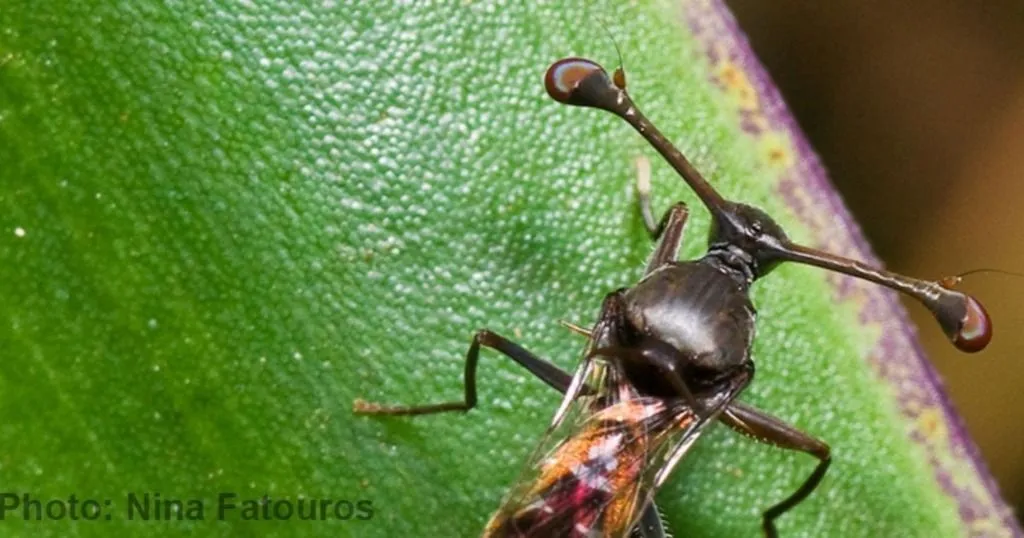
A handful of species do most of the work. The fruit fly (Drosophila melanogaster) is the best-understood animal model we have, with a genetic toolkit and behavioral repertoire that has been mapped in remarkable detail, especially for learning and memory. Honeybees are a favorite for studying associative learning and olfactory cognition. Locusts have shown how social context can flip behavior entirely, including the serotonin-driven shift from solitary to swarming individuals. Each species opens a slightly different window onto the same question.
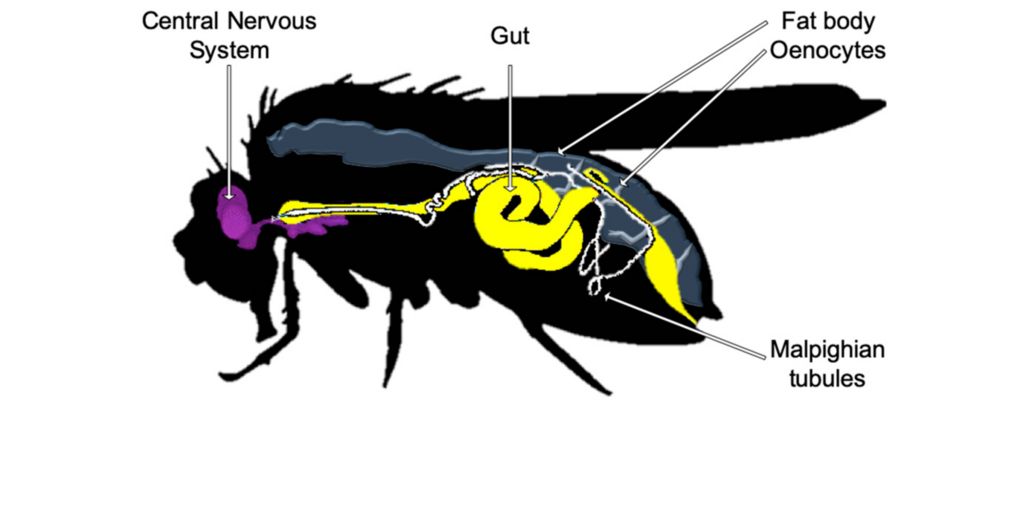
Adapted from [2]
What counts as an early-life experience?
Many different inputs can leave a mark during development. Temperature and light are powerful environmental cues, and many insects use them to trigger physical and behavioral change. Interactions with other animals, such as competitors, mates, and predators, shape later responses too. And then there is food: the quantity and quality of nutrition an animal receives early on can echo through the rest of its life. It is this last category that the study we look at today focuses on.
Nutritional stress in early life
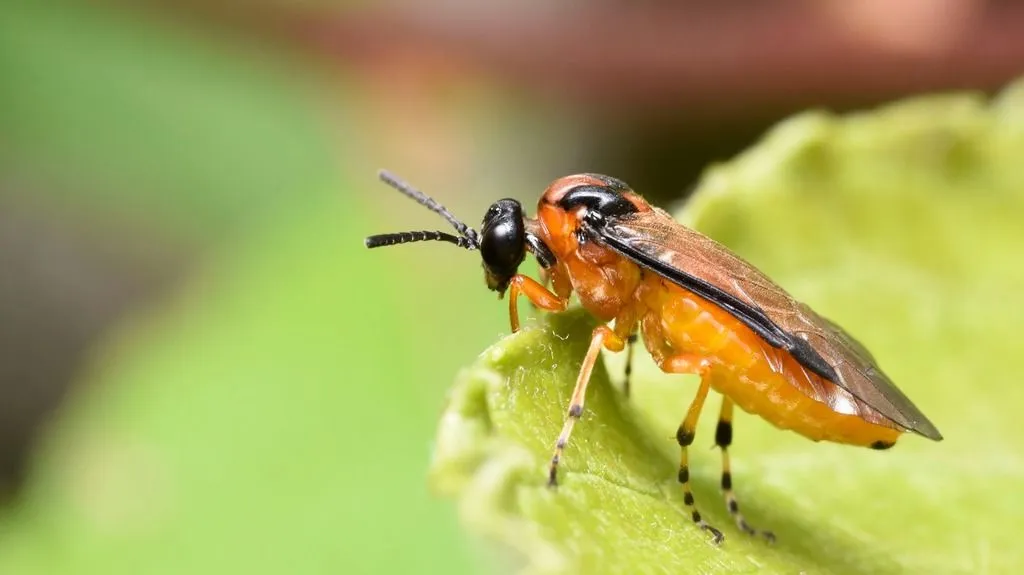
Brueggemann and colleagues asked a deceptively simple question: does it matter when an animal goes hungry [3]? Their model was the turnip sawfly (Athalia rosae), a holometabolous insect, meaning it goes through complete metamorphosis. Its larvae feed on leaves and flowers, while the adults drink nectar, so the two life stages occupy completely different dietary niches.
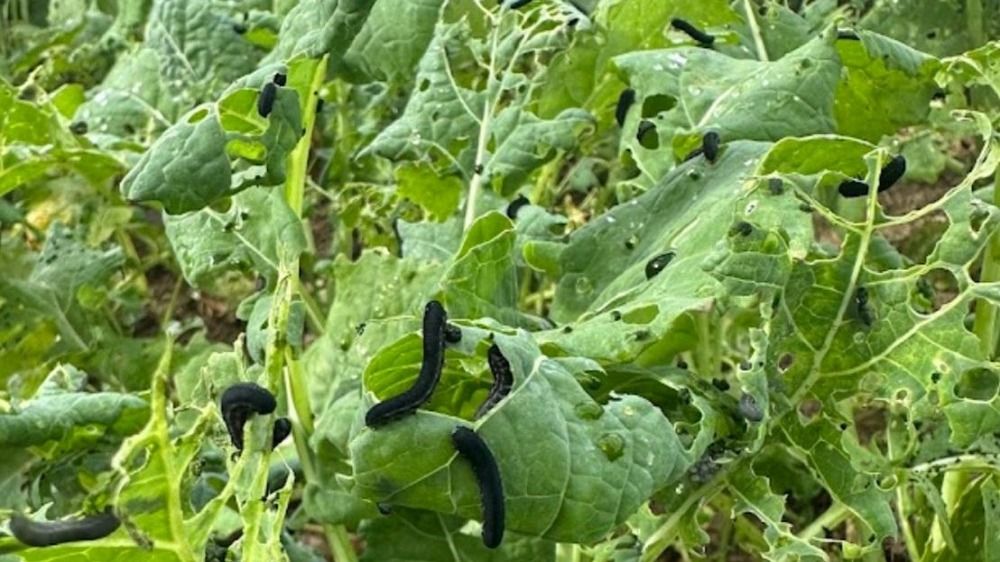
Picture retrieved from AHDB
To find out, the researchers exposed sawflies to one of four nutritional regimes: no starvation, starvation only as larvae, only as adults, or at both stages. They did this for both sexes, and then tracked the consequences across life-history, behavior, and metabolism.
To capture adult behavior, the team turned to automated video tracking. After the starvation treatments, sawflies were moved with minimal handling into empty Petri dishes, and six individuals were filmed in parallel for an hour with an overhead camera. Their movement was tracked with EthoVision, which followed each animal's center point several times per second and extracted two measures of activity: the total distance moved and the time spent immobile. This is what allowed the researchers to make a precise statement about whether activity changed at all.
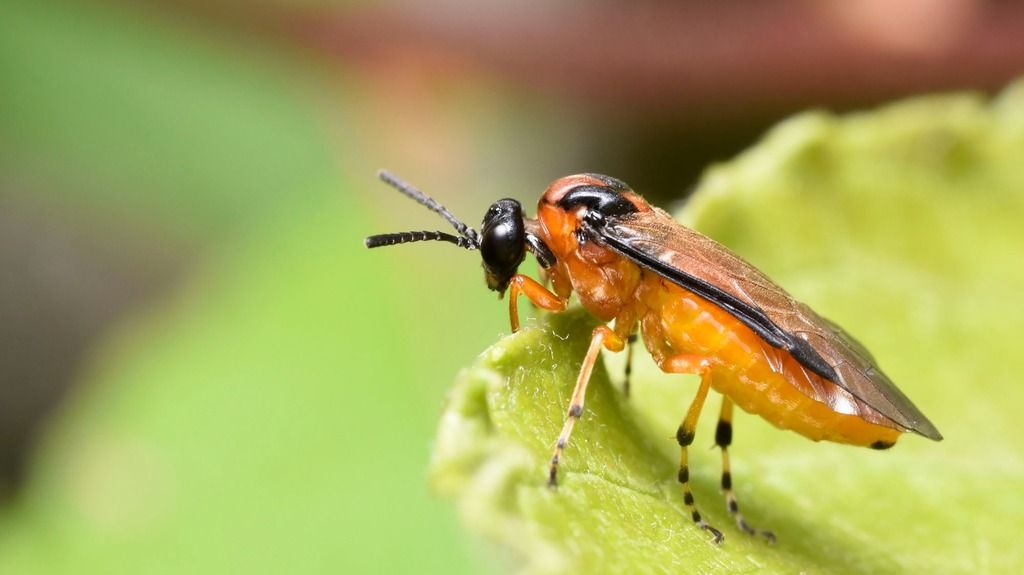
Picture by Peter Hillman
And the results were highly trait specific. Larval starvation prolonged development, and starved females reached a lower adult body mass than well-fed individuals. Males, however, conformed well to poor conditions, ending up at roughly the same body mass regardless of how they were reared. Metabolism shifted with starvation as well. But adult behavioral activity held steady: it was not significantly affected by starvation at either life-stage. In other words, some traits bend under early-life stress while others prove remarkably robust, and which is which depends on the trait, the life stage, and the sex of the animal.
For more on adapting behavioral assays to insects, take a look at our earlier blog on using flies as an animal model.
Measuring insect behavior at scale
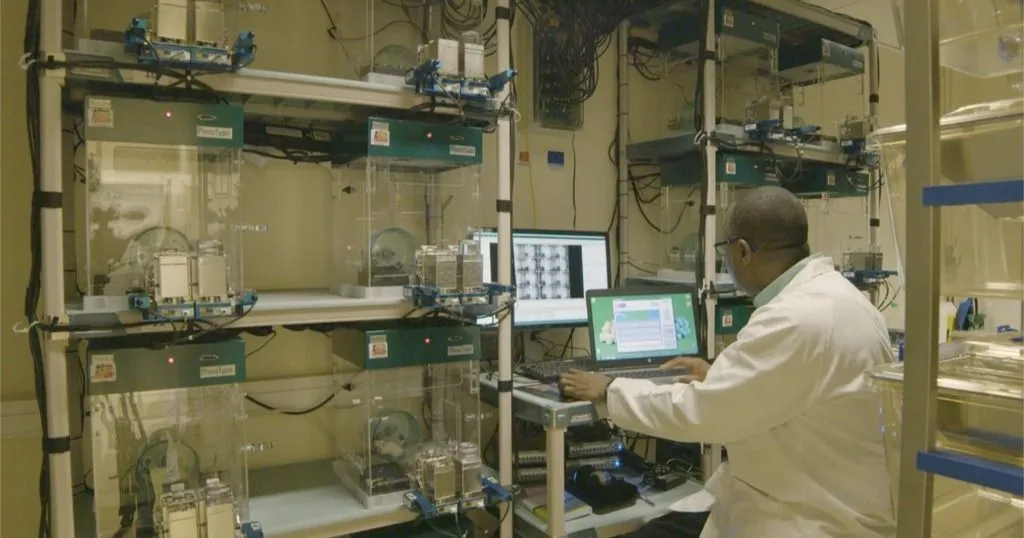
EthoVision is the most validated video tracking system available, and it quantifies movement and activity with a consistency that goes well beyond manual scoring. For more controlled, high throughput experiments, an optimized and standardized environment is needed. EntoLab combines this standardized observation chamber with EthoVision and EthoAnalysis to deliver high-throughput screening of up to 300 trials at once. It is used to measure activity, heat tolerance, responses to toxic compounds, and even learning and memory across a wide range of insect species.
Want to learn more about the EntoLab protocol or read how it's used in practice? Bolletta et al. used EntoLab to study prey-sharing behavior in two species of lacewings (Micromus angulatus & Chrysoperla carnea). EntoLab allowed them to observe differences in feeding behavior for four consecutive hours, which is essential for understanding predator-prey interactions.
Moving forward
Early-life experience shapes adult behavior, and insects give us a great way to study how. Whether the input is temperature, social context, or food, the lesson that keeps emerging is that plasticity is not all-or-nothing. Some traits shift dramatically while others hold firm, and timing, life stage, and sex all play a role.
The common thread is measurement. Subtle effects, and the absence of effects, only become visible when behavior is recorded precisely and at scale. The sawfly study is a good example: larval starvation altered body mass and development while leaving adult activity untouched. That kind of trait-specific plasticity is exactly why you need a tracking system sensitive enough to capture both the effects and the non-effects. The same automated tracking extends well beyond nutrition, to olfactory and vision-based research, the evolution of behavior, ecotoxicology, and insect-plant relationships.
If you are exploring how early experience shapes behavior in your own insect model, we would be happy to help you design the setup to measure it.
References
Westwick, R.R.; Rittschof, C.C. Insects Provide Unique Systems to Investigate How Early-Life Experience Alters the Brain and Behavior. Front. Behav. Neurosci. 2021, 15, 660464.
Capo, F.; Wilson, A.; Di Cara, F. The Intestine of Drosophila melanogaster: An Emerging Versatile Model System to Study Intestinal Epithelial Homeostasis and Host-Microbial Interactions in Humans. Microorganisms 2019, 7, 336.
Brueggemann, L.; Singh, P.; Müller, C. Life Stage- and Sex-Specific Sensitivity to Nutritional Stress in a Holometabolous Insect. Ecol. Evol. 2025, 15, e70764.