Anxiety disorders, including panic attacks and the obsessive-compulsive disorder (OCD), are on the rise, with increasing evidence suggesting a link between obesity and mental health. Research suggests obesity can contribute to anxiety and depression by altering the gut microbiome, triggering inflammatory processes in the brain. Given this connection, scientists are exploring diet-based or probiotic treatment for anxiety disorders. To investigate this, researchers at the University of Louvain, Belgium, conducted an experiment on laboratory mice using Noldus' EthoVision XT.
Testing anxiety in mice: a controlled experiment
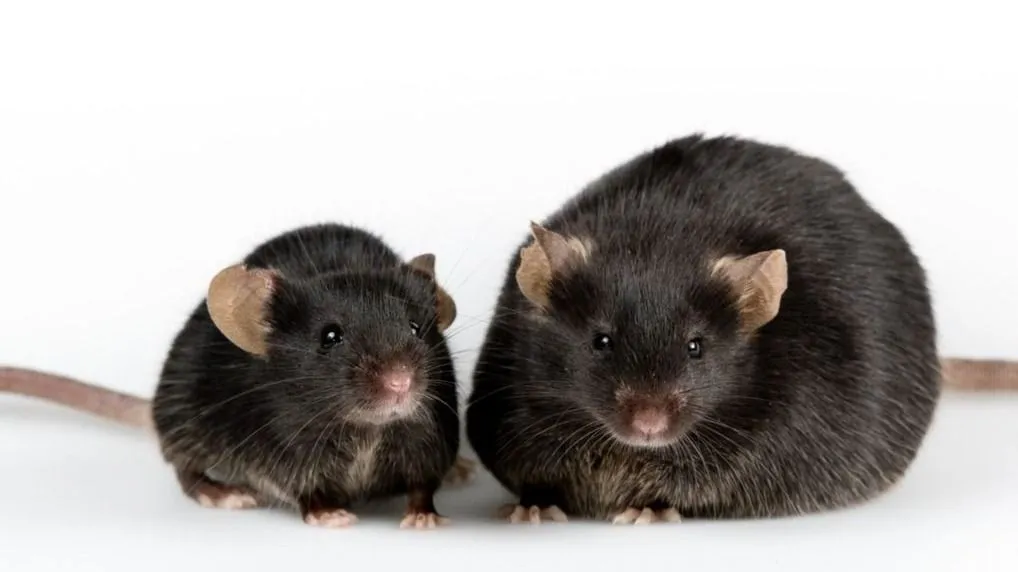
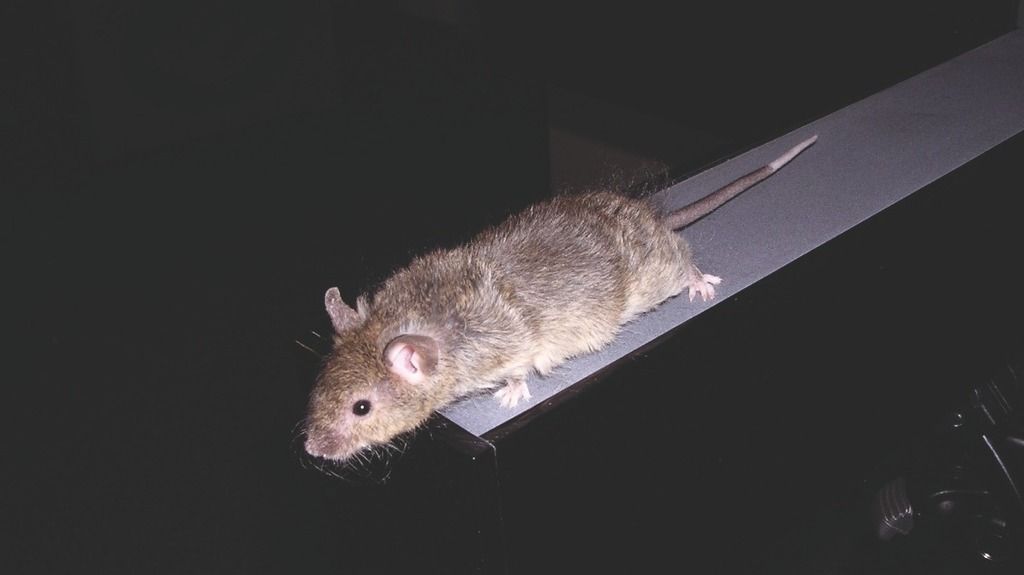
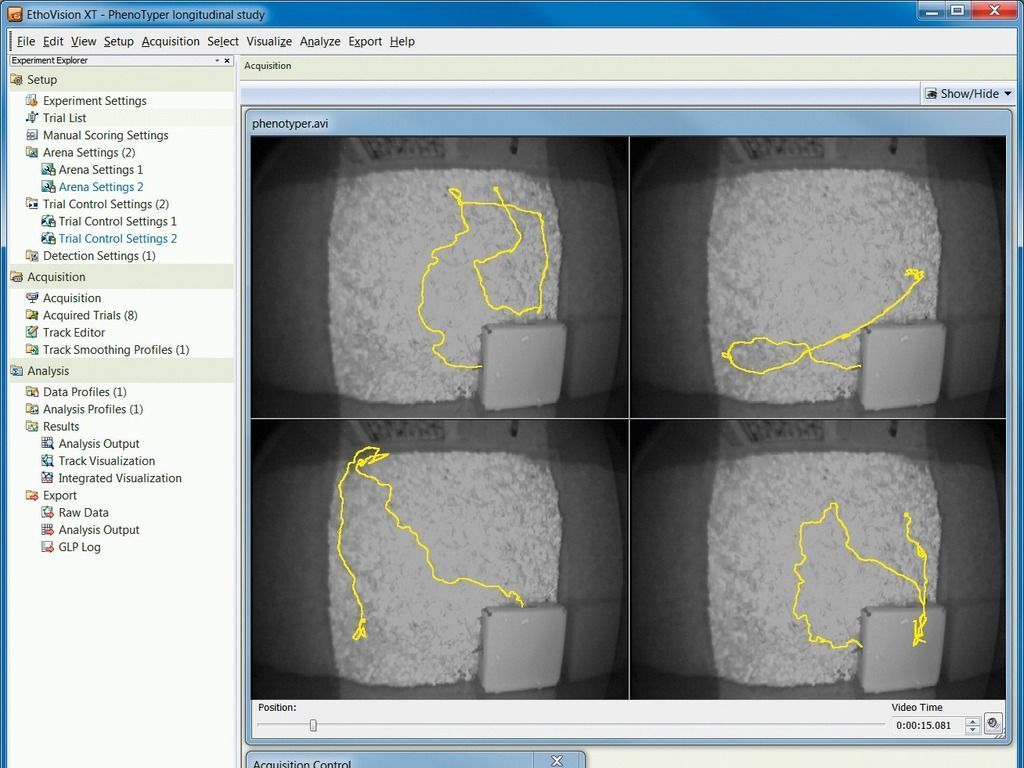
To better understand the association between anxiety and diet, Wong and her colleagues (2025) divided 24 male mice into two groups. One group received a high-fat diet, while the control group received a low-fat diet. After six weeks, both groups underwent a series of five standard behavioral tests designed to measure anxiety levels in mice, presented from low to high impact over two weeks. Using a high-quality camera with EthoVision XT, the researchers meticulously tracked and analyzed the mice's movements during these tests.
- Open field test
Anxious mice tend to stay near the walls of an open arena rather than exploring the center. EthoVision XT tracked the time spent in specific areas, speed, and the total distance moved.
- Marble burying test
Anxiety-prone mice exhibit compulsive behavior, such as excessive burying of marbles placed in their bedding. EthoVision XT measured the number of marbles buried.
- Light-dark test
Mice prone to anxiety prefer to remain in the darker portion of a two-chambered enclosure rather than venturing in the illuminated section. EthoVision XT recorded the transitions between dark and light chambers.
- Elevated plus maze
More anxious mice spent less time in the open arms of an elevated maze, favoring the enclosed area. Entries into the open arms were analyzed by EthoVision XT.
- Forced swim test
Anxious mice are less likely to display movements beyond those needed to keep afloat. EthoVision XT recorded the latency to the first float event and the time spent being mobile.
In addition to behavioral data, Wong et al. (2025) measured body weight, fat tissue weight, gut microbiome diversity, concentrations of corticosterone (a stress hormone), and markers of brain inflammation.
Unexpected results: obesity and anxiety
Contrary to expectations, the mice on a high-fat diet – despite increased weight gain and fat accumulation – did not exhibit greater anxiety-related behaviors compared to the control group. This was confirmed by stable corticosterone levels and consistent brain inflammation markers across the two groups. While gut microbiome composition differed between the two groups, the predicted increase in anxiety-like behaviors did not materialize.
The impact of oral gavage on stress levels
The researchers hypothesized that both the high-fat diet group and the control group in the first experiment were exposed to similar stress levels due to daily oral gavage of a control liquid vehicle. This technique, commonly used to administer bacterial probiotics in rodent studies, may exert stress on the animals, potentially masking any differences in anxiety-related behaviors.
To test this, the researchers conducted a second experiment over eight weeks with 36 male mice, all maintained on a low-fat diet. Half the mice underwent daily oral gavage, while the other half did not. By week six, the mice underwent the same five standard tests and body measurements.
The results mirrored the first experiment: behavioral tests showed no significant differences between groups. The mice that received oral gavage did not display increased anxiety compared to their non-gavaged counterparts. Additionally, weight gain, corticosterone levels, and inflammatory markers remained similar, reinforcing that neither diet nor oral gavage induced anxiety-related behaviors.
FREE TRIAL
Try EthoVision XT yourself!
EthoVision XT is a video tracking software that can accurately detect and track rodent movement and behaviors.
By automating data collection and analysis, it significantly enhances research efficiency, providing high-quality behavioral data with minimal human bias.
Get your Free trial
science
Conclusion: challenging assumptions about diet and anxiety
These findings challenge the widely held assumption that obesity, caused by a high-fat diet, necessarily leads to increased anxiety. The researchers recognized that prolonging the 8-week dietary treatment could yield different behavioral outcomes. Similarly, the age of the mice when the dietary treatment started and when testing was conducted could be a confounding factor.
In this study, gut microbiota composition was altered in obese mice, yet it did not translate into heightened anxiety-related behaviors. Furthermore, oral gavage—a common method in probiotic research in rodent models—did not induce behavioral changes in mice, suggesting that this technique is unlikely to confound future studies.
These results highlight the complexity of the relationship between diet, obesity, and mental health. By using advanced tracking instruments like EthoVision XT, scientists can continue to refine behavioral studies and better understand how physiological factors influence mental health. These findings contribute to a growing body of research questioning simple causal links between diet and anxiety, paving the way for more nuanced approaches to mental health interventions.
References
Wong, G. C., Bearzatto, B., Gala, J.-L., Delzenne, N. M., Van Hul, M., & Cani, P. D. (2025).
Obesity phenotype and gut microbiota alterations are not associated with anxiety-like behaviour in high-fat diet-fed mice. Food & Function, 16(1), 268–281. https://doi.org/10.1039/D4FO04461D.