When studying developmental psychology you study how people grow and develop, from childbirth to end of life. What are examples of developmental psychology?
When you are studying developmental psychology, you’re studying how people grow and develop, all the way from childbirth to the end of their lifespan. What are examples of developmental psychology? It could be anything within a range of subject matters that are related to human growth. Not just psychological behavior, but anything from thoughts and emotions, cognitive and linguistic development, to decision making and motivation, moral and even physical development like motor skills.
Research examples of developmental psychology
Over the years we’ve come across many examples of research in developmental psychology, often done with various behavioral research tools. Are you looking for topics for developmental psychology research papers? We’ve put together an overview of research examples in developmental psychology that were published on the Behavioral Research Blog.
Examples of developmental psychology: Infant stage
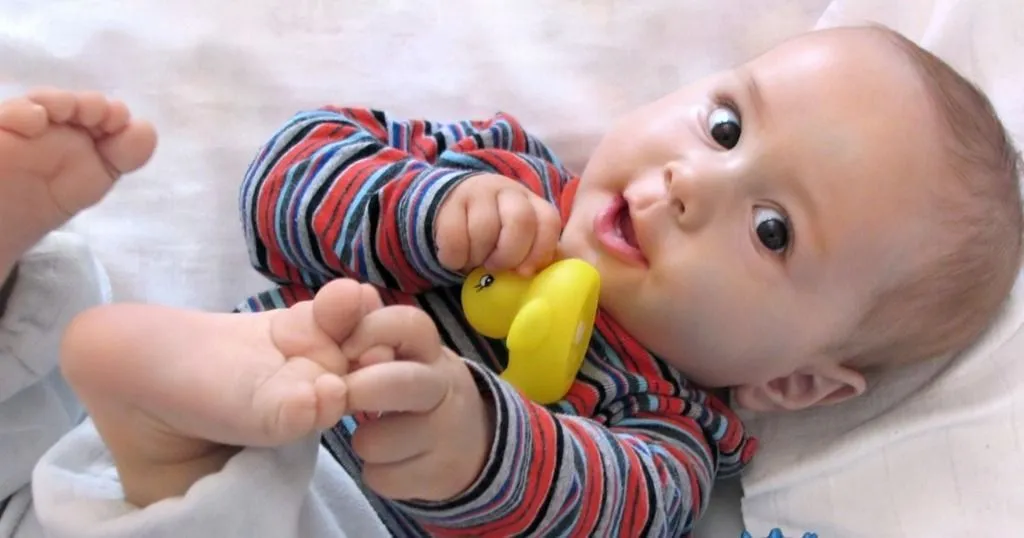
The infant stage is the time from birth until children are (roughly) two years old. A time that has been well studied by researchers, as changes are rapid and these first years in life are considered fundamental in our development.
Early infant behavior development of hand preference
In learning about objects and their parts, transporting objects to new locations, and sharing objects with others, the hands are essential. Infants discover how to control each hand and how to use the hands together.
There are many reasons to study the development of hand preference in infants, as it can provide clues about motor skills or any developmental disorders. A team of researchers was particularly interested in asymmetric bimanual actions and presented “Unimanual to bimanual: Tracking the development of handedness from 6 to 24 months”.
In the Noldus Webinar 'How emotions are made in Baby FaceReader', we tell you about emotions, how they are 'made' and how this relates to facial expression analysis in FaceReader with a focus on Baby FaceReader.
Observing and analyzing repetitive movements in infants to detect autism
In the first year of life, an infant learns how to use his or her arms, legs, mouth, hands, and fingers by repeating movements over and over again. They discover a wealth of possibilities. However, an increased frequency of repetitive movements has been widely described in neurodevelopmental disorders as well.
To examine if a specific repertoire of repetitive movements was present in children with autism, researchers used home videos to code the behaviors of the infants.
Infant siblings of children with or without ASD participated in a study to determine whether gaze behavior, showed during a test with an unfamiliar examiner, could predict gaze behavior in a more naturalistic context. The team of researcher Gangi examined prospectively infant gaze behavior at 6, 9, and 12 months of age in infants who were later diagnosed with ASD, as well as low- and high-risk infants without autism spectrum disorder outcomes.
To measure the cognitive functioning of the infants, the Mullen Scales of Early Learning was filled in at each visit by an examiner. Meanwhile, infant gaze to the examiner’s face was recorded, and play interaction with a parent took place.
Understanding infants’ social and moral development
At the Centre of Infant Cognition at UBC in Vancouver, researchers conduct independent studies as well as participate in ManyBabies projects to further understand the development of moral and social behaviors of infants.
Developing social communication and the role of mimicry
Children learn from interacting with others, especially their parents. For example, reproducing the emotions that others express is part of that. Copying facial expressions is one of the great milestones in the social development of a child.
Still, little is known about the mechanisms controlling the early development of emotional mimicry. Therefore, a research team of the University of Amsterdam conducted a study to investigate infant emotional mimicry, parent-infant mutual attention, and parent dispositional affective empathy.
Adolescence is the period of transition between childhood and adulthood. It is a time for rapid cognitive development. When entering adolescence children are going through many changes at the same time: both physical and intellectual, as well as their personality and social skills that are developing. We’ve published several articles about studies into the adolescent stage.
Direct observations help develop effective interventions in adolescence
In a study by a team of researchers from Arizona State University, John Hopkins School of Medicine in Baltimore, Maryland, and the Oregon Research Institute, family and friendship dynamics in adolescence were observed in order to develop more personalized interventions that prevent problem behaviors and adjustment issues.
In adolescence, the ability to regulate emotions is heavily challenged by numerous biological, social, and psychological changes. How are adolescents’ emotions socialized by mothers and close friends? A study by a team of researchers from Canada and The Netherlands focused on dealing with depression in adolescence.
Studying conflict interactions between mothers and adolescents
Adolescence is a developmental phase with many physical, neurodevelopmental, psychological, and social changes. It is common for conflicts to arise between adolescents and their parents. However, severe conflicts can have negative effects on adolescent development. What can parents do to prevent escalating conflicts?
FREE WHITE PAPER
Parent-child interaction
This free white paper informs you how on to facilitate a parent-child study and how to set up your experiment.
Research examples in developmental psychology research: Adult stage
Adult development encompasses the changes that occur in biological and psychological domains of human life from the end of adolescence until the end of one's life1. When studying adult development, many researchers tend to focus on aging and health.
Some study eating behavior in residential care homes which enables them to take environmental factors into account. Others focus on family relations and communication and try to facilitate and improve contact between parents and children living a distance apart. Some examples of developmental psychology research in the adult stage of life.
How to measure couple communication patterns
Communication between husbands and wives is often discussed on TV, in magazines, and is frequently a topic of discussion amongst friends. Additionally, it is also a popular research theme. Effective husband-wife communication can benefit a relationship. But are there specific behaviors which need enforcing and are they the same for every couple?
Flow is a state in which a person is fully involved in an activity, decreasing self-consciousness and sense of time. This process requires a person to be extremely focused, as well as exactly have the skills to master a task. Several researchers have developed methods of measuring flow.
Do your emotions and moods change as you get older?
Are emotions affected differently for younger than for older people? Researchers used FaceReader to complement self-assessments and objectify mood changes to answer this question. They exposed participants to film segments to induce four basic emotions: anger, disgust, happiness, and sadness.
Behavior and emotions of older adults
It's important to develop user-friendly products and services to assist older people in daily activities and improve their quality of life. Therefore researchers wanted to find out if TV footage could motivate older persons to start being more active? Being active can improve the overall health of a person (65+ but of course also 65-!).
In certain cases, observations for your study are best performed on-site. There are many examples of observational studies with older age groups, conducted at home or at a healthcare facility. We've highlighted two examples of on-site observational studies with older persons.
Robots helping people with dementia
Behavioral and psychological problems affect most individuals with dementia at some point during the progression of the disorder. Researchers explored if the use of a robotic seal as a therapeutic tool would influence the emotional and behavioral symptoms of dementia.
Find out more about this large study on robotic pets here!
RESOURCES
Read more about The Observer XT
Find out how The Observer XT is used in a wide range of studies and how it can elevate your research!
How can we understand emotional reactivity in children with ADHD? In the current study, Tarle and her colleagues examined the relation between emotion regulation and working memory in children with and without this disorder.
Researchers perform infant studies to properly monitor and understand all kinds of development factors. In this blog post, five examples of infant studies are highlighted.
Researcher Rebecca Knapp was interested to know whether infant eye gaze away from the mother, or eye gaze directed to the mother, would correspond to increased maternal oxytocin. Read her blog post to learn more.
Request a personalized quote with no obligations. Our team will review your selection and contact you within 1-2 business days with detailed pricing and information.
To connect you with our team via live chat, we need to load our chat service (HubSpot). This will set cookies to remember your conversation and provide personalized support.