Emotion Blog Posts
Emotions are what makes us human, and we all experience them. Emotion data provides crucial insights that allow researchers to gain insight in complex human behaviors in greater depth. Emotions can play a role in all kind of matters. For example, in the decisions we make whether or not to buy something, in food choices we make, and in how we interact with others.

7 things you need to know about FaceReader
Are you looking for guidance in getting started with your facial expression analysis? Or want to get more out of your FaceReader setup? Keep reading to learn 7 essential things you need to know about FaceReader!

Cats and human emotions: A stronger bond than we thought?
A recent study shows cats can detect human emotions through scent - especially fear - suggesting our cat friends might understand us more than we realize.

8 reasons why FaceReader outperforms OpenFace
In this blog post, we’ll break down why FaceReader outperforms OpenFace. We’ll focus on key aspects like accuracy, ease of use, and security—making sure you get reliable results without the hassle.
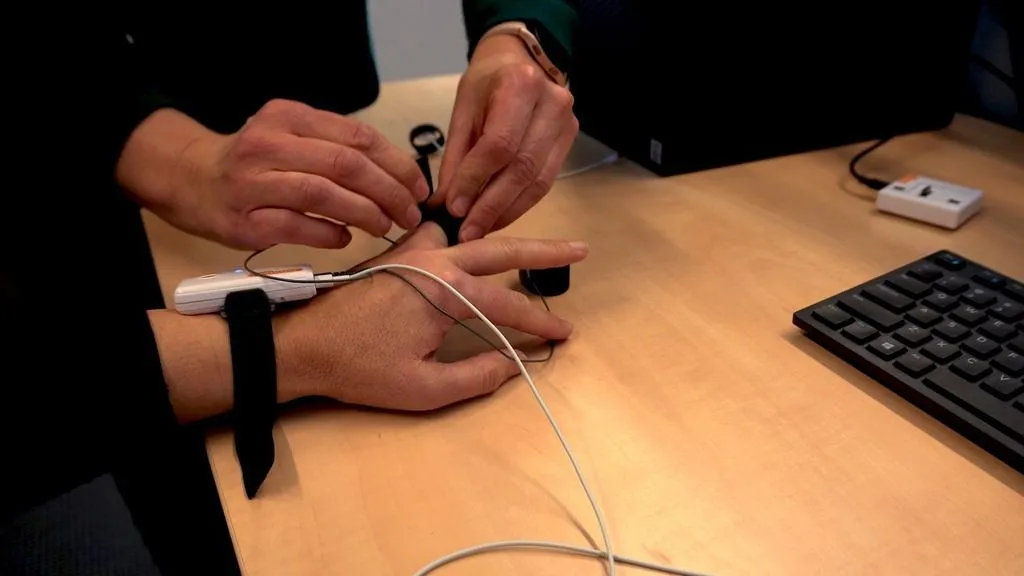
What is Galvanic Skin Response?
Understanding human emotions and physiological responses is a key focus in behavioral science. One insightful tool in this field is galvanic skin response (GSR). But what is galvanic skin response? A beginner’s guide to understanding GSR in research.

How to use facial expression analysis in pain research
As the world seeks more efficient research methods, automated facial expression analysis tools offer great potential for studying facial expressions. Could these tools be applied to pain assessment?

Why you want to find out if your customers are bored
Emotions deeply influence our daily lives, shaping our moods and behaviors - including our decision making. That's why facial expression analysis is often used in consumer and behavior research.

How to use FaceReader in the lab
Are you interested in using automatic facial expression analysis in a standardized lab setting? Here are 5 tips to get you started!
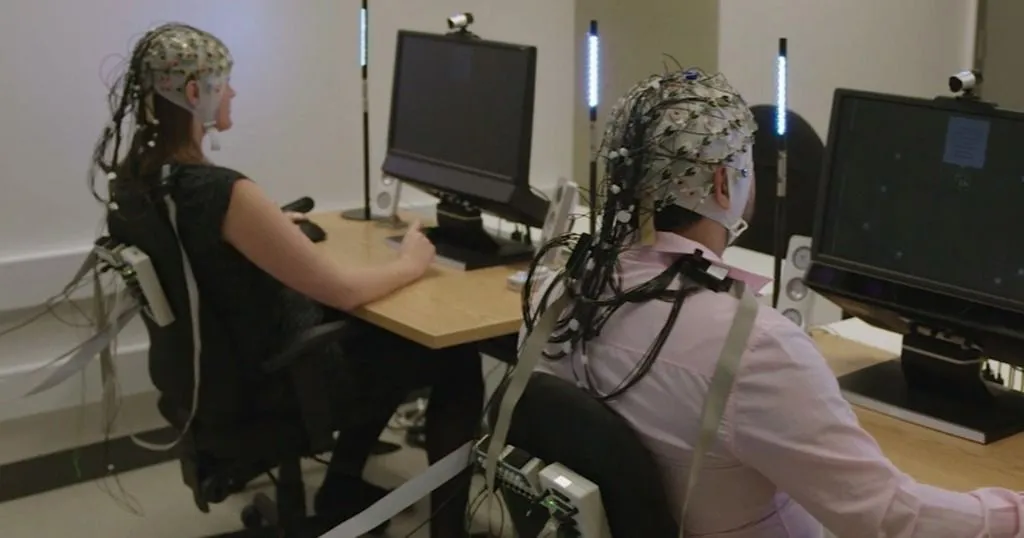
What is biometric research?
Biometric research helps scientists uncover subconscious processes related to attention, cognition, emotion, and physiological arousal.

Why you should use custom expressions in your facial expression analysis
Using custom expressions in facial expression analysis can unlock a deeper understanding of human behavior. How can you use custom expressions in different fields of research?

Disclosure dilemma
Isabelle Leenders examined the influence of disclosures in influencer advertising on the brand attitudes and purchase intentions of young adults, mediated by their emotions and activation of persuasion knowledge.

AI and deep learning: Responsible use of facial expression analysis
The European Parliament adopted its negotiating position on the first-ever regulation of AI. In this blog post, we explore how to use facial expression analysis responsibly and how it can contribute to scientific research.

FaceReader and different scientific theories on emotion
In this blog post, Tess den Uyl, PhD, Peter Lewinksi, PhD, and Amogh Gudi, PhD from VicarVision outline how FaceReader is designed with scientific rigor and in accordance with responsible AI principles.
Thank you!
We'll get back to you shortly.
Please correct the following errors: